Nqobile Bhebhe in BEIJING, China
CHINA’S remarkable economic ascent is not a solitary success story but rather a product of deep interdependence with the global community, a senior Chinese professor told Zimbabwean journalists in Beijing.
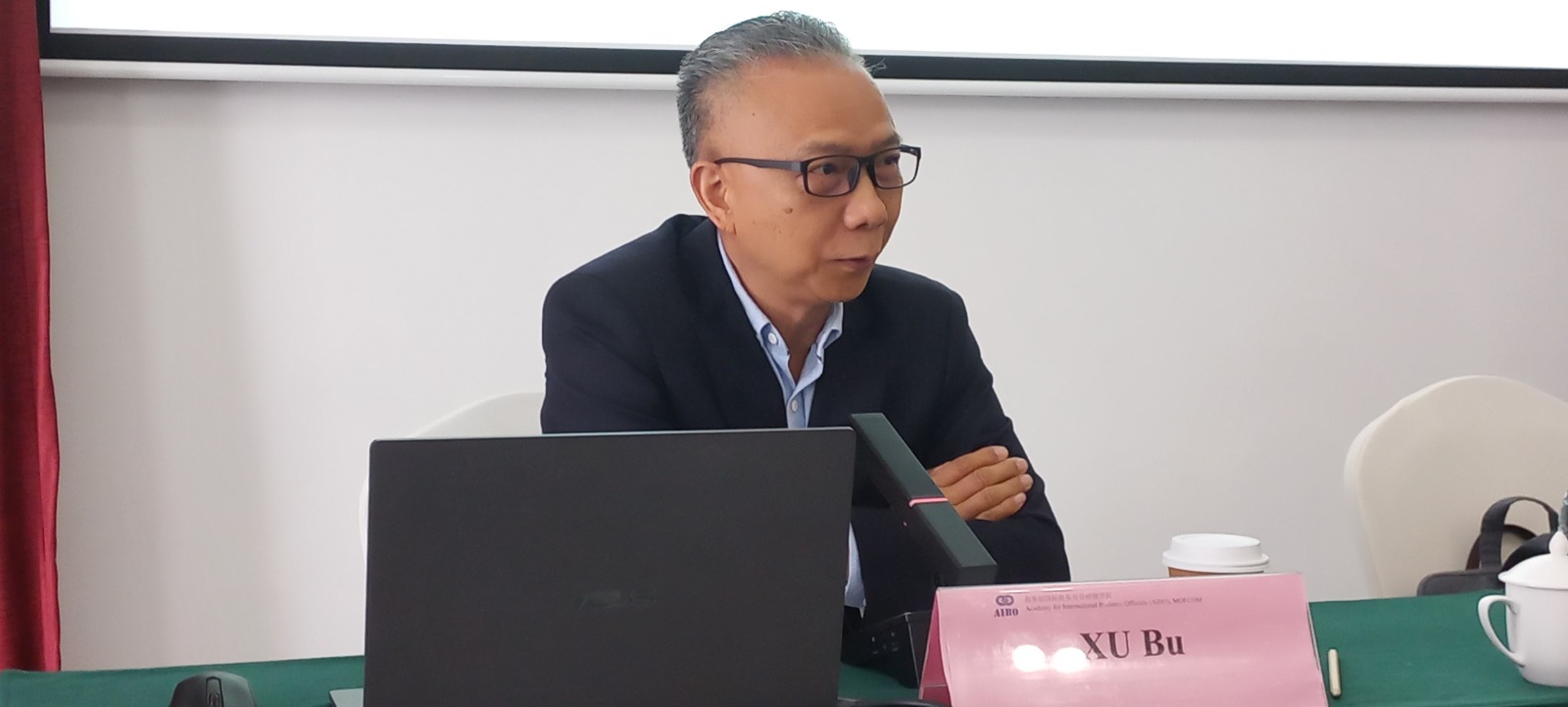
Professor Xu Bu, a senior academic underscored that Beijing views Africa as an indispensable trade and development partner.
He made the remarks during a presentation titled: “Building a Community of a Shared Future for Mankind”.
The lecture sought to explain the philosophical and practical underpinnings of China’s foreign policy, with a strong emphasis on mutual benefit and open cooperation.
Prof Xu was unequivocal about the structural realities of the Chinese economy.
“Chinese development cannot be made without cooperating with other countries,” he said.
Prof Xu provided concrete data to back the assertion, detailing China’s heavy reliance on global supply chains for essential resources.
“Our economy is dependent on foreign trade. China imports 70 percent of oil, 50 percent of gas and millions if not tonnes of wheat and soya beans.
“That is to say, Chinese development can by no means be made without doing trade with the outside world,” he emphasised.
The professor’s remarks come at a time when global supply chain resilience and diversification have become pressing topics.
He argued that China remains committed to deepening trade linkages rather than retreating into protectionism.
Crucially, Prof Xu identified Africa as a cornerstone of this outward-looking strategy, noting that China does not view the continent merely as a source of raw materials but as a long-term strategic partner in industrial and agricultural transformation.
“That is why we believe that China views Africa as very important,” he told the Zimbabwean journalists.
Prof Xu also pointed to a landmark tariff decision that took effect on May 1. The zero-tariff treatment has now been extended to all African countries with which China has diplomatic relations, and represents a significant shift in trade architecture.
“From May 1, the zero tariff treatment for all African countries took effect. We believe it will not only reduce the cost for African countries to import from African countries but provide more opportunities for value-added products,” he said.
The zero-tariff arrangement, which came into effect on May 1, grants duty-free access to a broad range of African products entering the Chinese market, thereby positioning Zimbabwean exporters to tap into one of the world’s largest consumer economies at a more competitive level.
The policy is also expected to deepen economic integration between China and Africa while creating fresh momentum for Zimbabwe’s export-led growth agenda anchored on agriculture, mining and value addition.
According to Prof Xu, the policy is designed to go beyond simple exchange of goods.
By lowering barriers for processed and manufactured goods from Africa, China hopes to stimulate the continent’s own industrial base.
“The manufacturing sector will develop,” Prof Xu asserted, linking the zero-tariff regime directly to long-term capacity building in Africa.
The presentation was part of a broader media exchange programme aimed at enhancing understanding between Chinese institutions and Zimbabwe media.