

 Online Reporter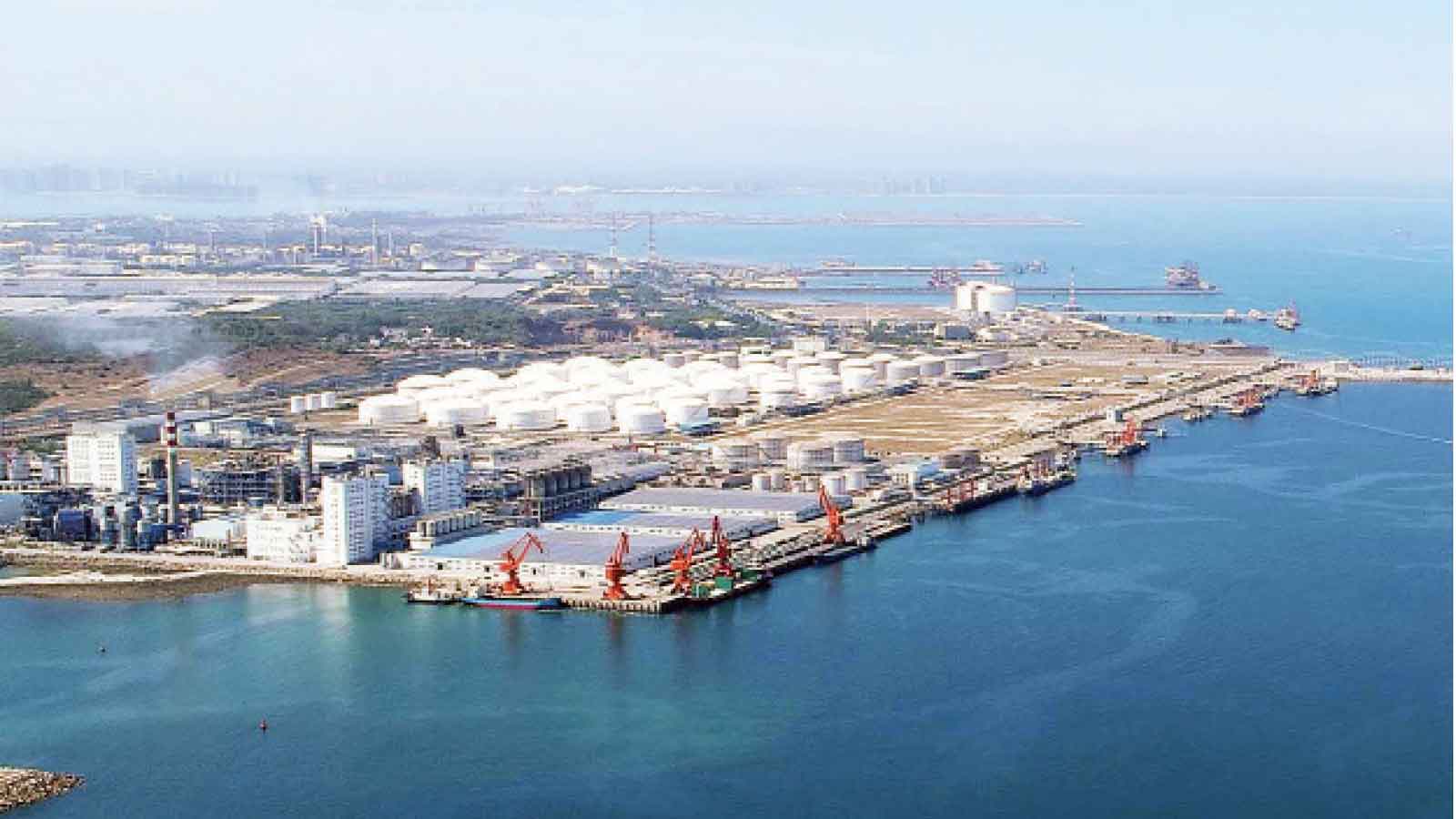
Kuda Bwititi in Hainan, China
A significant transformation in international trade is approaching, with the potential to greatly benefit developing economies like Zimbabwe.
On December 18, 2025, the Hainan Free Trade Port (FTP) will officially launch its island-wide special customs operations, marking the culmination of a five-year, high-stakes project by China to create a new gateway for global commerce.
For Zimbabwe, watching from the sidelines is not an option. The strategic development of China’s Hainan province presents a tangible model of economic transformation and a direct conduit to the world’s second-largest economy.
The transformation of Hainan from a tropical tourism destination into a “new frontier of China’s opening up” is a case study in strategic, state-backed development. Since the release of the Overall Plan for the Construction of the free trade port in June 2020, the province has achieved what Chinese officials term “one qualitative leap, four significant breakthroughs, and five notable outcomes.”
The “qualitative leap” is the move into its final operational phase. The policy framework is now built on a powerful foundation of zero tariffs on most imported goods and equipment, and a tantalising 15 percent cap on both corporate and individual income tax for eligible businesses and talent.
To put this in perspective, 6 979 companies have already enjoyed tax reductions of over US$5 billion, while 48 000 individuals have benefited from similar cuts.
This creates a low-cost, high-efficiency business environment deliberately designed to attract international capital and expertise.
According to statistics provided by officials from Hainan province, foreign trade increased from US$13,1 billion in 2020 to US$39 billion in 2024.
In terms of innovation, Hainan’s research and development investment growth has ranked first in China for three consecutive years, a clear signal of its shift from a low-value to a high-value economy.
It has produced 173 institutional innovation cases, established China’s first provincial-level department for business environment development and created a one-stop international commercial dispute resolution mechanism.
In a lesson for the whole world, Hainan has grown its economy while becoming greener. Clean energy accounts for over 80 percent of its installed power capacity, and its Boao Zero-Carbon Demonstration Zone has cut carbon emissions by 99 percent.
At the heart of this transformation is the Yangpu International Container Terminal. This is not just another port but the physical engine of the Hainan FTP. With a massive 1 970-metre shoreline and berths capable of handling vessels up to 200,000 tons, it is a deep-water gateway designed for global trade.
In 2024 alone, it handled 2 million TEUs (twenty-foot equivalent units) through 57 international shipping routes. For a landlocked country like Zimbabwe, which depends on the efficiency of ports in Mozambique and South Africa, the strategic importance of Yangpu cannot be overstated.
It represents a dedicated, high-capacity entry point into the Chinese market, backed by a special customs regime that simplifies and incentivises trade.
How Zim can translate Hainan’s success into tangible gains
Zimbabwe’s greatest untapped potential lies in moving from being an exporter of raw materials to a supplier of semi-processed and finished goods.
Hainan’s zero-tariff policy on raw and auxiliary materials is a game-changer. Imagine Zimbabwean lithium concentrates, tobacco, or citrus being shipped to Hainan, where they can be processed in specially designated zones with imported, tariff-free equipment, and then either sold into the vast Chinese domestic market or re-exported globally. The “processing for re-export” model is tailor-made for this. The 15 percent corporate tax rate would make establishing a Zimbabwean-owned or joint-venture processing facility in Hainan remarkably cost-effective.
The Hainan FTP’s cross-border e-commerce “dual-duty-free” model is a direct route to the Chinese consumer. Zimbabwean brands—be it in specialty foods, leather goods, or artisanal crafts—can use Hainan as a logistics and distribution hub to sell directly to Chinese customers online, benefiting from streamlined customs and lower costs.
Several Global South countries have already established trade centres in Hainan and Zimbabwe must secure its own pavilion to showcase its unique products.
Hainan’s four pillar industries are tourism, modern services, high-tech and tropical agriculture. There is a clear synergy with Zimbabwe. Harare can learn from its model of integrating high-end tourism with healthcare and education.
Zimbabwe’s own world-class tourism assets—the Victoria Falls, wildlife safaris—could be packaged and marketed directly to the affluent Asian tourists who frequent Hainan, creating new tourism circuits.
Zimbabwe’s own energy challenges make Hainan’s clean energy transition a critical learning experience.
With over 70 percent of its power generation from clean sources, it offers a model for how to build industrial capacity without relying on fossil fuels.
Collaboration on solar technology, smart grid management and even carbon credit mechanisms could be a new frontier for Sino-Zim cooperation, aligning with global sustainability trends.
Hainan is strategically positioned as the link between the Chinese mainland and the Association of Southeast Asian Nations (ASEAN).
ASEAN refers to about 10 Southeast Asian nations, including Malaysia, Singapore, Indonesia and Thailand. With the full implementation of the China-ASEAN Free Trade Area Version 3.0 in 2025, Hainan will be at the forefront of this integration.
For Zimbabwe, establishing a strong presence in Hainan provides indirect, preferential access to the entire ASEAN market of hundreds of millions of people, diversifying its trade partnerships.
The impending launch of the free trade port can be viewed as the starting gun for a new era of South-South cooperation. The Chinese authorities have explicitly stated that the doors of Hainan “are open and will always be open to the Global South.”
For Zimbabwe, the path forward requires decisive action.
Perhaps authorities can consider establishing a dedicated Hainan Desk to navigate the new policies and facilitate business linkages. Another option might be to negotiate for a Zimbabwean Trade and Investment Centre within the free trade port.
For the private sector, Zimbabwean businesses, from agriculture and mining to tourism and tech, must proactively seek out partnerships in Hainan.
The low tax environment and streamlined regulations significantly de-risk such ventures.
The port represents a rejection of economic isolationism and a bold bet on connectivity. For Zimbabwe, the message is clear: the wave of opportunity is building and immediate action is necessary.



