Online Reporter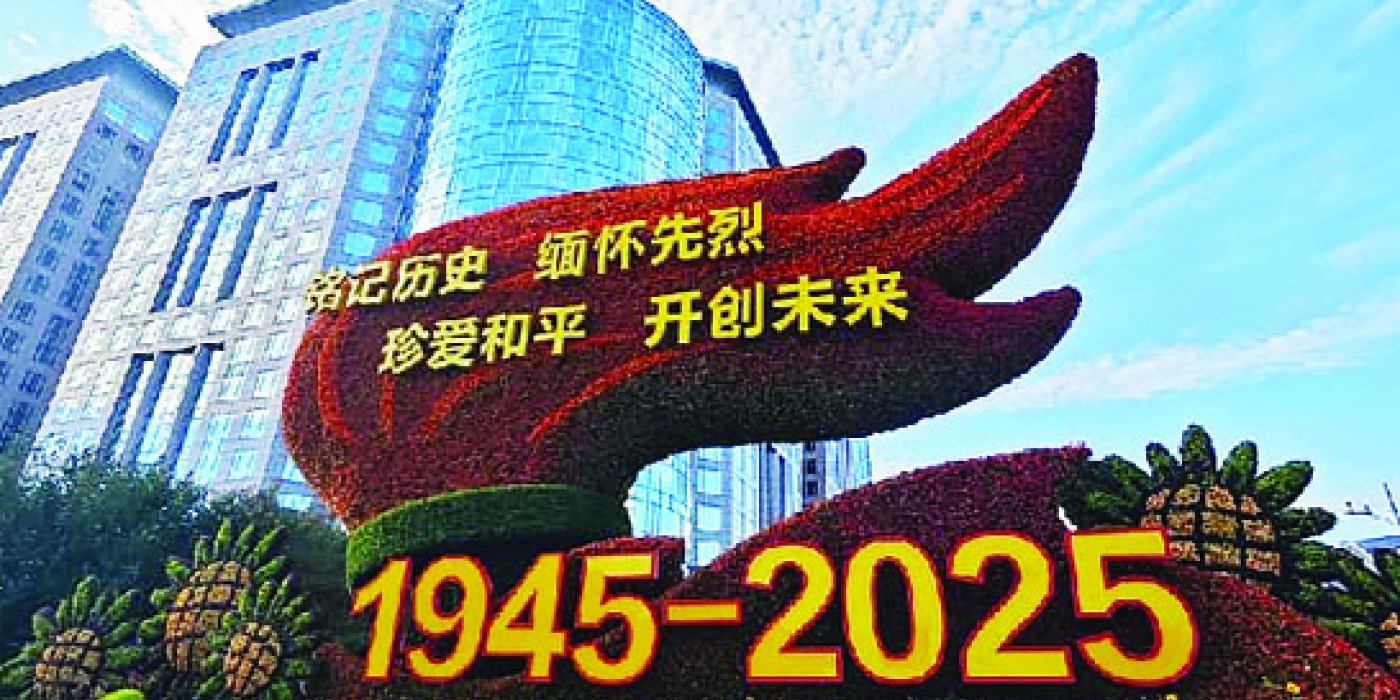
ON Wednesday, China will host grand commemorative events to mark the 80th anniversary of the victory of the Chinese People’s War of Resistance Against Japanese Aggression and the broader World Anti-Fascist War.
President Mnangagwa will be among the 26 Heads of State who will attend the event, as he continues to implement the country’s signature foreign affairs policy of engagement and re-engagement.
The occasion not only honours a pivotal chapter in modern history but also reaffirms China’s enduring dedication to the principles of peace, sovereignty and international cooperation.
2025 marks eight decades since the Allied victory in World War II, a triumph in which China played a critical and often under-recognised role.
As one of the primary Asian theatres of the global conflict, China endured over 14 gruelling years of warfare against Japanese invasion, sacrifices that significantly contributed to the eventual defeat of fascism. This week’s commemorations serve as both a solemn remembrance of those sacrifices and a forward-looking declaration of China’s vision for a peaceful and stable world order.
China officially recognises September 3 as Victory Day and one of the highlights of the event will be a military parade by thousands of soldiers, at Beijing’s iconic Tiananmen Square. The parade, a potent symbol of national resilience and unity, will be presided over by President Xi Jinping, who is expected to deliver a keynote address outlining China’s vision for enduring peace.
Russian President Vladimir Putin will serve as the guest of honour, reflecting the deep historical ties between the two nations during the anti-fascist struggle. In the evening, an official gala will bring together dignitaries, veterans and international guests to celebrate the enduring spirit of solidarity.
In a press briefing last week, China’s Assistant Foreign Minister Hong Lei articulated the broader significance of the commemorations, emphasising that they are not merely about recalling past conflicts but about affirming a steadfast commitment to peace.
“Love for peace is deeply embedded in the cultural and historical DNA of the Chinese nation,” Mr Hong said. “Having endured the scourge of imperialism and foreign aggression, the Chinese people hold the value of peace as sacred. The military parade is not a display of sabre-rattling, but a solemn affirmation of our resolve to pursue peaceful development, uphold national sovereignty, and contribute meaningfully to global peace and stability.”
Mr Hong went on to underscore China’s remarkable track record in international peacekeeping and conflict avoidance. “Since the founding of the People’s Republic of China, we have neither initiated a single war, nor occupied a single inch of foreign territory, nor engaged in proxy conflicts. Indeed, China is the only major power to enshrine the pursuit of peaceful development in its constitution.”
He added that China has consistently ranked among the top contributors of peacekeeping troops among the permanent members of the United Nations Security Council. Furthermore, the country has advanced the Global Security Initiative (GSI), a comprehensive framework that champions a vision of “common, comprehensive, cooperative, and sustainable security.” Through such initiatives, China seeks to address the growing global security deficit and promote multilateral approaches to conflict resolution.
“China’s growing strength,” Mr Hong affirmed, “will be a source of positive energy for global peace. Regardless of how far our development advances, we will never pursue hegemony, territorial expansion, or engage in an arms race. We will remain a staunch force for peace, stability and progress—and we stand ready to collaborate with all nations in the enduring pursuit of a harmonious world.”
The commemorations will also pay special tribute to the international allies who supported China during its darkest hours. More than 50 veterans, descendants and representatives from 14 countries, including Russia, the United States, the United Kingdom, France and Canada, have been invited to attend the ceremonies. These individuals or their kin represent the brave souls who journeyed across continents to stand in solidarity with the Chinese people, often at great personal risk.
“The bonds forged in the crucible of shared struggle are unbreakable,” Mr Hong remarked. “These international friends, of diverse ethnicities, nationalities and backgrounds, stood shoulder to shoulder with the Chinese people. Their courage, sacrifice, and altruism have left an indelible mark on our collective memory. As a nation that deeply values gratitude and friendship, China will forever honour their legacy.”
A call for unity amid global uncertainty
In a world grappling with geopolitical tensions, economic instability and the erosion of multilateral norms, the commemorations arrive at a moment of profound global flux. Mr Hong acknowledged the rising “peace deficit” and reiterated China’s belief in the necessity of defending the hard-won victories of the Second World War.
“The theme of this year’s commemoration, ‘Remember History, Honour the Fallen, Cherish Peace, and Build a Better Future’, is both a tribute and a call to action,” he said. “We must collectively safeguard the outcomes of the Second World War, uphold the United Nations-centred international system, and reinforce the international legal order.”
He emphasised China’s support for constructing a “community with a shared future for mankind”—a concept that envisions global challenges being met through collaboration rather than confrontation. “In these turbulent times, the lessons of history are more relevant than ever. We must remain united in our resolve to prevent the recurrence of conflict, and to build a world where peace, development, and dignity are shared by all.”
As China prepares to host one of the most significant commemorative events of the decade, the message is clear: the memory of the past must illuminate the path forward. The 80th anniversary is not merely an occasion to reflect on a monumental military victory, but a platform to reassert a vision of international relations rooted in mutual respect, historical consciousness and collective security.
Through solemn ceremony and resolute rhetoric, China is positioning itself not only as a guardian of its own sovereignty but as a vocal advocate for a rules-based international order and a more peaceful world. In doing so, it calls upon the international community to join in the shared responsibility of ensuring that the horrors of war are never repeated and that the hard-won peace of the post-war era endures for generations to come.