admin
admin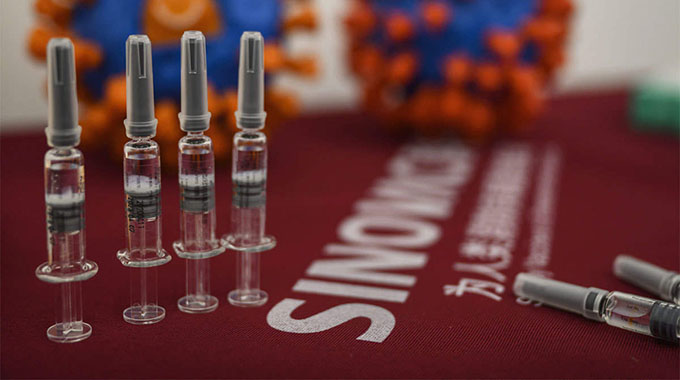
The experimental COVID-19 vaccine developed by China’s Sinovac Biotech can induce quick antibody responses and is suitable for emergency use, preliminary trial results published in the medical journal The Lancet Infectious Diseases showed on Wednesday.
CoronaVac, Sinavac’s vaccine, “was well tolerated and induced humoral responses against SARS-CoV-2, which supported the approval of emergency use of CoronaVac in China and in three phase-3 studies,” the findings read.
While the early to mid-stage trials were not designed to assess the efficacy of CoronaVac, researchers said it could provide sufficient protection, based on their experience with other vaccines and data from preclinical studies with macaques.
The study comes hot on the heels of two U.S. drugmakers Pfizer and Moderna as well as Russia that showed their experimental vaccines were over 90 percent effective based on interim data from large, late-stage trials.
Read more: Global pharmaceutical companies make progress on COVID-19 vaccine
CoronaVac and four other experimental vaccines developed in China are currently undergoing late-stage trials to determine their effectiveness in preventing COVID-19.
How good is the experimental vaccine?
The Sinovac findings, published in a peer-reviewed paper in The Lancet Infectious Diseases, came from results in Phase I and Phase II clinical trials in China involving more than 700 participants.
“Our findings show that CoronaVac is capable of inducing a quick antibody response within four weeks of immunization by giving two doses of the vaccine at a 14-day interval,” Zhu Fengcai, one of the authors of the paper, said.
Researchers said the findings from large, late-stage studies, or Phase III trials, would be crucial to determine if the immune response generated by CoronaVac was sufficient to protect people from the coronavirus infection.
Sinovac is currently running three Phase III trials, in Indonesia, Brazil and Turkey.
Naor Bar-Zeev from Johns Hopkins University, who was not involved in the study, said the results must be interpreted with caution until Phase III results are published.
“But even then, after Phase III trial completion and after licensure, we should prudently remain cautious,” he said.
“Attractive option”
CoronaVac is one of three experimental COVID-19 vaccines China has been using to inoculate hundreds of thousands of people under an emergency use program.
The two other vaccines in the program, both developed by institutes linked to Sinopharm, and another vaccine from CanSino Biologics, were also shown to be safe and triggered immune responses in early and mid-stage trials, according to peer-reviewed papers.
Gang Zeng, a Sinovac researcher involved in the CoronaVac study, said the vaccine could be an attractive option because it can be stored at normal fridge temperatures of 2 to 8 degrees Celsius (36°-46°F) and may remain stable for up to three years.
“(It) would offer some advantages for distribution to regions where access to refrigeration is challenging,” the author said.-CGTN



 Online Reporter