

 Online Reporter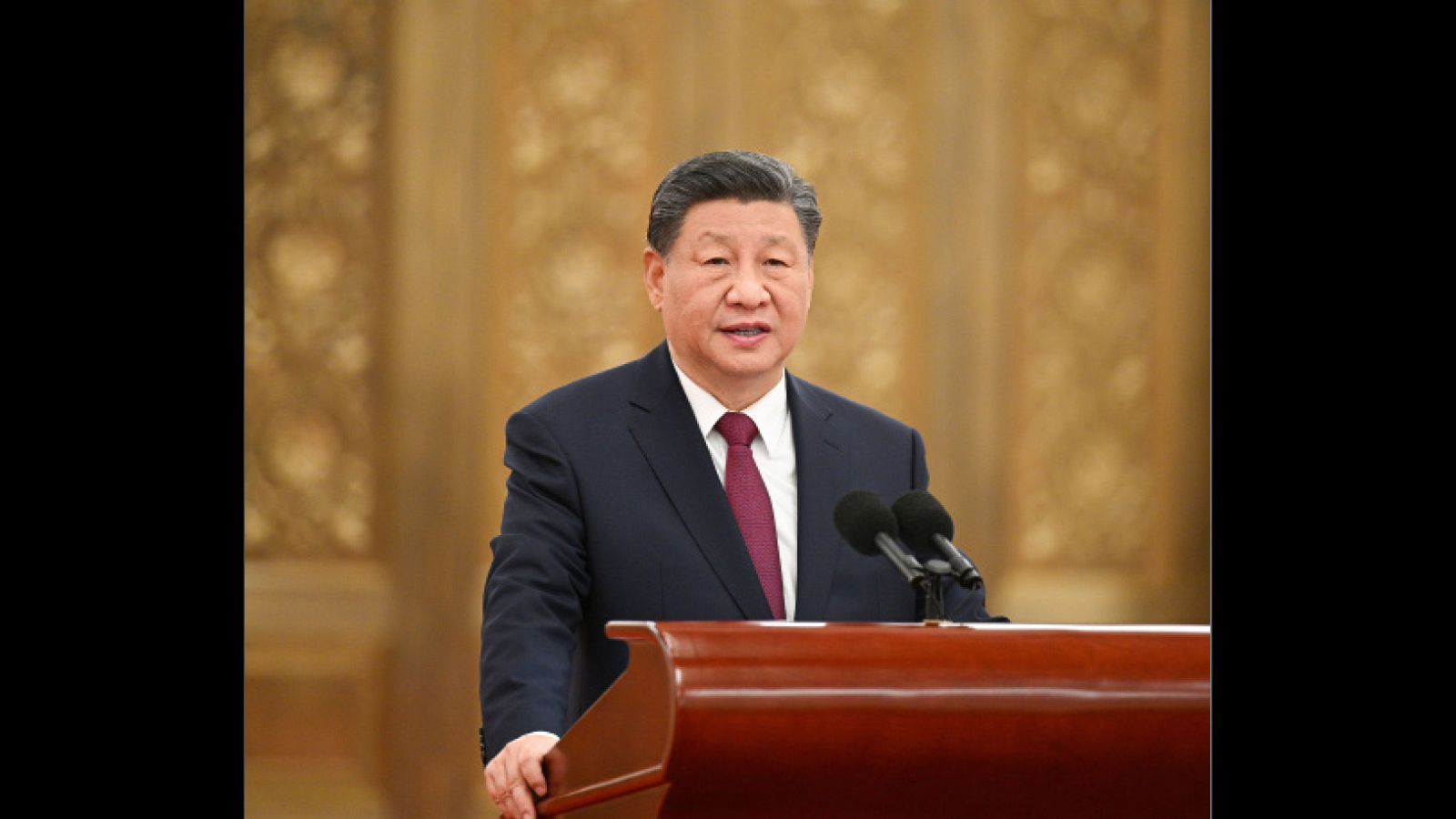
Kuda Bwititi
In Beijing, China
AS China today marks the 80th anniversary of the end of its War of Resistance Against Japanese Aggression, a conflict that consumed an estimated 35 million Chinese lives, the observances will reverberate far beyond its borders.
President Mnangagwa is among 26 Heads of State who will attend the prestigious event, as one of only two leaders from Africa, alongside Congo’s President Denis Sassou Nguesso.
To Zimbabwe, the significance of this commemoration is not merely a diplomatic courtesy, but a profound historical echo. China’s remembrance of its struggle against fascism and imperialism during World War II (WWII) is a powerful narrative that intertwines Zimbabwe’s own liberation story, underpins a formidable modern partnership and validates a strategic foreign policy alignment that has become a cornerstone of its national development.
The connection is rooted in a shared historical experience of resistance. China’s protracted and bloody war against Japanese militarism, a critical theatre of WWII, served as a lesson and inspiration for liberation movements that sprouted decades later across Africa. The triumph of a determined, largely agrarian nation over a formidable imperialist power, which Japan was, provided a blueprint of possibility for colonised Africa.
For figures like President Mnangagwa, the Chinese Communist Party’s mobilisation of its populace for a people’s war demonstrated that revolutionary will could overcome technological and military disadvantage.
President Mnangagwa was a student at the Nanjing Army Command College in Jiangsu in 1964.
Many other revered leaders of Zimbabwe’s liberation struggle also trained in China, including ZANLA Commander General Josiah Tongogara.
It was not a coincidence that they returned to Zimbabwe to become leading figures in the fight against colonial rule.
Their schooling in China was not abstract training, but a practical one that informed the strategies of Zimbabwe’s own liberation struggle against white minority rule. Therefore, when China commemorates its victory, it also, in a symbolic sense, honours the foundational spirit of resistance that animated Zimbabwe’s fight for independence. This establishes a foundation of mutual respect and shared historical consciousness, elevating the bilateral relationship between Harare and Beijing.
This historical affinity has been meticulously forged into a robust modern framework, the Comprehensive Strategic Partnership (CSP) between Harare and Beijing. Only a few nations enjoy this bilateral status with China. This CSP was an upgrade from the All-Weather Friend status formulated in 2018.
To further consolidate ties, President Mnangagwa and President Xi last year met at the Forum on China-African Cooperation (FOCAC) where they agreed to establish a “five-star ironclad” cooperation framework underpinned by five plinths: politics, economy and trade, security, culture and international cooperation.
Under the tenet of politics, there is strong political trust and mutual support. Zimbabwe consistently supports China on its core interests, such as the One-China principle on Taiwan. For the same political plinth, China has been a steadfast diplomatic shield for Zimbabwe, particularly during periods of intense Western pressure and sanctions. In 2008, China and Russia vetoed a United Nations Security Council resolution that would have imposed sanctions on Zimbabwe.
Under the economic platform, China and Zimbabwe are deepening economic and trade cooperation. China is Zimbabwe’s largest source of foreign investment and foremost trading partner, with figures exceeding US$3 billion in 2024.
In security relations, China resolutely supports Zimbabwe in safeguarding its sovereignty and development interests and opposes external interference and illegal sanctions. Under the culture plinth, people-to-people exchanges between the two countries continue to grow. Also, the number of Zimbabwean students studying in China’s universities is on the up, whilst multiple Chinese delegations visit Zimbabwe regularly in various sectors, including health, education and the Arts.
Through their cooperation in international forums, Zimbabwe is a partner of China’s Belt and Road Initiative. Also, Harare holds a special place in Beijing’s strategy for the Global South, which aims to advance multilateralism and establish a more multipolar global system.
The tangible manifestations of this partnership are visible across Zimbabwe’s economic landscape as Chinese investments are irrefutably far-reaching.
Dinson Iron and Steel Company (DISCO), a subsidiary of the Chinese giant Tsingshan Holding Group, owns and operates what is morphing into the largest steel plant in Africa after an investment of over US$1, 5 billion.
The US $1, 5 billion expansion of the Hwange Thermal Power and the multi-million-dollar upgrade of Sino Hydro Kariba South both added 900 megawatts to the national grid, addressing the country’s power shortages.
The Robert Mugabe International Airport modernisation, funded by China, has transformed Zimbabwe’s primary transnational gateway, enhancing connectivity and tourism potential.
Major investments in mining, manufacturing, agriculture and other sectors by Chinese investors have created thousands of jobs and boosted economic activity countrywide.
This consistent flow of engagement is mirrored by a remarkable consistency at the highest political level.
President Mnangagwa is likely the only African leader to have made consistent visits to China over the last three years. His visits are a powerful signal of strategic prioritisation. In 2023, the President visited China for a State Visit at the invitation of President Xi.
Last year, on the sidelines of the FOCAC Summit in Beijing, President Mnangagwa oversaw the signing of 17 Legal Instruments of Co-operation, including 14 Memoranda of Understanding (MoUs) and three Letters of Exchange.
The MoU’s covered agriculture, investment, trade, infrastructure development, mineral extraction, renewable energy and digital economy growth.
Furthermore, at the same FOCAC summit, China pledged $50,7 billion to Africa over three years, with Zimbabwe being one of the beneficiaries of the kitty. As such, President Mnangagwa’s visits to China are not mere photo opportunities but are crucial to the development of the country and transforming the lives of ordinary Zimbabweans.
With Zimbabwe’s economy hamstrung by Western sanctions, alignment with China is not just a choice but a strategic imperative. President
Mnangagwa’s constant presence in Beijing underscores a calculated and unwavering commitment to ensuring that Zimbabwe remains a key partner in
China’s broader African strategy. That he is one of just two African Heads of States attending today’s commemorations speaks volumes of President Xi’s trust in him as a crucial partner in the global political order.
Therefore, China’s 80th WWII anniversary matters to Zimbabwe because it is a multi-layered symbol. It is a reminder of a shared past where nations fought, in their own ways, against forms of domination. It reinforces the narrative that underpins their “iron-clad” friendship, a narrative of resilience, sovereignty and mutual respect.
Also, the visit celebrates the defeat of a historical fascism that was ideologically akin to the colonial oppression Zimbabwe endured. And it provides the historical moral authority for a contemporary partnership that is fundamentally reshaping Zimbabwe’s economy and its place in the world.
In the grand theatre of global politics, China’s commemoration and Zimbabwe’s participation are a performance of a deep, strategic unity. It is a demonstration that their partnership, forged in the fires of anti-imperialist struggles, is now being strengthened in the crucible of 21st Century geopolitics and economic ambition.
For Zimbabwe, the 80th WWII anniversary celebrations underscore a key fact: its most powerful ally is a Strategic Partner whose history makes it a natural compatriot in the ongoing journey toward liberation and development.



