

 Online Reporter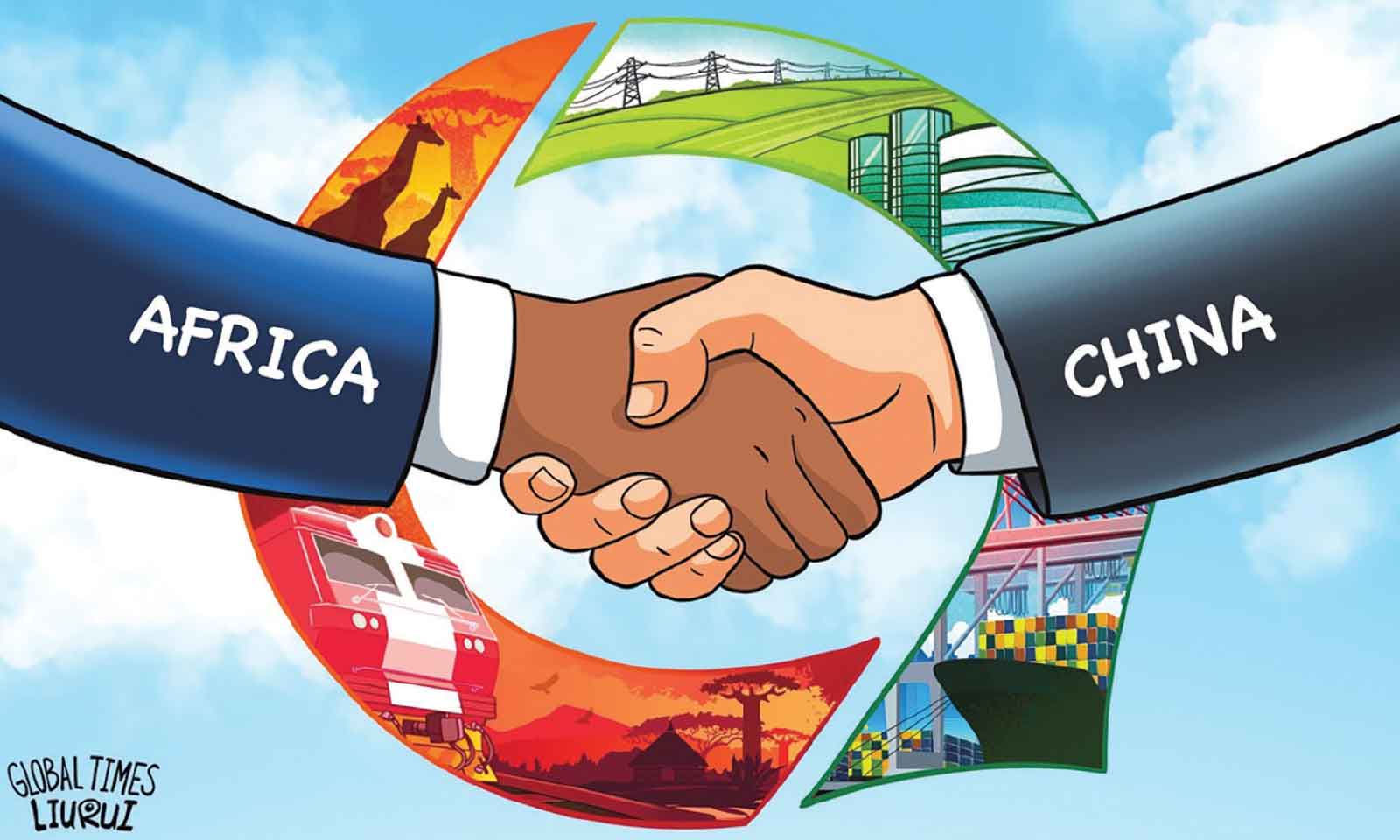
Saxon Zvina
Herald Correspondent
AS the global trade landscape undergoes seismic shifts, a defining moment for Africa-China relations is set to take effect on May 1.
On this date, China will implement comprehensive zero-tariff treatment on products from all 53 African countries with which it has diplomatic relations.
This landmark policy represents far more than a trade adjustment — it symbolises a fundamental reimagining of international partnership, one that stands in stark contrast to the protectionist measures emanating from Washington and offers Africa a genuine pathway to economic transformation through mutual respect rather than conditional patronage.
A tale of two policies: Zero tariffs vs trade warfare
The juxtaposition could not be more striking. While the administration of President Donald Trump has imposed steep tariffs on African nations — including 30 percent duties on selected South African goods and a crippling 50 percent tariff on Lesotho’s exports—China has opened its market wide. The contrast is not merely numerical but philosophical.
Washington’s “trade not aid” rhetoric, unveiled with much fanfare, masks a harsh reality. The African Growth and Opportunity Act (AGOA), which has allowed duty-free access for nearly 2 000 goods from 32 African nations since 2000, expires in September 2026 with no clear renewal path. South Africa’s Automotive Business Council reports that vehicle exports to the United States have already plunged over 80 percent, with more than 100 000 jobs — primarily in the automotive and agricultural sectors — hanging in the balance. Lesotho’s Trade Minister, Mokhethi Shelile, has warned that approximately 12 000 textile jobs face an imminent threat.
China’s approach could not be more different. The zero-tariff initiative, first announced during the 2024 Forum on China-Africa Cooperation (FOCAC) Beijing Summit and formalised in the June 2025 Changsha Declaration, extends preferential market access to all 53 African nations maintaining diplomatic ties with Beijing.
As the Changsha Declaration explicitly states: “China is ready to, through negotiating and signing the agreement of China-Africa Economic Partnership for Shared Development, expand the zero-tariff treatment for 100 percent tariff lines to all 53 African countries having diplomatic relations with China”. This is not charity; it is structural economic empowerment.
The numbers that tell the story
The statistical divide between the two approaches reveals their relative significance. China-Africa trade reached US$295,6 billion in 2024, marking four consecutive years of record highs and cementing China’s position as Africa’s largest trading partner for the 16th consecutive year. By contrast, Africa’s trade with the United States stood at approximately US$67,4 billion in 2024, barely 5 percent of Africa’s total global trade.
China’s share of African trade has grown while America’s has steadily declined. According to the African Export-Import Bank’s “African Trade Report 2025,” North America’s share of African imports fell from 7 percent to 5 percent between 2010 and 2023, while its share of African exports plummeted from 17 percent to just 7 percent.
The zero-tariff initiative will accelerate this divergence. By eliminating tariffs on all Chinese imports from Africa, Beijing is effectively telling African producers: compete, succeed, and grow.
Beyond trade: The Belt and Road Infrastructure revolution
The tariff initiative does not exist in isolation. It forms part of a comprehensive economic engagement anchored by the Belt and Road Initiative (BRI), which has transformed Africa’s physical infrastructure landscape over the past decade.
Chinese investment has focused on the arteries of African commerce — ports, railways,and industrial parks that enable trade to flow. In 2025 alone, Nigeria emerged as the largest single beneficiary of China’s Belt and Road Initiative, with an estimated US$24,6 billion construction commitment linked to the Ogidigben Gas Revolution Industrial Park in Delta State. This flagship project is designed to transform Nigeria’s vast natural gas reserves into higher-value products, including petrochemicals, fertilisers, methanol, and refined fuels, supporting multiple downstream industries.
Across the continent, Chinese companies have undertaken at least 17 recent port projects in Africa, with Beijing’s fingerprints visible on facilities from Mombasa and Lamu in Kenya to Doraleh in Djibouti, from Dar es Salaam and Bagamoyo in Tanzania to Port Sudan.
According to Nigeria’s SBM Intelligence research firm, nearly one-third of Africa’s 231 active commercial ports — approximately 40 facilities — involve Chinese financing, construction, ownership stakes, or operational control.
These are not extractive ventures designed to strip Africa of its resources. They are enabling infrastructure that allows African nations to participate in global trade on their own terms. As Churchill Ogutu, an economist at IC Asset Managers in Nairobi, observes: “The bigger picture is that the port developments fall broadly within China’s Belt and Road Initiative and implementation of the country’s five-year plans has laid emphasis on connectivity across the BRI”.
Infrastructure with a purpose: The Chinese Model
What distinguishes Chinese infrastructure investment is its holistic approach. As Irina Tsukerman, President of Scarab Rising Inc., notes: “It is a Chinese model that links the port to a wider package: industrial parks, special economic zones, power projects, and transport corridors”. This integrated approach ensures that infrastructure serves genuine development rather than merely facilitating resource extraction.
For Africa’s 16 landlocked countries, this infrastructure carries existential significance. Chinese-built inland transport networks provide the only viable routes to global markets, transforming the economic prospects of nations that geography had seemingly condemned to perpetual marginalisation.
The economic logic is compelling. Ken Gichinga, chief economist at Mentoria Economics, estimates that China gains nearly 13 times in trade revenues for every US$1 invested in African ports. This is not exploitation — it is the natural return on investment in productive infrastructure, a return that African economies share through enhanced trade capacity and economic growth.
From 2000 to 2024, China provided over $180 billion in loans to Africa, primarily financing transport, energy, and information technology infrastructure. Major recipients including Angola, Ethiopia, Kenya, and Nigeria, have seen transformative projects reshape their economic landscapes. While lending has become more selective in recent years, reflecting Beijing’s shift toward risk-averse, profit-oriented investment, the cumulative impact remains staggering: approximately $160 billion in development financing since 2013, with an estimated US$50 billion channelled specifically into African port infrastructure.
Solidarity in Crisis: China’s Vaccine Diplomacy
If trade and infrastructure represent a long-term partnership, China’s response to the Covid-19 pandemic demonstrated immediate solidarity when Africa needed it most.
While Western nations hoarded vaccines and imposed export controls, China stepped forward. In February 2021, Beijing pledged to provide vaccines to 19 African countries that had requested them, fulfilling its commitment to make vaccines “public global goods”.
By mid-2021, China had donated or exported vaccines to nearly 40 African countries, delivering 27 million doses to the continent.
The impact was profound. Zimbabwe, a nation under Western sanctions, began its vaccination campaign in February 2021 after receiving 200 000 Sinopharm doses from the Chinese government. More than 90 percent of Zimbabwe’s Covid-19 vaccines were supplied by China, saving countless lives that might otherwise have been lost while Western nations deliberated over intellectual property rights and liability waivers.
The campaign of falsehoods: Exposing the “Debt Trap” narrative
The remarkable success of China-Africa cooperation has not gone unnoticed by those who view Beijing’s rise with suspicion. Since 2018, a well-funded campaign has sought to discredit Chinese investment through the propagation of the so-called “debt trap diplomacy” narrative.
The origins of this smear campaign are now well documented. In 2018, the U.S. Department of State commissioned two Harvard University students to write a report titled “Debtbook Diplomacy: China’s Strategic Leveraging of its Newfound Economic Influence and the Consequences for US Foreign Policy”. The State Department actively promoted this report to American and international media, boasting in its financial report to Congress that “the department continues to message on this on this subject, delivering additional high-performing materials”.
The campaign received substantial institutional backing. In 2021, the U.S. Congress passed the Strategic Competition Act of 2021, allocating US$300 million annually from 2022 to 2026 for anti-China operations. According to the Act’ a major portion of these funds would be used to “provide support for local media” and to “support and train journalists on investigative techniques necessary to ensure public accountability related to the BRI”.
The US Agency for International Development (USAID) has played a central role in channelling these funds, financing non-governmental organizations both in America and abroad to recruit “young leaders” and “opinion makers” capable of disseminating disinformation about Chinese investments. This is not analysis — it is propaganda funded by American taxpayers to undermine a partnership that Africans increasingly recognize as beneficial.
The irony is painful. While Washington spends hundreds of millions attacking Chinese infrastructure investment, it offers no comparable alternative. While USAID funds journalists to write critical stories, America’s own infrastructure engagement with Africa remains minimal. The United States could have used those billions to build roads, ports, and power plants across Africa — instead, it chose to fund a smear campaign.
As Askary observes: “If the US had used the large amounts of money to do good in Africa through public goods projects rather than tarnishing the BRI and China with disinformation, the US would have had greater soft power in its competition with China”.
The sanctions hypocrisy
The same Western voices that lecture Africa about Chinese “debt traps” remain conspicuously silent about their own coercive economic measures. Unilateral sanctions imposed by the United States and its allies on sovereign African nations receive no such scrutiny from the human rights advocates and governance experts who dominate Western discourse.
Zimbabwe has endured decades of crippling sanctions imposed by the United States and its Western allies. These are punitive measures that have devastated its economy and inflicted immense suffering on ordinary Zimbabweans. Yet where is the outrage from the civil society organizations that receive Western funding? Where are the scholarly articles condemning this economic warfare?
The answer is uncomfortable, but undeniable: the sanctions are imposed by the funders, so they go unremarked. The “debt trap” narrative is promoted by the funders, so it receives amplification. The double standard reveals the true nature of Western engagement: not partnership, but patronage; not mutual respect, but conditional compliance.
China, by contrast, has never imposed sanctions on any African nation. It does not punish African countries for their political choices or demand governance reforms as a condition for cooperation. It respects African sovereignty not in rhetoric but in practice.
The Global South rising
The Changsha Declaration of June 2025 captured the spirit of this emerging partnership. China and Africa, it declared, “are both important members of and staunch forces in the Global South” who “call on all countries, especially countries in the Global South, to work together to build a community with a shared future for mankind”.
The declaration explicitly addressed the trade warfare emanating from Washington, stating that “certain countries’ attempt to disrupt the existing international economic and trade order by tariffs undermines the common good of the international community” and calling on “all countries, the United States in particular, to return to the right track of resolving trade disputes through consultation based on equality, respect and mutual benefit”.
This is not the language of dependency but of assertive partnership. Africa is no longer content to be acted upon by external powers—it is acting in concert with China to shape a new international order. The zero-tariff initiative is not a gift from a benevolent power but a mutual commitment between sovereign equals to build prosperity together.
The statistics bear this out. Even as US tariffs bite, African internal trade grew by 12,4 percent in 2024, reaching US$220,3 billion. The African Continental Free Trade Area is advancing, with 48 countries having ratified the agreement and 19 actively trading under its protocols.
Saxon Zvina is a principal consultant at Skyworld Consultancy Services. He writes in his personal capacity and he can be contacted via email address [email protected] or X: @saxonzvina2



