

 admin
admin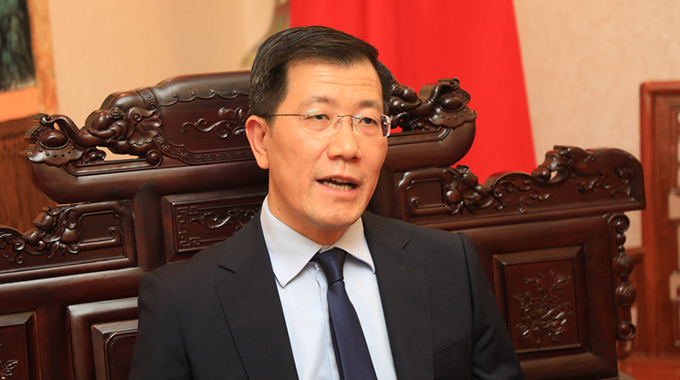
The novel coronavirus has spread globally, affecting close to 20 000 people and causing over 300 deaths since the first cases were detected in central China in December last year. The Chinese government is working with the Government of Zimbabwe on containment and mitigation measures. Here, Chinese Ambassador to Zimbabwe Mr Guo Shaochun speaks on the latest situation
Q: What are the latest developments on the epidemic?
A: So far, most confirmed and suspected infections of the novel coronavirus have been recorded in central China’s Hubei Province, the centre of the virus outbreak. By 12am on February 2, there had been 17 205 confirmed cases in the Mainland of China, including 361 deaths while 475 people had been discharged from hospitals after recovery. Fifteen confirmed cases have been reported in Hong Kong SAR, eight in Macao SAR and 10 in Taiwan Province.
The number of the discharged patients has outpaced the number of deaths. I believe the gap between the two figures will widen day-by-day until the epidemic ends.
Outside China, 23 countries have reported a total of 146 confirmed cases, including one death. China is releasing daily updates on the English website of its National Health Commission. Easy access to information is key to winning this battle.
Q: What is China doing to contain the spread of the virus within its borders?
A: Many of the measures adopted by the Chinese government go well beyond the requirements of International Health Regulations (2005).
Starting from the most affected areas, Wuhan has been put on lock down. Within eight days, Wuhan built a specialised hospital with 1 000 beds to treat the novel coronavirus patients. Today, it has started admitting patients. In a few days, another new hospital will also be commissioned. Over 6 000 medical staff and 52 medical teams from all over the country are now in Wuhan to join the fight.
Large quantities of food and medical supplies have been delivered there.
Across the country, governments at all levels are working against the clock. At the leadership level, President Xi Jinping has given important instructions on curbing the epidemic and personally chaired a meeting on the first day of the lunar New Year to deploy and mobilise resources. A central leading group has been set up to oversee the national response.
We now have a comprehensive and multi-tiered prevention and control programme, covering the whole country, with a special focus on Hubei Province.
Under it, a series of unprecedented moves are being implemented, including extending the Spring Festival holiday, postponing the spring semesters of schools and universities, adopting transport restrictions in various areas, and suspending mass gatherings.
Thirty-one provinces, municipalities and autonomous regions have activated level-1 public health emergency response and stepped up health check on outbound travellers to control the spread of the virus. As of January 29, China has allocated 27.3 billion yuan, which is nearly US$4 billion, to support the battle.
To raise awareness about the virus, we are also running an intense information campaign to guide people on how to prevent infection and respond to suspected symptoms.
By strictly controlling the sources of infection and breaking the chain of transmission, we have managed to prevent the large-scale spread of the virus and help reduce cases in other parts of China and other countries.
China is known for its efficiency in mobilising resources in times of major challenges. We have a proven record in successfully combating SARS, H1N1 influenza, avian influenza and Ebola. Over the past seven decades, we have built a solid technological and material foundation. All of this gives us full confidence in winning this fight.
Q: What has China been doing to lead the global fight against the virus?
A: We believe openness, transparency and international cooperation are critical in containing the epidemic. When the novel coronavirus was first discovered in Wuhan, we shared the genome sequence of the virus with the WHO and scientists across the globe.
Since then, we have been actively sharing information with the WHO. Experts from the WHO were invited to Wuhan to gain first-hand knowledge and facilitate the global fight against the epidemic. Chinese scientists have participated in meetings held by the WHO to share and discuss the latest information on the outbreak.
China has been increasing bilateral communication and coordination with the health authorities in Japan, Thailand, South Korea, the United States and other countries to verify confirmed or suspected infections.
China’s serious commitment to its international responsibilities and to an open and transparent approach has been widely recognised by the WHO and leaders and senior officials of many countries and international organisations. All of them expressed their confidence in China’s capacity to secure victory against the epidemic.
According to the WHO Director-General, in many ways China is setting a new standard for outbreak response. The Chinese government is to be congratulated for the extraordinary measures it has taken to contain the outbreak, despite the severe social and economic impact those measures are having on the Chinese people. The world would have seen many more cases outside China by now, if it were not for the Chinese government’s efforts, and the progress they have made to protect their own people and the people of the world.
We thank the international community, including Zimbabwe, for its full understanding and support for China. We are determined to continue our cooperation with international partners.
Q: Is the Chinese Embassy taking steps to help protect Zimbabwe from the virus?
A: The Chinese Embassy in Zimbabwe is making an all-out effort to prevent the virus from spreading to Zimbabwe. We have been updating the Zimbabwean public on the latest developments regarding the epidemic on a daily basis and have also established an information-sharing mechanism with Zimbabwean authorities in health, foreign affairs and airports.
We have requested Chinese nationals coming to Zimbabwe to cooperate with the quarantine measures at Zimbabwean ports of entry and issued four consular notices to provide recommendations for epidemic prevention.
We have called on the local Chinese communities and Chinese businesses and institutions to remind their members and employees who have returned to China for holiday, to raise the awareness of prevention.
Those who have returned to the most affected regions in China, such as Hubei Province, are advised to delay coming back to Zimbabwe until the situation eases in order to reduce the risk of bringing the virus to Zimbabwe.
Those who have returned to Zimbabwe from the worst-hit areas in China are requested to undergo a self-quarantine of two weeks at home, not to go to public places, offices, or any gatherings. If suspected symptoms appear, they are asked to seek medical help and report to the Embassy without any delay.
The Embassy will stay in close communication and work hand-in-hand with the Zimbabwean Government to contain and mitigate the impact of the epidemic.
Q: There are many Zimbabweans, particularly students, who are now in Hubei and some other parts of the country affected by the epidemic. Is there cause for concern for their safety and daily life?
A: Indeed, this epidemic has struck hard in some parts of China. But the government has taken effective measures to minimise the impact on the people’s daily life, including the foreign nationals in the cities.
We encourage the foreign community in China to be calm and confident. We promise that those staying in the city will have no problem in meeting their demand for daily necessities and medical assistance.
Wuhan authorities have released guidelines and hotlines for foreigners, especially foreign students, to make enquiries and request help.
In the meantime, an emergency response mechanism has been created by the Foreign Ministry of China.
The Embassy is also in touch with the Zimbabwean Government concerning the well-being of the Zimbabwean community in China.
Furthermore, China’s National Immigration Administration has issued a guideline for novel coronavirus (2019-nCoV) prevention in multiple languages for foreigners in China. It also answers questions concerning immigration and entry policies for foreigners, including entry and exit, as well as visa and residence permit applications. The information is being sent to foreigners in China via e-mail, text message, and Weibo and WeChat apps.
Q: What does China think of WHO’s decision to declare the epidemic a public health emergency of international concern (PHEIC)?
A: We value our cooperation with the WHO and welcome the WHO’s participation in the response to this outbreak. WHO Director-General Dr Tedros visited China a few days ago and WHO experts made a field trip to Wuhan. In his announcement, Dr Tedros underlined China’s extraordinary and strong measures and said, in many ways, China is setting a new standard for outbreak response.
As he rightly pointed out, the decision to declare the epidemic a public health emergency of international concern is not a vote of no confidence on China. On the contrary, the WHO continues to have confidence in China’s capacity to control the outbreak. But since the extent of the spread of the virus is unknown, the organisation is concerned that the outbreak outside China might worsen and the virus might spread to countries with weaker health systems.
He also stressed that there is no reason for measures that unnecessarily interfere with international travel and trade. WHO doesn’t recommend limiting trade and movement and calls on all countries to implement decisions that are evidence-based and consistent.
China will continue to act with a serious and professional attitude, maintain close communication and cooperation, counter the outbreak and safeguard regional and global public health security together with WHO and other countries.



 Online Reporter