

 admin
admin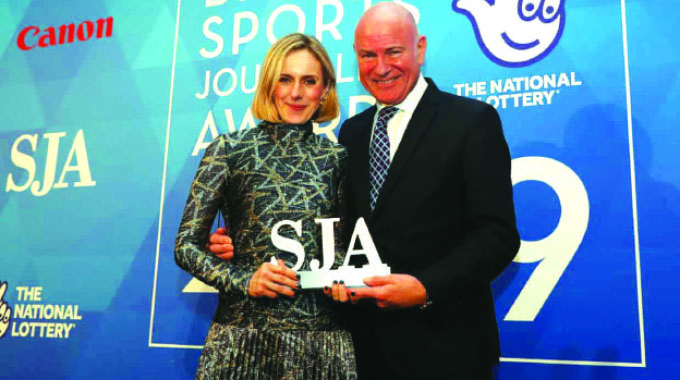
Sharuko on Saturday
THE world can be such a depressing place — the global spike in the Coronavirus infections and deaths makes miserable reading, reminding us there will always be more important things than football.
There is a tendency, among our constituency, to try and pretend that our game is the be-all-and-end-all of everything in this world, ever since Bill Shankly told us that football is not a matter of life and death, but something much more than that.
It’s a syndrome that also runs deeply among football writers and commentators, this imaginary feeling of importance, this fictitious belief that we are the be-all-and-end-all, that somehow we are God’s ultimate gift to the game, in particular, and life in general.
We meet people on the street who tell us how good we are, that we are their idols, we read things on Twitter and Facebook where people praise us, and it inflates our egos, we begin to feel very important, the ultimate guardians of the truth and the perfect opinion.
We treat those who disagree with us with both contempt and ridicule, dismissing them as a people who know nothing, while we brag about knowing everything, as if that’s even remotely possible, in this world littered by human frailties.
Maybe, that’s what happens when you join the group of men of a certain age but I have been thinking a lot, of late, questioning a lot of things, and appreciating life even more.
That probably explains why the best story I read this week had nothing to do with Manchester United making it nine matches, without defeat, and or even Donald Tiripano’s fireworks in the second ODI in Bangladesh which almost brought an improbable win for the Chevrons.
Instead, the best story, for me, was the amazing tale of a three-year old Syrian girl, who was taught by his father the unique art of using laughter, to deal with the misery, and dangers, of the bombardment of her town in an endless war.
“Girl, 3, who laughs at bombs, escapes Syrian war,” the BBC thundered in its headline on Wednesday as news broke out that she, and her family, had finally crossed into the safety of Turkey.
Her name is SaIwa and, just in case you missed the story, she is a three-year old girl taught by her father to laugh, every time she heard a loud explosion, as a way of helping her deal with the constant bombardment of her town.
Her father Abdullah Mohammad, worried about the possible psychological damage the sound of bombs would have on his daughter, devised a unique way of making her not fear it and, instead, laugh at it.
He used fireworks to teach her to always laugh at booming sounds, filmed it all when she started laughing as the bombs rained down their town, and the video went viral on social media.
It led to the Turkish authorities intervening with their army helping the family escape from the horror, of what has become the life and times of their home in Idlib, into the safety of Turkey.
There is something special about women and children.
It’s what we are taught at journalism school, and that’s why you will always read reports, in the event of let’s say an accident or an armed attack, placing an emphasis on the number of women and children who would have been killed.
That little Salwa lives today, for all the horror she has faced, and the unorthodox way she has dealt with the turmoil, is something we should celebrate and her flight into safety in Turkey could not have come at a better time with the world set to celebrate International Women’s Day tomorrow.
A time for all the great women in this profession to celebrate the journey they have travelled, from the very beginning when they smashed the barriers, which used to make this job something of an all-male dominion, back in the days when some of us arrived on the scene.
There were no female sports journalists in the country, when I arrived at this newspaper in November 1992, but now things have changed dramatically and some of the best sports scribes, photographers and pundits are now women with my good sisters Merit Mudziwembiri and Lindiwe Munjanja having set the pace.
Today, we have a fine crop of female sports journalists — Grace Chingoma, Ellina Mhlanga, Grace Chirimhanzu, Yvonne Mangunda, Blessing Malinganiza, Patricia Jacobs and Mercy Ndlovu — and it’s now only a matter of when, rather than if, we will get the first woman to occupy the post of Sports Editor of this newspaper in its more than hundred-year history.
The revolution isn’t restricted to Zimbabwe only, one of the top African football journalists is a Ugandan woman, Usher Komugisha, as good a reporter as any on the continent.
And, for the first time in the 43-year history of the Sports Journalists Association of the United Kingdom awards, a female journalist, Marina Hyde won the coveted Sportswriter of the Year gong in January this year.
Marina was commended for her excellent coverage of the Women’s World Cup, her amazing piece on Tiger Woods’ incredible comeback win at the Masters and Theresa May’s decision to knight cricket commentating legend, Geoffrey Boycott.
So, to all my sisters in the profession, I just want to thank you for breaking the barriers, showing the world that you can do also it, shaming all those prophets of doom who argued this was a man’s field and living to enjoy your dream.
No one knows what little Salwa will become when she grows up but, hopefully, she will also break barriers and, even if she doesn’t, the very fact she lives to this day, to celebrate International Women’s Day tomorrow, given everything she has faced, is in itself a miracle.
MAPEZA, MADMEN, MINEFIELDS AND ALL THE MADNESS
So, as we had all predicted, Norman Mapeza’s romance at Chippa United, the most chaotic football club in the world, was brief and came to a predictable premature ending this week.
Actually, the only surprise was that it lasted five months because there have been instances, in the past, where some of the coaches barely lasted three weeks at this mad house disguised as a professional football club.
Twenty plus coaches, in the past nine years, is just sheer madness.
But, for this guy called Chippa Mpengesi, who runs his club in a way that makes the running of a tuck shop appear like some fine art, it’s what surprisingly defines professionalism.
However, this is a man who is an insult to the word patience, a man who is mockery to the virtues of professionalism, when it comes to the way he runs his club, and a man who is a cancer to the values of decency.
He is the ultimate symbol of a lunatic, who lives in his own weird world, who finds pleasure in operating on the edges of insanity when it comes to his decision-making in this game, a deranged fellow who makes and irrationality look so beautiful.
He makes confusion look like an art.
Incredibly, he is not alone, in this club of the mad men in charge of football clubs in the world.
Take, for example, George Reynolds who somehow rose from early years a life of petty crimes, a four-year jail sentence credited with changing him, and launching him onto a path which eventually saw him become a successful businessman.
Armed with a US$500 million fortune, he purchased English side Darlington in 1999, saying he wanted to turn the club into a Premiership side.
Well, he built a US$40 million 25,000 seater stadium for the then fourth-tier side, which he named the ‘‘Reynolds Arena,’’ but he forgot this was just a modest club with an average attendance of just 2000 fans and the stadium was always virtually empty.
Five years after buying Darlington, he was arrested in 2004 and jailed the following year, after being convicted of money laundering.
Poor Darlington were relegated into the Conference, went into administration once more, they left the ‘’Reynolds Arena,’’ and they changed their name to ‘’Darlington 1883’’ as they started life in the eighth-tier league.
Then, there was Zeljko Raznatovic, a notorious warlord who bought Serbian FK Oblic and took them into the top-flight league only for reports to emerge the club had built their success by using the owner’s criminal contacts to threaten other clubs to lose their matches.
One opposition star player was locked in a garage, to prevent him from playing against FK Oblic, before this drama ended with the assassination of Raznatovic in 2000.
What about Gigi Becali, who took over top Romanian club Steaua Bucharest, a man with a painting of himself, as Jesus, at his home?
He ended up being convicted of kidnapping but that was before he had shocked European football by refusing to sit alongside the Ajax Amsterdam president because he claimed the Dutchman’s shoes were too cheap.
THERE ARE MANY SUCH MADMEN IN THIS BEAUTIFUL GAME
Then, there is Jesus Gil, the former Atletico Madrid strongman, who holds the record for the number of managers fired in 17 years, with 39 coaches being dismissed.
This is the same man who once rode an elephant around Madrid after his team had won a match.
The same man who once told the media he wished the plane carrying his team back home would crash, after Atletico Madrid had lost a match against Las Palmas, because their loss had soiled his good name.
The same guy who built an apartment without consulting any architects, surveyors and all the technical people needed for such a venture and, as had been feared by many, the building eventually collapsed, killing 58 people.
The very same club president who scrapped the Atletico Madrid youth team because he said there was no point in having such a team and, that it had a player who would become a legend at Real Madrid legend, Raul, didn’t even concern him at all.
Then, there is Zamalek chairman, Mortada Mansour, who has hired and fired more than 20 coaches since he took over at the Egyptian powerhouse.
When asked how his team had lost to Mamelodi Sundowns in the CAF Champions League final a few years ago, Mortada said he blamed the defeat to ‘’magic and sorcery,’’ practised by the South Africans.
‘’Is it natural to waste 18 chances in front of goal? Things were obviously not normal and there was magic and sorcery involved,’’ he said.
Mapeza took a huge risk to join Chippa, which only the bravest of coaches can do, and he walks out of that jungle, disguised as a football club, with his reputation enhanced.
It’s easy to blame Mapeza but even a successful coach like Micho went into bed with Mortada recently, when he joined Zamalek, and the romance ended as quickly as many had predicted.
Mapeza found Chippa United without a clue of how to win a football match this season, with some pundits already condemning them into Division One, but he left them five points into the safety zone.
He went into a jungle, because he believes in himself, and left with his reputation enhanced and there will be many clubs knocking on his door for his services.
Even three-year old SaIwa would have laughed at the way Chippa runs his club.
To God Be The Glory!
Peace to the GEPA Chief, the Big Fish, George Norton and all the Chakariboys in the struggle.
Come on United!!!!!!!!!!!!!!!!!!!!!!!!!
Ole, Ole, Ole, Ole, Ole, Ole, Ole Ole!
Text Feedback — 0772545199
WhatsApp — 0772545199
Email — [email protected], [email protected]
You can also interact with me on Twitter — @Chakariboy, Facebook, Instagram — sharukor and every Wednesday night, at 9.45pm, when I join the legendary Charles “CNN’’ Mabika and producer Craig “Master Craig’’ Katsande on the ZBC television mag¬azine programme, “Game Plan”.



 Online Reporter