admin
admin
Roselyne Sachiti Features Health & Society Editor
Tomorrow, Zimbabwe joins the rest of the world in commemorating the International Women’s Day 2020 (IWD).
Running under the theme, “I am Generation Equality: Realising Women’s Rights,” the commemorations come at a time when the rights of women are taking centre stage in the development trajectory of Zimbabwe in particular, and the globe in general.
At the same time, women speaking up and continuing to make strides in various sectors of the economy, business, political and social spheres.
Sadly, some women face challenges like gender-based violence, political and financial exclusion that constantly reverse the gains attained so far.
IWD is dedicated to celebrating women’s achievements in the social, economic, cultural, and political spheres.
The day, collectively founded by women, also spotlights gender parity and women’s rights.
It has proved to be an important tool for policymakers striving towards gender equality.
This year, IWD comes as the world is also marking the 25th anniversary of the adoption of the Beijing Platform for Action, as well as the first time that progress on the implementation of the Platform is reviewed in light of the 2030 Agenda for Sustainable Development.
Zimbabwean women have had a fair share of successes, empowerment opportunities, access to education, healthcare, agriculture among others.
When educated, Zimbabwean women know what they want and clearly speak their mind about their dreams and aspirations, fears and what drives them.
Sound policies
All this has been catalysed by sound policies by the Government. At independence, the Government committed to providing education for all irrespective of race, gender or religion.
Through the Education Act of 1982, education was declared a basic human right, making primary and secondary public education free and compulsory.
According to the Zimbabwe Education Act (Chapter 25:04) all children have the right to education.
Such legislation paved way for equality and equity between girls and boys, and women and men as they all could access education without discrimination.
Aviation
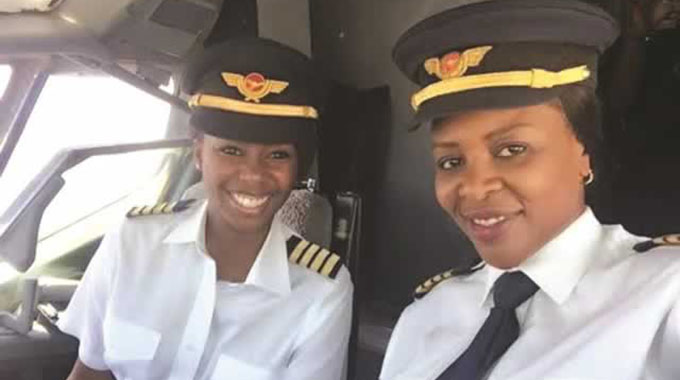
Education was a huge step for women as it opened many doors in areas that were once male-dominated.
Examples are in the aviation industry where female pilots like Captain Emily Njovana, Chipo Matimba, Elizabeth Simbi Petros, among others, took over cockpits of huge planes, a job once viewed as a domain for men.
Others work in the aviation industry as engineers. Today, the sky is not even the limit for women who want to start a career in aviation.
Politics
While Zimbabwe has a legal framework that values gender equality and equity in politics, the country is also a signatory to many declarations aimed at widening opportunities for women’s leadership and decision-making.
The new Constitution which came into effect in 2013 made available a quota of 60 seats for women for proportional representation in Parliament, increasing the number of women in Parliament from 16 percent to 34 percent.
Zimbabwean women have also done well in politics, though a lot still needs to be done to increase their participation.
Women like Oppah Muchinguri-Kashiri hold powerful positions in Government, heading the Ministry of Defence and War Veterans Affairs. At party level, she is the Zanu PF national chair, which is the fourth in command.
Hon Monica Mutswangwa, serves as Information, Publicity and Broadcasting Services Minister, another powerful position.
Zimbabwe also has five female Provincial Affairs Ministers.
These include Hon Judith Mkwanda (Bulawayo), Hon Ellen Gwaradzimba (Manicaland), Hon Aplonia Munzverengwi (Mashonaland East), Hon Monicah Mavhunga (Mashonaland Central) and Hon Mary Thandiwe Mliswa (Mashonaland West).
The common denominator about these influential and powerful women in Government and their parties is that they also distinguished themselves in the war of liberation.
At the height of political tension between the three major political parties in Zimbabwe (ZANU PF, MDC-T and MDC), women like Hon Priscilla Misihairabwi-Mushonga confidently sat on the negotiating table to craft the Global Political Agreement, which saw the formation of the Government of National Unity, and her voice was heard, 2008-2013.
Up to 2019, women like Dr Arikana Chihombori-Quoao worked as the African Union Ambassador to the United States, a challenging job that brought out her competencies.
In Zimbabwe, the number of female parliamentarians has increased significantly in the past decade though not to the level women want.
Several studies prove that unlike their male counterparts, female political candidates face specific barriers that may deter them from running for elected office, including sex stereotyping, political socialisation, and balancing work and family.
Media
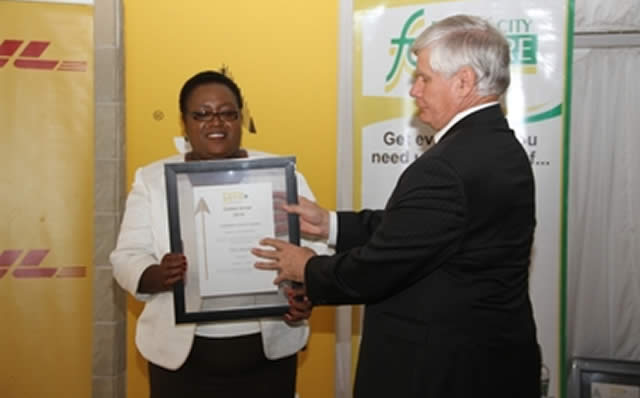
Over the past few years, women have started claiming their space in Zimbabwe’s newsrooms taking the reins of newspapers, a previously male-dominated area.
Victoria Ruzvidzo; the editor of The Sunday Mail, Wendy Nyakurerwa-Matinde; Manica Post, Gugulethu Ncube; Umthunywa, Faith Zaba; The Zimbabwe Independent, are at the helm of big newspapers, something that was unthinkable years back.
Business
Women like Divine Ndhlukula, Chipo Mtasa, Grace Muradzikwa, Angeline Vere, Nancy Guzha, among others, have been holding the torch with pride and precision.
For example, the portfolio of Chipo Mtasa, the managing director of TelOne since 2013 speaks volumes about how women can shine when opportunities are available.
Mtasa was previously the chief executive officer of the Rainbow Tourism Group (RTG). She also worked as the finance director of Sheraton Hotel and RTG. She is a Chartered Accountant by profession.
When it comes to entrepreneurship, women have proved to be masters of the art, from businesses as small as vending to big enterprises.
In agriculture, Zimbabwean women have also done exceptionally well.
Checking progress globally
A report, “Women’s Rights in Review, 25 years after Beijing” takes stock of how the landmark gender equality plan, the Beijing Platform for Action, is being implemented and calls for greater parity and justice.
According to the report, there has been faltering progress with hard-won advances being reversed by rampant inequality, climate change, conflict and exclusionary politics.
The review also points out a lack of effective action to boost women’s representation in key decision-making and warns that the platform will never be realised if all women and girls are not acknowledged and prioritised.
“The review of women’s rights shows that despite some progress, no country has achieved gender equality,” said UN Women’s executive director Phumzile Mlambo-Ngcuka.
Maintaining that “equality isn’t just one-quarter of the seats at the tables of power”, she said, however, that was “the current reality of women’s representation, across the board”.
Despite unprecedented global challenges, the report proves that positive change is possible, by citing feminist movements globally; illustrating the success of women’s collective actions for accountability on crimes against them; and showcasing successful initiatives in scaling up public services to meet women’s rights — from increasing access to contraception and childcare, to reducing domestic violence and increasing women’s participation in politics and peace-building.
“Women’s Rights in Review” also highlights advances since the Beijing Platform was adopted, namely more girls in school, fewer women dying in childbirth, more women in parliaments and a greater number of laws supporting women’s equality.
Ms Mlambo-Ngcuka said, “2020 presents an unprecedented opportunity to turn things around for current and future generations of women and girls”.
To accelerate progress during the UN Decade of Action, she pointed to her agency’s Generation Equality campaign “to deliver game-changing results to advance equality for women and girls”.
Presenting key findings of a background paper on the subtheme of PEOPLE, during a plenary titled “People, Pillar of the SDGs” on the sidelines of the 6th Africa Regional Forum on Sustainable Development in Victoria Falls last week, United Nations Population Fund East and Southern Africa (UNFPA-ESARO) Director, Dr Julitta Onabanjo said the gender dimension to development can never be ignored as it cut across all the SDGs.
“While we pride ourselves in women in leadership, participation, gender parity decision making, we continue to see child marriages, female genital mutilation, access to justice and gender based violence.”
“Continental reviews of ICPD25 and Beijing+25 highlights the need to address violence against women and girls, capacity gaps in training and lifelong learning for women and girls.
“Access to healthcare, including sexual and reproductive health and reproductive rights and legislation that assures quality and non-discrimination with equal access to justice,” she said.
She highlighted underlying drivers that include weak systems and structures at institutions and communities, limiting culture and social norms, cultural practices and unfulfilled rights inclusion especially gender and youth.
Other factors are a result of weak governance, partnership, cooperation and regulation.
She also pointed out constrained domestic financing and increasing shocks, climate action, conflicts and its triggers.
Feedback: [email protected] [email protected]


 Online Reporter