Online Reporter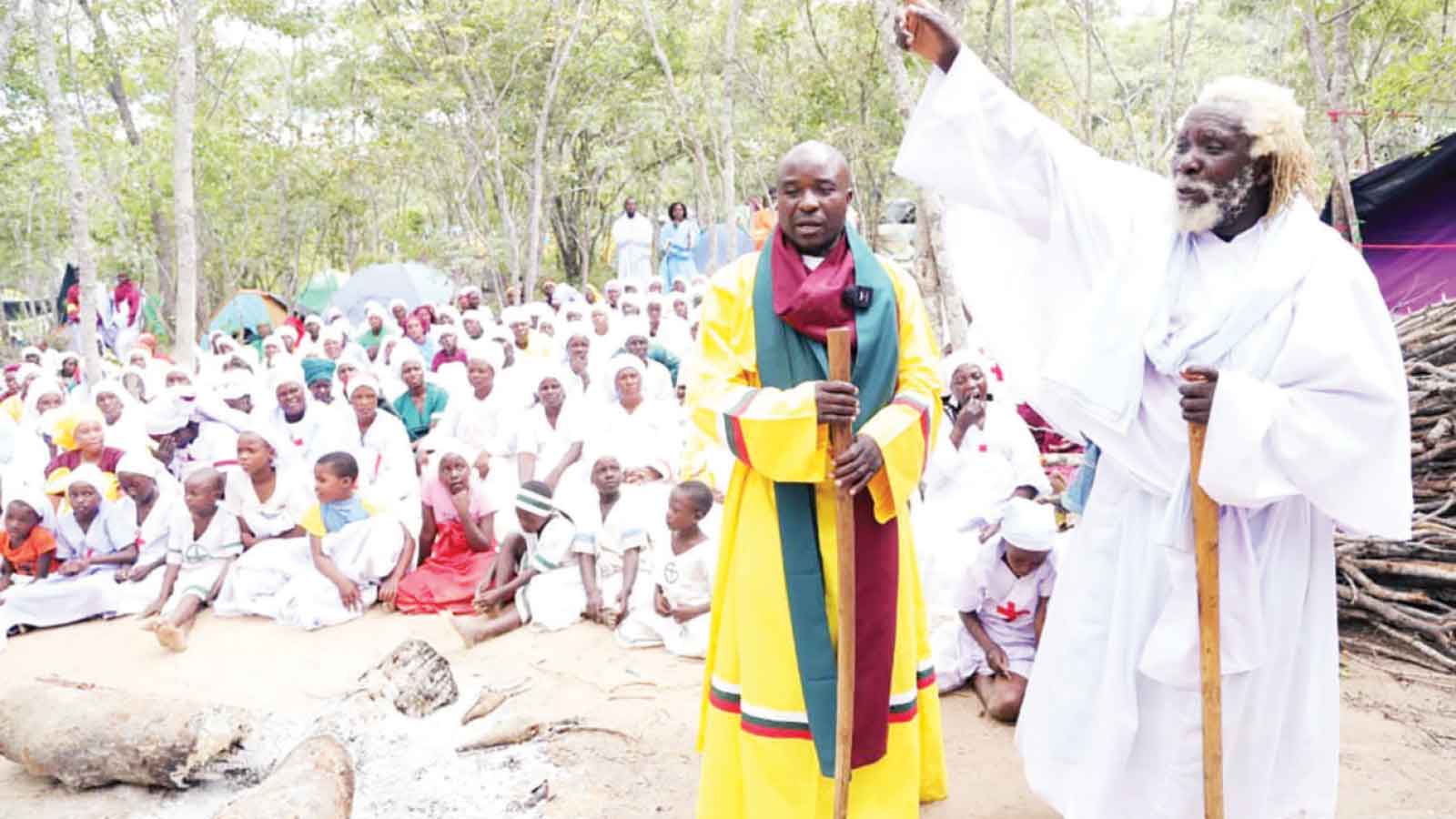
Blessings Chidakwa
Senior Reporter
NOTHING could separate Mutumwa Micho from water. Some preferred to call him Baba Micho. He would make it rain and even stop it.
He even walked on top of it in Kakora Village, Chiweshe.
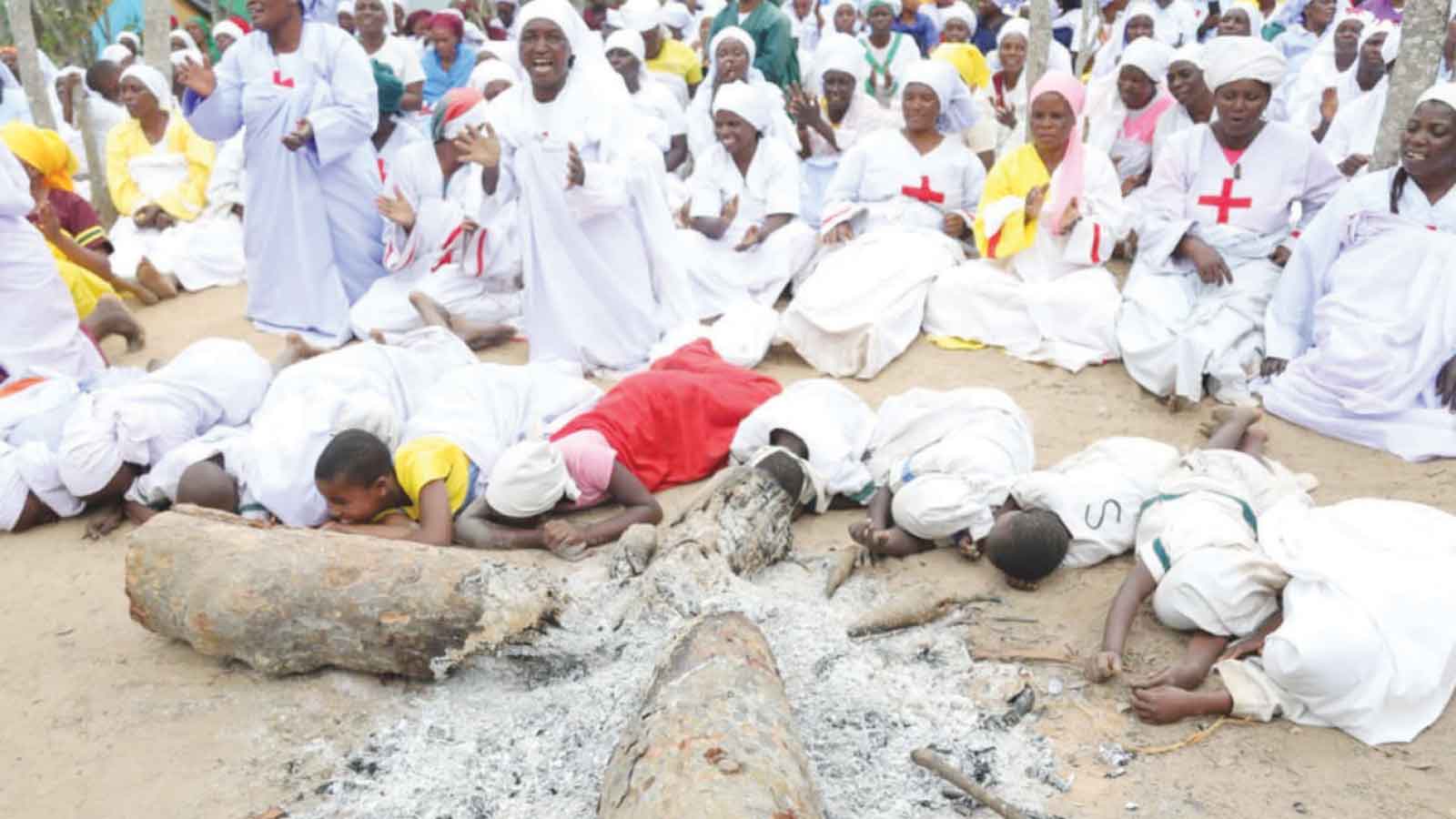
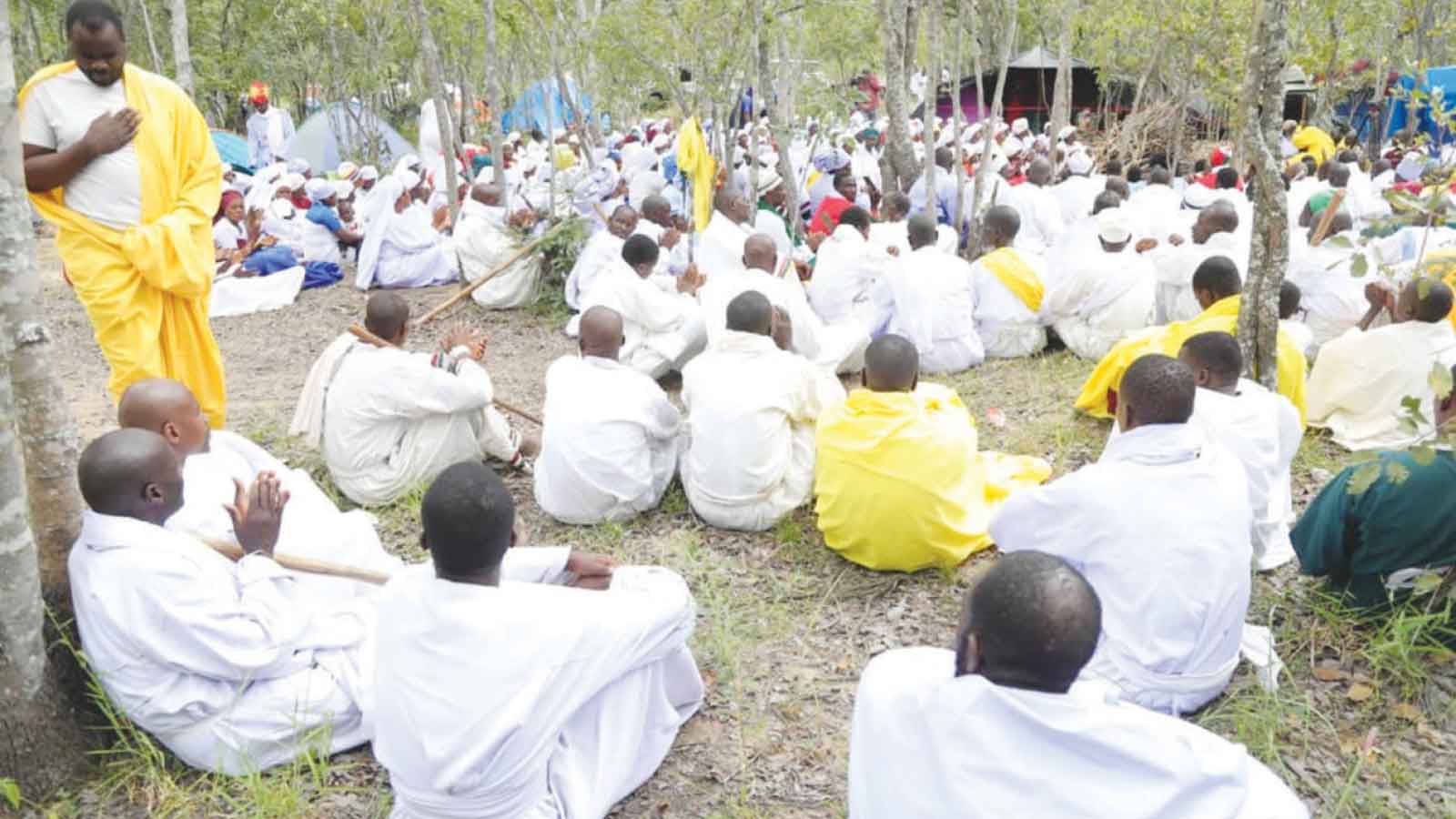
While many Christians across the country marked the Easter holiday in packed churches and mainstream services, followers of the Johanne Masowe Echishanu Nyenyedzi Nomwe Apostolic Church made the journey into the mountains for the annual Easter Conference at the revered PaMvuma Shrine a tradition rooted deep in the sect’s history.
Songs of worship welcomed us long before we began the steady ascent into the rugged slopes, their harmonies drifting across Chiweshe and guiding pilgrims toward the shrine, a place forever linked to the legacy of Mutumwa Micho.
As we climbed higher, the scene opened into a striking sea of colour: congregants dressed in red, blue, yellow, and other vibrant garments spread across the rocky terrain, some standing barefoot in prayer while hymns rose steadily into the crisp Easter morning air.
At the shrine, four flags stood firmly planted, fluttering in the mountain breeze above the gathering, marking the sacredness of the place and adding to the solemnity of the occasion.
Founded around 1931 by Baba Micho in Chiweshe, the church remains one of Zimbabwe’s oldest apostolic movements, with members still holding firmly to the teachings and testimonies that shaped its identity nearly a century ago.
During our visit, we were taken down memory lane to the life of Mutumwa Micho, whose full name was Hazvineihazvo “Micho” Changa from the Chikomo clan.
He was born in 1909 in Kakora Village, Chiweshe in Mashonaland Central Province.
Even in death, his legacy lives on, remembered not only as a spiritual leader but also as a man believed to have possessed divine powers, particularly in rain-making ceremonies.
He was also widely respected for his unique style of worship, which blended Christian teachings with elements of traditional spirituality, drawing even traditional healers and spirit mediums to his ministry.
Madzibaba Lotbell, whose real name is Simon Tinofirei, said Baba Micho was a leader in all things. In everything he did for the nation, he would invite both spirit mediums and members of apostolic sects so they could move in unison.
“He always sought unity among all spirits. If there was a ceremony, he would invite all traditional leaders and all spirit mediums, especially during rain-making ceremonies at Ruya and Mutoradundu, in the Rossa area of Kakora Village.
“It was also in that area that he walked on water, demonstrating the power of the Almighty.
“He wanted to show that if Jesus once walked on water, that same power can also be among Black people. Both spirit mediums and apostolic sect members witnessed this,” he said.
Madzibaba Lotbell shared some of the miraculous acts performed by Mutumwa Micho.
“On one occasion, he even nailed a hook into a ruware (a large flat rock) with his bare fist. There are stones built around that area as proof,” he said.
“In Guruve, when people were attending church, he would sometimes sit alone. The leaders from that area, named Elijah and Lamech, once asked him, ‘How long will we worship like this?’ A song was then sung, and Baba
Micho suddenly went into a trance, flying into the crowd and touching the head of everyone present.”
Madzibaba Lotbell said if someone did not believe in spirit mediums and visited the shrine, they might see people wearing black attire with traditional beads (zvuma) and begin to criticise them, but Baba Micho would immediately rebuke that.
“He would make it clear that we do not attack spirit mediums. We value them because there is also a word from the Almighty through them that protects this country.
“He would say, ‘I want to hear what the spirit mediums are saying and also listen to what the Holy Spirit is saying, and combine them because these are the things that unite a nation,’” he said.
Madzibaba Lotbell said the late Baba Micho also emphasised that the unity of the word of the Almighty, together with the guidance of both spirits, was vital for planning for the nation, protecting its people, and addressing all challenges, whether from enemies, sickness, or other negative forces.
He added that the late church leader, whose focus was not only on rain-making ceremonies but also on addressing the challenges facing the nation, was married.
His wife has since passed away, but he is survived by a son who is following in his father’s footsteps and other daughters.
For Madzimai Gavhena, the miracle of Baba Micho began even at birth after he was born prematurely.
“When he was born, he was placed in a clay pot due to his stature and people wanted him to be killed, but his mother refused and said, ‘As long as he is breastfeeding, I will keep him.’
“Even his grandmother once went to look for medicine for him. She walked the whole day in the forest, but she could not find anything, for the child was blessed,” she said.
Madzimai Gavhena said, indeed, Mutumwa Micho was the child of water.
“When rain was needed, he would pour a little water into a cup or jug and say, ‘Let the cloud of water move around.’ And immediately, the rain would fall.
“When he wanted to stop the rain, he would stop it. He would lift his stuff to the sky and point to the four corners, and the rain would stop. He could bring the rain, and he could stop it,” she said.
Madzimai Gavhena said the work she saw him doing was mighty work for the nation.
“He stood in the gap for Zimbabwe, especially when the people were in trouble, mostly for water. He wanted the country to be free, to rule itself, and he did his work together with the priests who were left behind.
“He wanted the people to live well, to be at peace. He was a true messenger of God, for he could walk upon water,” she said.
Alwin Chitsinde also echoed the same sentiments on Baba Micho’s rain-making ceremony powers.
“The staff he used to lead was the staff for rain-making. We know other spirit mediums could also conduct rain-making ceremonies, but one day, he invited everyone those involved in taking snuff (bute), those playing the mbira.
“The spirit mediums shared their views, but Baba Micho simply stood up and instructed them all to return to their places. After that, it rained continuously for two weeks. He did not only speak; he acted. He believed that a country is ruled by water, and without rain, the people would suffer.”
Interestingly, the church also highlighted a special connection between the late Mutumwa Micho and First Lady Dr Auxillia Mnangagwa, noting that they share the same lineage and totem, and both hail from Kakora Village in Chiweshe.
Madzibaba Willmot said Dr Mnangagwa is their mother, as Mutumwa Micho used to refer to her that way and would often speak about the young Auxillia, whom he used to visit in Kakora Village.
He said Baba Micho would call for “Auxillia” when she was as young as five years old, pray for her, and she would then stand up and speak to congregants, astonishing many people.
He added that they even take their issues to Chief Negomo.
Today, the church is being led by Madzibaba Willmot Takesure Mungwariri, who inherited the leadership mantle following the passing of the founder in 2014 at the age of 105.
Madzibaba Willmot said the church started with Johanne, followed by Emmanuel, and then Baba Micho, who walked on water to demonstrate the power of God that he could move over the waters here in Zimbabwe.
“During the liberation struggle in the 1970s, he was once arrested and taken to a place called Mandas, where he was accused of being a leader of bandits.
“He denied the accusation and said, ‘My calling has to do with water; it will rain at 2pm.’ And exactly at that time, rain poured down, which led to his release,” he said.
Madzibaba Willmot said even to date, rain-making ceremonies are still popular among the church.
“There are still those who remain today and do similar works. It is done by the Spirit, not by the flesh. There is a priesthood circle anointed to perform these tasks,” he said.
Among the witnesses of Baba Micho’s mighty works is Madzibaba Joshua Dizha, who came with his relative, who was mentally challenged due to ngozi.
“When we arrived here, we were instructed to bring a lamp, which was then lifted at Rushanga. Once it started burning, and after a prayer by Baba Micho, my relative was completely healed.
“To this day, he has remained well and has never experienced any challenges. He is fully healthy,” he said.
Madzibaba Dizha said since that time, he realised that “this God is truly powerful, able to heal a mentally challenged person with just a lamp, without the need for offering cattle to appease the ngozi.”
“There is also a song that is well known: ‘Makurukota nemasvikiro vanomuziva.’ If it is sung in the presence of spirit mediums, all the spirit mediums vanish unless the song is sung again to invite them back.”
Madzibaba Innocent Mukosi also narrated about their sacred place.
“We have two mountains here, one called Mvuma and the other Goromoka. This is the place where we would gather to conduct our spiritual work,” he said.
“Baba Micho would help people through prayer and through the cross. Spirit mediums, if they had challenges, would approach him, and he would carry their complaints and issues. Everything would be resolved smoothly.”
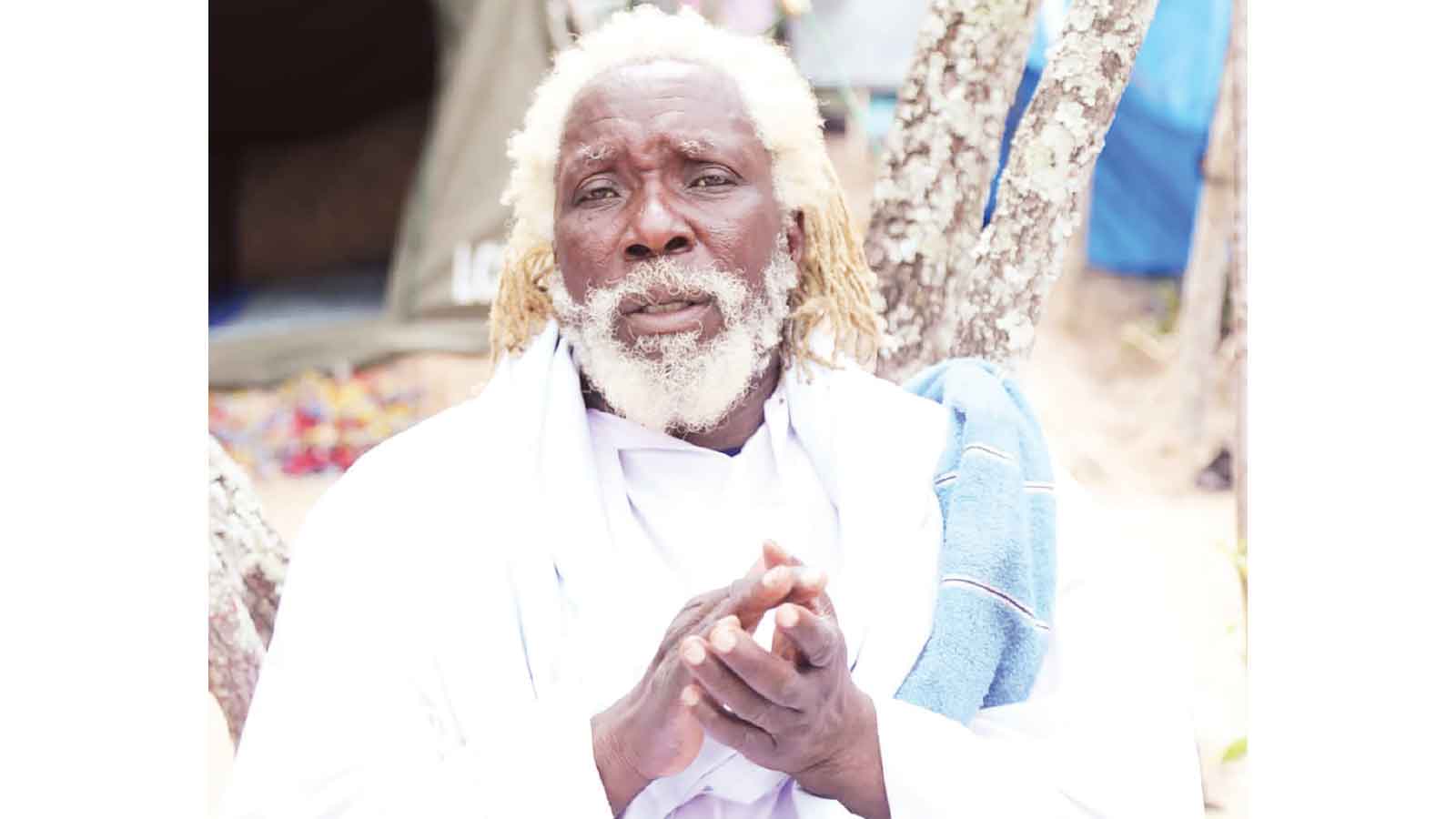
Despite the church’s long-standing presence, one notable feature among some congregants is the Rastafarian hairstyle, which church leaders describe as a sacred spiritual link to the Creator.
“Even in the Bible, there was Samson. Similarly, in our church, some members grow their hair in dreadlocks as a covenant to carry the challenges of this nation. These dreadlocks symbolise the electricity and power of the Spirit,” said Madzibaba Willmot.
Over the years, Mutumwa Micho encouraged his followers to support Government programmes and initiatives, a legacy the church continues to uphold.
“In 1980, we were at PaMuchirikuenda when we made a covenant with our leader to support the ruling party. Up to date, we support the ruling Zanu-PF Government, which our leader left us in,” said Madzibaba Willmot.
Leaders stressed that their doctrine promotes peace, unity, and national development, urging congregants to remain law-abiding citizens who contribute positively to society.
The shrine, regarded as a sacred place by the church, has become a centre of worship and reflection, as congregants, including children, gather for prayers, songs, and spiritual teachings.
It is now 12 years after the death of Baba Micho, but his teachings remain alive.
His spiritual legacy continues to inspire generations in Kakora Village in Chiweshe and beyond.