Online Reporter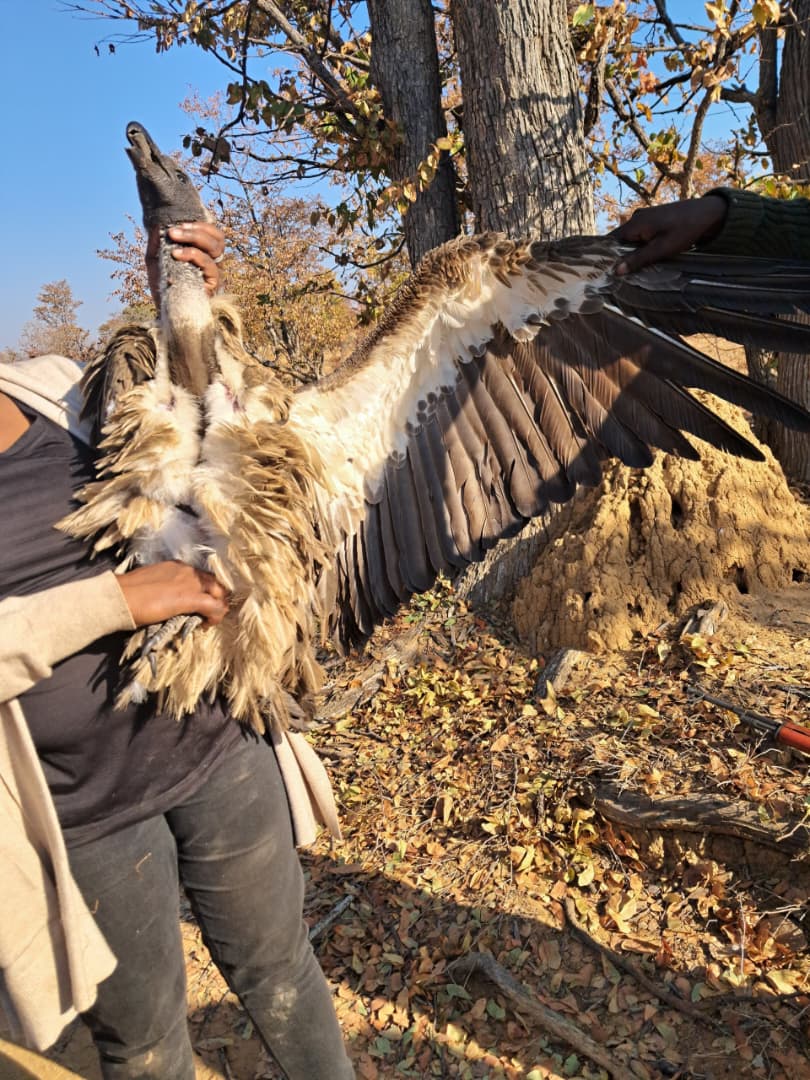
Rutendo Nyeve [email protected]
TWO white-backed vultures fitted with satellite transmitters in Chizarira National Park have travelled a combined 19 000 kilometres across southern Africa, revealing wildlife corridors that extend far beyond the boundaries of protected areas.
Their remarkable journeys have provided conservationists with fresh insights into how vultures move between Zimbabwe, Botswana, Namibia, Angola and Zambia, highlighting the need for greater cross-border cooperation to protect species that routinely traverse national and conservation boundaries.
The birds were fitted with miniature satellite transmitters in July 2024 through a partnership involving WWF Zimbabwe, BirdLife Zimbabwe and the Zimbabwe Parks and Wildlife Management Authority (ZimParks).
One of the vultures travelled 13 456km through Zimbabwe, Botswana, Namibia, Angola and Zambia, traversing the vast Kavango-Zambezi Transfrontier Conservation Area (KAZA TFCA).
The second bird covered 5 572km, spending much of its time in south-western Zimbabwe, including Tsholotsho and Gwayi Conservancy, before returning to Chizarira.
Together, the two birds travelled a distance equivalent to flying between Harare and London more than six times.
Their satellite-tracked movements took them across protected areas, communal lands, commercial farms and private conservancies, giving conservationists a rare glimpse into the interconnected nature of southern Africa’s wildlife landscapes.
WWF Zimbabwe wildlife programme manager, Tinaapi Hillary Madiri, said the tracking exercise was helping conservationists understand where vultures move, feed and face potential threats.
“Tagging vultures gives us valuable information on where they move, where they feed and how they use the landscape. This helps us better understand and manage wildlife movements, while also recognising the important role vultures play in maintaining healthy ecosystems,” he said.
The findings are particularly significant for a species facing multiple threats, with poisoning remaining one of the greatest dangers to vultures.
Poachers sometimes deliberately poison carcasses to eliminate vultures, whose circling behaviour can alert authorities and other people to illegal wildlife killings.
Vultures also fall victim to poisoned carcasses intended for predators such as lions and hyenas.
Beyond their conservation value, vultures perform an important ecological and public health function.
Their highly acidic digestive systems enable them to destroy pathogens associated with diseases such as anthrax and rabies while consuming carcasses before decomposition sets in.
As a result, the birds form a vital part of nature’s sanitation system, helping to maintain healthy ecosystems.
Madiri said the movement data demonstrated why conservation efforts could not be confined to national parks alone.
“A carcass can become the point where several conservation challenges such as human-wildlife conflict, illegal wildlife activity and the loss of a species that plays a vital role in keeping ecosystems healthy meet,” he said.
“Vulture conservation cannot stop at the boundaries of protected areas. These birds move across parks, communal lands, farms and private conservancies, making collaboration with communities and conservation partners essential.”
The satellite data is now being used to identify key movement corridors, feeding grounds and areas where vultures may be exposed to poisoning and other threats.
For conservationists, the information could strengthen interventions aimed at protecting declining vulture populations while enhancing cooperation among communities, private landowners, conservation organisations and governments.
The tracking programme is set to expand, with more vultures expected to be fitted with transmitters this year.
The additional data is expected to provide a broader understanding of the birds’ movements and help identify other critical habitats and corridors that might otherwise go undetected.
The two Chizarira vultures have therefore become more than subjects of a scientific study.
Their journeys have shown that wildlife landscapes do not conform to the borders marked on maps, underscoring the need for a coordinated regional approach to conservation.