Bongani Moyo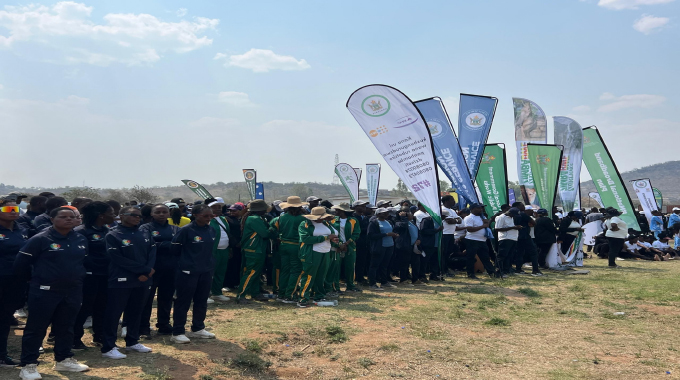
Sukulwenkosi Dube-Matutu [email protected]
THE roar of the crowd, the celebrations after victory and the disappointment of narrow defeats are what most people will remember from this year’s Inter-Ministerial Sports and Arts Festival in Gwanda. Yet beneath the competition and entertainment was a deeper story about the people who keep Government running and the role they play in Zimbabwe’s development journey.
For seven days, Gwanda became more than a host town. It became a meeting place for civil servants drawn from ministries and Government departments across the country. Away from their desks, files, meetings and official responsibilities, they gathered on sports fields, in performance arenas and at cultural showcases, discovering a side of public service that is rarely seen by the citizens they serve.
The festival was built around a simple but important theme: “Healthy nation, productive workforce.” While it may have sounded like a slogan, events throughout the week brought the message to life.
The occasion also provided a platform for reflection on the state of the public service and the role of civil servants in the country’s future.
Vice President Kembo Mohadi, in remarks delivered on his behalf by the Minister of State for Matabeleland South Provincial Affairs and Devolution, Albert Nguluvhe, said Zimbabwe’s development ambitions depend not only on policies and plans but also on the people responsible for implementing them.
At a time when the country is pursuing Vision 2030 and seeking to accelerate economic growth and development, he stressed that civil servants remain at the centre of that process.
The Vice President’s message was clear. Government institutions cannot afford to work as isolated islands if national goals are to be achieved. Ministries, departments and development agencies must find ways of working together, sharing ideas and supporting one another in pursuit of a common national agenda.
That spirit of cooperation was visible throughout the festival.
On football pitches and volleyball courts, officials who would normally interact through official correspondence became teammates and opponents. In choir competitions and cultural performances, public servants accustomed to boardrooms and policy discussions revealed talents that many of their colleagues had probably never seen before.
The week offered a reminder that behind official titles and Government offices are ordinary men and women carrying the same pressures, aspirations and challenges as everyone else.
It was against this backdrop that VP Mohadi highlighted the connection between wellness and national development.
“A healthy workforce is an astute and productive workforce, and is very critical for any nation, developing or developed. Such a workforce is handmaiden to the attainment of set national aspirations and goals. As the executors of state policy and implementers of Government programmes, and as civil servants, you bear the fundamental responsibility of fostering national wellness and happiness,” he said.
His remarks touched on an issue that is increasingly gaining attention across workplaces around the world. Productivity is no longer seen solely in terms of hours worked or targets achieved.
Mental wellbeing, physical health and workplace morale have become equally important measures of organisational success.
For civil servants, whose work often involves handling complex public issues and responding to the needs of millions of citizens, those factors matter even more.
Throughout the week, participants traded office attire for sports kits, tracksuits and performance costumes. The change was more than symbolic. It represented a chance to step away from daily pressures, recharge and reconnect.
Anyone who spent time at the venues could see the value of that break. Colleagues laughed together, encouraged one another and built friendships that stretched beyond ministry boundaries.
The atmosphere was competitive, certainly, but it was also relaxed and inclusive.
According to VP Mohadi, that is precisely why such events matter.
He said the festival helps reinforce the Whole-of-Government philosophy, which encourages Government institutions to function as parts of a single system rather than separate entities pursuing isolated objectives.
In practical terms, that means fostering relationships that make collaboration easier long after the final whistle has blown and the last performance has ended.
The Vice President also linked the festival to Zimbabwe’s broader development agenda.
“This festival is strategically aligned with the overarching national framework of the National Development Strategy 2 (NDS2). It demands a diligent, focused, hardworking and patriotic citizenry across all sectors to achieve our collective vision. It emphasises inclusive growth, human capital development and structural transformation,” he said.
Those themes were reflected in the diversity of activities on display.
There was the athleticism of the track and field competitions. The intensity of football and volleyball. The patience and strategic thinking required in chess. The raw determination of tug of war contests.
Alongside the sporting action, the arts brought a different energy to the festival. Choirs filled venues with song, models showcased creativity and confidence, while traditional performances celebrated Zimbabwe’s rich cultural heritage.
Together, the sporting and cultural activities demonstrated that development is not only about infrastructure, economics and policy. It is also about people, their wellbeing and their ability to express themselves.
Minister of Sport, Recreation, Arts and Culture Ambassador Anselem Sanyatwe echoed that sentiment in a speech delivered on his behalf by Permanent Secretary Nicholas Moyo.
He spoke of sport as more than recreation.
“When civil servants engage in sports and recreational activities, it fosters an environment of teamwork, mutual respect and stress reduction, which ultimately translates to heightened productivity, better inter-agency collaboration and a more energised delivery of public services,” he said.
His comments reflected a growing understanding that healthy workplaces are often more effective workplaces. Teams that trust one another communicate better, solve problems more effectively and deliver stronger results.
Ambassador Sanyatwe also highlighted Government efforts to expand sporting infrastructure across the country, particularly in rural areas where access to quality facilities has historically been limited.
The objective, he said, is to ensure that sporting opportunities are not confined to major urban centres but are accessible to all Zimbabweans regardless of where they live.
As the week progressed, Gwanda embraced its role as host city. Visitors filled local accommodation facilities, sporting venues came alive with activity and the town briefly became the centre of Zimbabwe’s public service community.
By the time the closing ceremony arrived, attention naturally turned to the medal standings.
The Ministry of Agriculture, Mechanisation and Water Resources Development once again stamped its authority on the competition, finishing as overall champions after collecting seven gold, 11 silver and three bronze medals.
The Ministry of Health and Child Care secured second place with six gold, one silver and two bronze medals, while the Ministry of Higher and Tertiary Education finished third after earning four gold, four silver and three bronze medals.
Yet long after the medals are packed away and the trophies return to display cabinets, what many participants are likely to remember is not a final score or podium finish.
They will remember the conversations, the friendships, the shared experiences and the reminder that public service is ultimately about people working together towards a common purpose.


 Online Reporter