admin
admin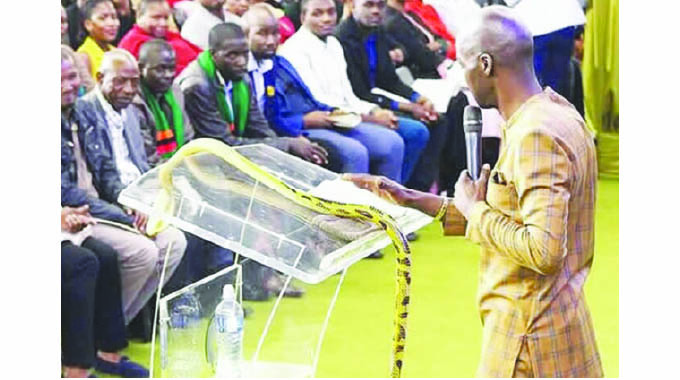
Matters of Faith
Led by charismatic preachers and self-proclaimed prophets, African churches are swelling with promises of miracle healings, signs and wonders.
But in recent months, governments across the continent are trying to rein in these churches.
In Zimbabwe, this week, the Broadcasting Authority of Zimbabwe (BAZ) issued a directive to all broadcasters, prohibiting the airing of advertisements promoting prophets, traditional healers, and traditional herbs or medicines that cannot be authenticated.
In a letter addressed to the chief executives of Zimbabwe’s leading broadcasting companies and all community radio stations, BAZ reminded stations of their duty to protect consumers from misleading information.
Africa’s experience with Christianity has for the most part been positive. About 63 percent of Africans identify as Christian, and Christian denominations founded and still run schools and hospitals. They have played critical roles in helping to keep communities together and stitching together a fraying social fabric.
But while trying not to trample on religious freedom, governments are increasingly frustrated with tales of clergy fleecing their followers and are proposing a raft of new measures to protect unsuspecting church members from corrupt or immoral schemes.
Take Kenya for example. In recent years, a Nairobi pastor banned women from wearing undergarments and bras to church. Rev Njohi argued that the women should be free in body and spirit to receive Jesus.
Or take Kenyan preacher Victor Kanyari. He admitted to a scheme whereby followers were asked to pay him in return for his cleansing them of their sins. As proof their sins were forgiven, the pastor said the water in a “miracle basin” would turn red after he prayed over it. Later, church leaders admitted adding chemicals to the water.
Or take South Africa, where a pastor in Pretoria made members of his congregation strip naked and rode on their backs as he prayed for them. Another Pretoria pastor, Daniel Lesego, made his congregation drink petrol and eat grass. Pastor Penuel Mnguni, based in northern Pretoria, capped it all when he declared a live snake a chocolate bar and commanded the congregation to eat it.
Governments are responding with a series of initiatives:
In the past, Kenya unveiled a number of rules designed to regulate religious groups and prevent youth radicalisation by Muslim terrorist groups.
After bitter protests by church leaders, the attorney general withdrew the rules, including one that would have required all clergy to hold theological degrees. By then, former Kenyan President Uhuru Kenyatta indicated it remained his intention to rein in rogue preachers.
“Those evil men and women who use the name of God to take advantage of the citizens and fleece them must be uprooted,” President Kenyatta was quoted saying then.
A few years ago, in Ghana, the government asked the Christian Council to draft regulations to ensure all churches were registered.
The South African Council of Churches called for some kind of guidelines to help churches self-regulate.
“We believe there is a role for the government to play, for example to protect them (followers) from harm,” said Bishop Malusi Mpumlwana, the council’s general secretary.
In Cameroon, a few years ago, the government ordered the closure of 100 churches over alleged criminal activities by Pentecostal church pastors linked to miracles.
While governments move to regulate religious groups, some clerics suggested self-regulation through associations, national councils and fellowships.
Tolbert Thomas Jallah Jr, a Liberian cleric who heads the Fellowship of Christian Councils and Churches in West Africa, said this has worked in Gambia, a predominantly Muslim state, where the Christian Council of Gambia regulates all religious groupings, including those of Muslims.
Jallah said some African preachers have confused doctrines that are without any biblical and theological basis.
“They are doing strange interpretations of scriptures to exploit poor people, using prosperity messages, calling for miracle services and purchase of healing,” he said.
“They are requesting money before praying for the sick, and people will have to pay money to get appointments and register before getting to see the apostle,” he added.
But churches are also fighting back, rejecting the assumption that all church leaders are frauds.
Last month, more than 4 000 churches were closed down in Rwanda for failing to comply with health and safety regulations, including not being properly soundproofed.
Jesse Mugambi, a professor of philosophy and religious studies at the University of Nairobi, said government interventions are intended to curb illegal activities.– National Catholic Reporter/Herald Reporter
“I do not think the intention is to muffle the freedom of expression,” said Mugambi. “Rather, the intention is to do what the African elite ought to do without having to be prodded to do it – exercise decency both in private and in public.”



 Online Reporter