admin
admin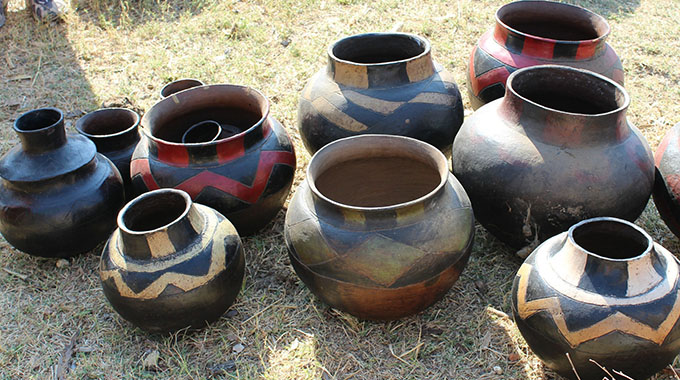
Fungai Lupande Mashonaland Central Bureau
Mr Enock Kweneke’s skilled hands carefully squeezed and nudged a big clay pot as he moulds a biosand filter, a simple traditional household water treatment device used to purify drinking water.
Purified water through the use of sand, stones, and gravel in this clay pot is said to be 99,6 percent clean, which is a major breakthrough for communities relying on water from shallow wells along river banks and dams.
As the Government drills boreholes in every village and ward, this concept is also useful in areas where boreholes have low water yields and people resort to other sources of water.
The Magunje Village in Mt Darwin is among communities burdened by diarrhoeal diseases due to water shortages.
Humans and livestock consume water from contaminated sources.
Mr Kweneke, of Chihupi Village in Mt Darwin, is part of a group of fine potters from Chegutu in Mashonaland West province and Mashonaland Central province who gathered at Magunje Village to share knowledge and skills.
The project is being implemented by Mvuramanzi Trust, which adopted the concept from Pakistan, after its successful implementation in thousands of households. The €1,5 million programme is funded by Germany through its department of international corporation and co-funded by WHH.
The biosand nadi filter project is being implemented in Chegutu and Mt Darwin to strengthen water and sanitation systems to achieve SDG6, which demands access to water and sanitation for all.
Nadi is a Pakistani word for a clay pot.
“We have attempted to mould this vessel, but it is cracking and we are putting our heads together to resolve the issue. This vessel is easy to make,” said Mr Kweneke.
“We started this programme in October. I started making clay pots when I was a small boy and now, I am an experienced potter. I grew up watching my mother moulding clay pots and I took it seriously in 1985.”
Ward 11 Councillor, Lovemore Muropa, said some people in 17 villages in his area relied on water from shallow wells and along river banks due to inadequate boreholes and silted dams.
“We have wells, but they don’t have enough water for the population and people ration two buckets per day per household,” he said.
“This results in people going to river banks and dams searching for drinking water. Teachers are spending most of their time searching for water in the villages and they end up transferring to other schools.
We are losing teachers. At Pachanza Clinic, our local health facility is also facing water challenges forcing patients to bring water from home.”
Ms Benonia Nyabvumo from Mhondoro said they did not have a critical shortage of water in her village, but some of their water sources were unprotected.
She is earning a living out of clay making.
“I am no longer relying on handouts from my children because of this business,” said Ms Nyabvumo. “I can now buy basic goods using money from the sale of clay pots. This project has become a learning curve as I acquire skills in moulding bigger clay pots.”
Ms Tendai Chinhema from Msengezi, Ward 20, in Zvimba said she was acquiring the technology to assist people in the neighbouring ward in Murowe Village, where people are drinking water from unprotected shallow wells.
She said traditional rites had to be followed in collecting clay, including avoiding conversations with people, and removing shoes, among others, so that the clay pot did not crack.
“Traditionally, we used clay pots to fetch and store water. I am an expert in small clay pots and I came to learn how to mould bigger clay pots,” she said.
Mvuramanzi Trust project manager Mr Bloodwell Rusike said baseline studies indicated challenges in accessing potable water in selected wards in Mt Darwin and Chegutu.
He said high incidents of diarrhoea were recorded in the wards.
The filtering medium concept is not new and is used during the purification of water at treatment plants using sand bed filters.
“The technology uses two clay pots, one bigger with filtering medium approximately 75 centimetres long and a small one at the top, where the water is poured. After the purification the water is 99,6 percent pure,” he said.
“This a low-cost solution in hard-to-reach areas. We are expecting to perfect this model in April next year and upscale this project across the country. We are working with the Government and WASH committees.”
Farm Community Trust of Zimbabwe project manager Mr Barnabas Muhoma, who is implementing the project in Chegutu, said they were refining the skills of potters so that they cascade the project in their villages.
“We will train extension officers on hygiene promotion so that people do not contaminate the filter. Two hundred households will be selected in Mt Darwin and Chegutu for the pilot project and the water will be tested by the National Institute of Health Research,” he said.
“The project is using local resources and skill to assume that people accept technology from them to protect themselves.”


 Online Reporter