Online Reporter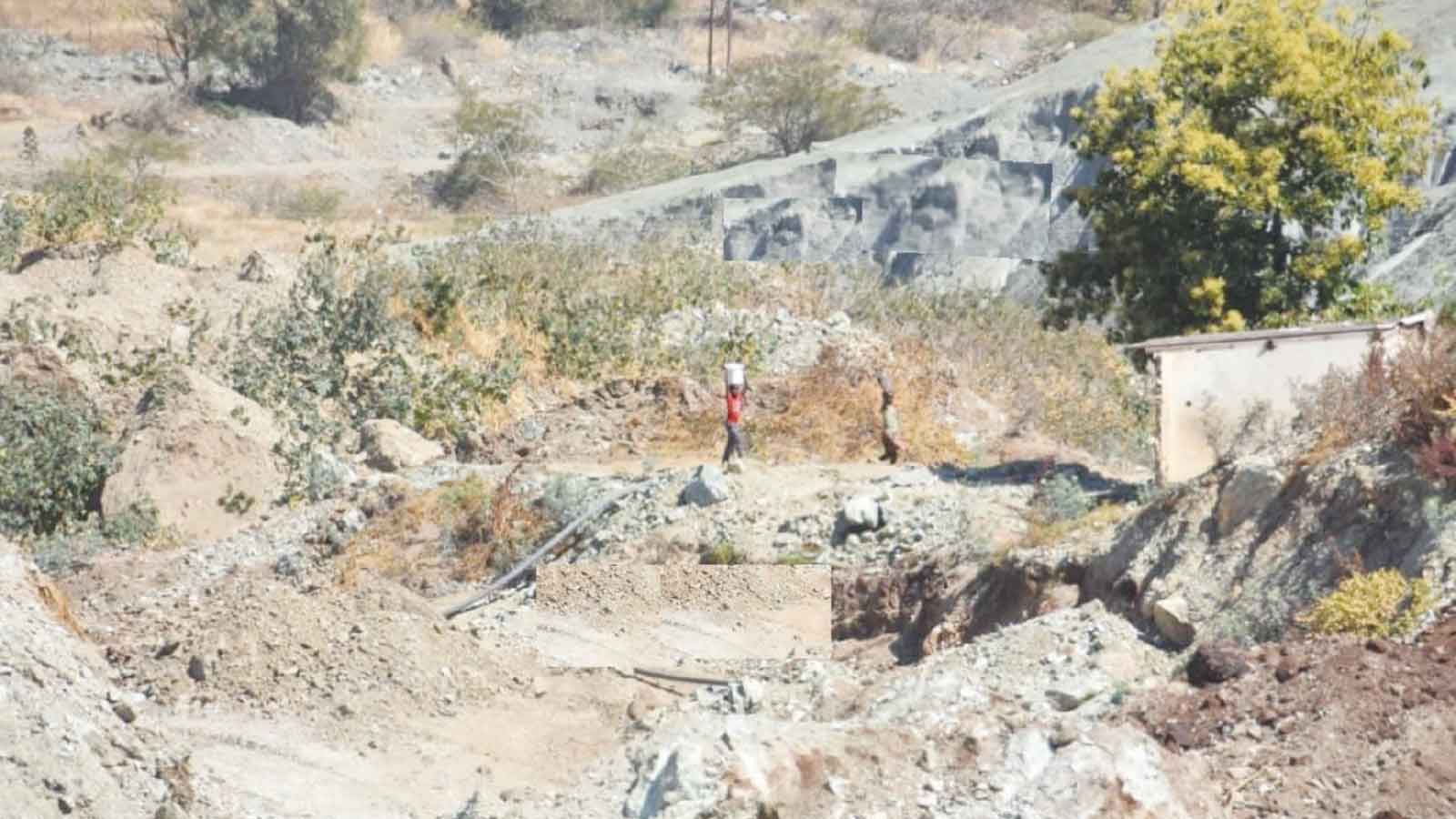
Theseus Mauruki Shambare
Features Writer
ACROSS Southern Africa, climate assessments warn that rising temperatures are increasing the frequency and severity of droughts, tightening pressure on already fragile rural economies.
In Mudzi District, Mashonaland East Province, mountains rise abruptly from dry plains, their rocky faces glowing gold under the harsh afternoon sun.
For generations, they stood as silent guardians over the communities that lived beneath them.
Today, the mountains tell a different story. The road that winds through Ward 5 is lined with signs of a changing landscape. Dust hangs in the air as deep scars cut across once undisturbed hillsides. Heavy machinery growls in the distance.
Beneath the earth lies mineral wealth capable of attracting investors from across the world. Yet in the villages surrounding the mining zones, life remains defined by a more immediate struggle: finding water, growing food and surviving a climate that seems increasingly hostile.
The contrast is impossible to ignore. Under the ground lies wealth, and above it, resilience. As all this plays out, Mudzi folks are redefining their stories. At a small fish pond tucked between dry fields, Taurai Chimukoko scatters feed into the water as hundreds of fish break the surface in a frenzy of movement. For years, she depended almost entirely on rain-fed agriculture.
Like many women in Mudzi, she planted maize each season, hoping the rains would come. Yet increasingly, they did not.
“The seasons are no longer the same,” she said in an interview during a recent media tour of climate resilience programmes in the district.
“There are years when you plant and nothing comes out. We realised we could no longer depend on traditional farming alone.”
For people in Mudzi, climate change is no longer a projection. It is a lived experience where wells run lower, rivers retreat earlier and harvests grow uncertain.
Adaptation is quietly taking shape.
The fish beneath Chimukoko’s pond are not just food, but a shift in thinking — from dependence to diversification.
Nearby, John Kapfunde watches workers tending a community aquaculture project.
“We used to survive through farming alone,” he said.
“Now we combine different activities. Fish farming is helping us adapt.”
The irony is striking. In a district increasingly defined by water scarcity, ponds have become lifelines.
Across the district, climate resilience programmes are supporting households with aquaculture, nutrition gardens and alternative livelihoods; small systems of survival emerging within a harsher climate reality.
But Mudzi’s story cannot be understood through climate alone. Mining has become an equally powerful force reshaping its future.
A small roadside sign points towards a licenced mining zone about 40 kilometres north of Mutoko.
Geologists describe the area as part of a vast pegmatite belt, with more than 40 mineral-bearing formations running through the rock.
The deposits include lithium, tantalum, beryl and simpsonite — minerals increasingly sought after in global energy and technology supply chains.
Zimbabwe’s mining sector has become one of the country’s largest foreign currency earners, contributing more than 12 percent to gross domestic product and accounting for over 60 percent of export receipts in recent years, according to official economic reports.
Employment in the sector is estimated at over 200 000 direct jobs, with many more dependent on artisanal and small-scale mining value chains.
The site is part of a wider national push to formalise and regulate mineral extraction, as the Government seeks to bring previously informal mining activity into the official economy.
The mountains that once existed as natural landmarks are now viewed through competing lenses.
Geologists see deposits, while investors see opportunity and the Government sees growth. Communities see both promise and uncertainty.
That tension is not new.
It recalls earlier mining centres such as Shabanie Mine in Zvishavane, once among Zimbabwe’s industrial giants.
At its peak, Shabanie Mine directly employed an estimated 3 000 to 5 000 workers, while supporting several thousand more through indirect employment in transport, retail, engineering services and housing economies in Zvishavane.
The mine also anchored one of the most visible mining-community social ecosystems in the country, including the widely known Shabanie Mine Football Club, which competed in Zimbabwe’s top-flight league for decades and drew strong local identity around industrial labour. Beyond production, it was an ecosystem; a place where employment, housing, sport and community identity were tightly interwoven.
Former workers still describe it as a time when mining meant more than extraction. It meant belonging.
Zimbabwe’s mining sector today continues to expand, driven by global demand for energy transition minerals such as lithium and rare earths. But expansion has also brought environmental strain into sharper focus.
The Government has declared a State of Disaster over 17 river systems under Statutory Instrument 91 of 2026 — the Civil Protection (Declaration of State of Disaster: Emergency Riverine Ecosystems Rehabilitation) Notice.
The affected rivers include major water systems such as Mazowe, Save, Sanyati, Munyati, Mupfure, Umzingwane, Insiza, Mutare, Haroni and Nyamukwarara, among others.
Authorities say the rivers have been affected by siltation, bank collapse and illegal mining activity in some catchments.
The declaration enables emergency rehabilitation works, mobilisation of contractors and coordinated restoration of damaged ecosystems.
The Government has also moved to restrict the export of unprocessed lithium and other strategic minerals through statutory instruments governing the mining sector. The regulations require that key minerals undergo local beneficiation before export, aligning mining activity with industrialisation and domestic value addition goals.
In Mudzi, those realities are not statistics but lived routines.
“When water becomes scarce, everything else becomes harder,” said Jane Kazanhi, tending a small vegetable garden near a drying stream.
Around her, survival has become increasingly inventive.
Residents in mining-affected areas describe dust on crops, open pits and pressure on local water sources.
“Development must not come at the expense of the same communities it is meant to uplift,” said ActionAid Zimbabwe Country Director, Dr Selina Pasirayi.
Child protection officials also warn that economic pressure in mining areas can expose children to unsafe conditions or disrupt schooling.
“In some cases, children become part of survival strategies,” said a Ministry of Public Service, Labour and Social Welfare official, Timothy Mudakureva.
“Their protection must remain central.”