Chronicle Editor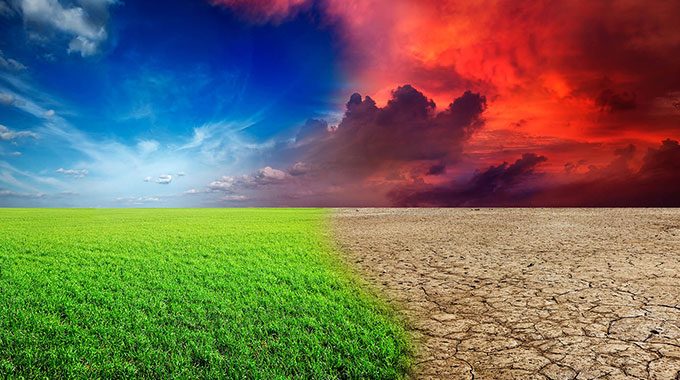
Simbarashe Murima, [email protected]
In response to President Mnangagwa’s advocacy for a collective approach in promoting home-grown solutions to allay the negative impacts of climate change by reinforcing mitigation and adaptation models that foster consensus and inclusivity, I honour the President’s earnestness in attenuating climate change and further proffer support to this lead by distilling the influences of climate change on tourism in Zimbabwe.
More focus on climate change is crucial to fortify the future of tourism in our country. In this context, climate change is defined as a long-term variation in temperatures and weather conditions caused by changes in the sun’s activities which have abruptly shifted due to human interferences through the burning of gas, fossil fuels, and emanations from aviation.
Tourism has become one of the massive contributors to climate change, from air transport radiation to the overuse of natural resources. Human activities seem to be the principal cause of climate change both locally and globally. The tourism industry remains prone to stressors such as climate change which is a slow-onset event driven by human-environment acquaintances.
Tourism in Zimbabwe is highly exposed to the direct physical effects of climate change, later affecting biodiversity, ecosystems, and agriculture due to oppressive temperatures and torrential rainfalls. These climatic shifts cause excessive floods, droughts, heatwaves, and heavy rains accompanied by landslides such as the one caused by the destructive force, Tropical Cyclone Idai, that distorted the landscape area of Chimanimani, one of the most amazing tourist destinations in Zimbabwe.
President Mnangagwa recently highlighted that there is an urgent need to find sustainable solutions to address the challenges of climate change which is a significant threat to the country’s economic growth and overall well-being, therefore there is need to build resilience in our communities.
Addressing climate change makes adaptation and the development of resilient approaches more critical in accentuating the indispensable position of encouraging sustainable tourism in Zimbabwe.
For instance, climate change resilience measures require urgent implementation in major tourism destinations such as Victoria Falls which becomes more vulnerable to climate change effects due to the influx of international and regional tourists flying to the destination resulting in the high rate of carbon exudation from airplanes.
Planes burn a lot of fossil fuel that releases carbon dioxide emissions coming from fossil burning and have strong warming effects with contrails accompanying environmental impacts, which are the major contributors to climate change threats and consequences.
Developing a robust climate change resilience framework that will help withstand disruptions from current and future external risks and shocks on tourism is crucial. The framework can be used by tourism policy makers and other stakeholders to fortify resilience as a central part of mitigating climate change crises besetting tourism in Zimbabwe.
Tourism stakeholders should embrace resilience thinking in reinforcing tourism sustainability in the country. Grounded on this article, resilience is defined as a human and natural system thinking model that focuses on building the capacity to deal with sudden shocks (e.g. terrorism, pandemics) and stressors(e.g. climate change).
To address climate change challenges, the government should enforce the use of sustainable lower-carbon alternative fuels to minimise airlines’ carbon footprint. They can use the carbon capture technology technique that draws out and stores carbon dioxide emissions permanently underground.
Relevant authorities should raise awareness among tourism destination residents who are in danger of facing extreme climatic events and disasters at the national and local strata.This may be effective when there is integrated collaboration and engagement with communities, disaster management agencies, and tourism companies.
Climate change places substantial pressure on tourism and affects the environmental and socio-economic conditions of a destination’s attractiveness.
There is a sine qua non to implement climate change resilience measures to safeguard the future of tourism in Zimbabwe.
*Simbarashe Murima (PhDc) writes in his capacity as an education, tourism and hospitality expert in Namibia, Zimbabwe, and South Africa. Feedback: [email protected] or 0781480742



 Online Reporter