admin
admin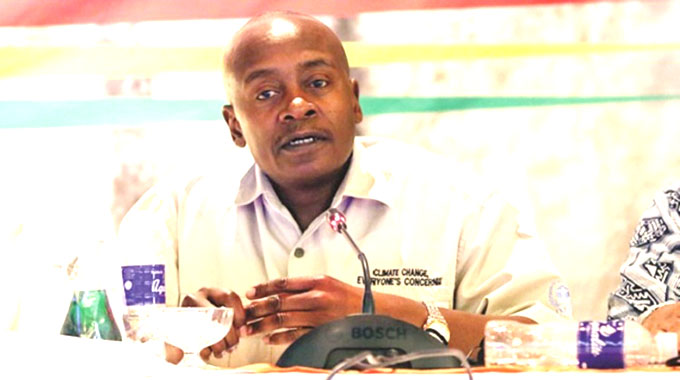
Bulawayo Bureau
THE private sector has been called to collaborate with the Government in scaling up adoption of environment-sensitive production models that build national resilience against climate change-induced vulnerabilities.
Climate change is real and the world, including Zimbabwe, are already feeling the impact — evidenced by the increased incidents of droughts and subsequent depletion of water resources, poor conventional farm yields, heat waves, violent storms and floods.
The impact of climate change on the productive sector dominated discussion during the virtual Water, Sanitation and Energy (WASHen) Conference, which was hosted by the Zimbabwe International Trade Fair (ZITF) Company in conjunction with the Bulawayo City Council yesterday. The panellists noted how the trail of destruction inflicted by Cyclone Idai last year and drought conditions this year continue to exert pressure on the country’s economy with a heavy strain on public revenue, as Treasury has to spend more on rehabilitative social services, food imports and repair of damaged public infrastructure.
Climate change related disruptions pose a huge negative bearing on the productive capacity, which heightens the need for collective adoption of smart climate modelling across economic sectors. The head of climate change directorate in the Ministry of Environment, Climate, Tourism and Hospitality, Mr Washington Zhakata, said the vulnerabilities of urban and rural communities to climate change shocks could be addressed through climate sensitive policies across the spectrum.
He said over-reliance on rain-fed agriculture alone was no longer viable as he stressed the need for climate-proofed models and sustainable irrigation. He said industry operations were already being affected by water supply shortages across major cities in the country with the southern region being the worst affected.
“Successful and sustainable management and use of water is critical. Our industries must carry water and energy efficiency audits to measure how they utilise these and conserve what is available,” said Mr Zhakata.
Engineer Sikhumbuzo Ncube from the Bulawayo City Council gave a synopsis of the water situation in the city, whose six supply dams stands at 21,5 percent after three were decommissioned, as levels dropped below pumping volumes. He said the frequency of droughts has increased since 2012 amid intense water shedding measures, which worsened this year, thereby impacting on business operations with some suburbs going for weeks without water. Council is now pursuing short-term mitigation measures through tapping into boreholes water and establishing water kiosks while awaiting long-term projects like the Gwayi-Shangani Dam, which is under construction.
A senior officer in the climate change and land management unit at the African Union Commission, Ms Leah Watambwa Naess, said the shortage of water and other climate change elements were not unique to Zimbabwe. She said due to climate change pressures deforestation, conflicts of human to human nature and human to wildlife were on the increase as societies seek alternative ways of survival. Ms Watambwa Naess said reduced energy production levels and power supply deficits related to climate were also negatively affecting small scale businesses with losses in household incomes.
“Adoption of climate change mitigation measures is critical, we need to shift towards better farming methods, water harvesting and invest in early warning systems as well as diversifying our sources of energy. This needs more coordination between sectors,” she said.


 Online Reporter