daniel chigunwe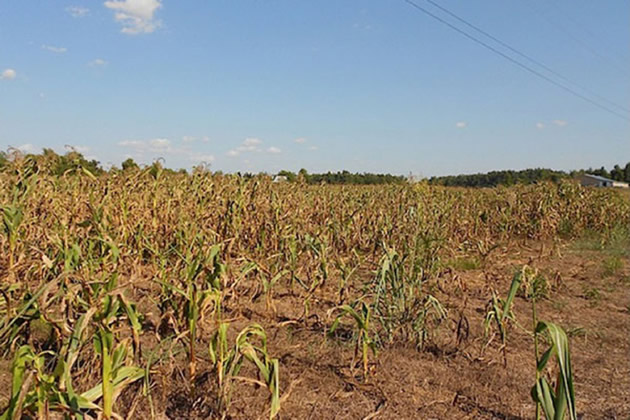
Last Word
Combating and mitigating climate change is moving up the priority ladder after this year’s El Niño drought and the hundreds of millions of dollars needed just to provide basic food aid while economic growth was slashed to 2 percent.
This is why the Ministry of Finance, Economic Development and Investment Promotion is concentrating at this year’s Zimbabwe Economic Development Conference starting on Sunday on climate change, its effects and the measures that are needed to mitigate change and their costs. This is the first pre-budget conference and a major input into the budgeting process.
The five topics listed for the conference are: Climate proofing agricultural production and growth; meteorological analysis of climate variability, rainfall patterns, and El Niño effects 2025 to 2030 and beyond; private sector initiatives including carbon financing to support development under climate change; public expenditure policies and programmes to build resilience and mitigate drought effects; and climate change and macroeconomic issues.
There is stress, obviously, on agriculture since most immediate adverse climate effects hammer farming, reduce output, cut sales and exports and boost imports. Bad weather directly affects agriculture although it can have knock-on effects down the line, such as manufacturers short of raw materials or people, towns and cities short of water.
While a lot of the talk these days is on climate change, this does not mean there were no droughts in the past. Historical records from the 1890s onwards, and careful digging into community memories for earlier droughts, do establish the link between El Niño events in the Central and Eastern Pacific and drought in Zimbabwe.
What climate change is doing is making these events in general more extreme and more frequent, so we either suffer more disasters and spend more money on coping with the disasters, or we spend more money on more mitigation.
In any case rising populations, growing specialisations in farming, more sophisticated rural communities and more agro-industrial manufacturing spread the effect of the disaster from solely food shortages outside the prime farming areas, and there is not much natural region 1 and 2 in Zimbabwe where some sort of crop can be expected in the worst years.
Even lay people can work out the general outline of what is needed, with more irrigation being the obvious starting point. But the practical measures on the ground need to bring in more efficient irrigation, with drip irrigation being the most efficient, better farming systems that make more use what rain falls and what irrigation is available, better choice of crops and varieties of crops.
Crops is a term that goes beyond human food and has to include livestock feed and establishing and maintaining pastures, some of which have suffered severely in the past century.
Moving these topics into the top of the pre-budget discussions appears to be an obvious move. Spending US$1 billion on extra food, plus millions more on school fees for the destitute, and other poverty-related costs is, economically, largely money down the drain, no matter how critical it is in human and social terms.
It is a budget intervention that adds zero to gross domestic product and the money has almost zero lasting effect except keeping people alive in reasonable health.
Money spent on mitigating drought, that is building up the capital base in irrigation infrastructure and even village wells, ensuring farmers are better equipped to plant and produce more at higher yields, and all the other measures taken to raise agricultural production obviously have effects on short-term, medium-term and long-term growth.
When this is coupled with the policy of spreading the increase in rural wealth there are additional economic benefits, including building up markets for the rest of the economy and especially industrialists, since there are many more people who can now buy what is made.
Growing ranges of crops and produce, and growing processing on farm or within farming communities also adds to wealth, so capital costs of such programmes are investments, rather than disaster payments which really do little for the economy, essential as they are.
Presumably the Finance Ministry is keen that money spent on mitigating climate change, or just bad climate, should be the money spent in advance on the required capital programmes, which in the end do increase economic wealth and even grow Government revenue, although this might be indirect.
Higher smallholder incomes, for example, tend to boost taxation via VAT when the smallholders spend money, hence the need to maintain and improve that assumed VAT collected from informal businesses without full records.
The Finance Ministry has also been driving other measures that ensure capital spending does not increase recurrent spending. Irrigation farmers have to pay for their water, although this can be done within a week of them selling the crop the water grew before the interest clock starts ticking.
Those village wells are now being embedded into village business units, a private company with the community as shareholders and thus responsible for maintenance, parts replacement and the other costs, as well as sharing in the water and the profits.
The similar upgrade of those on irrigation schemes, becoming shareholders in the scheme as well as beneficiaries and having to take responsibility for maintenance and other costs, means that a fair slice of Government budgeting on the capital account are one-offs, rather than perpetual drains on the running costs side of the budget.
Irrigation schemes also need to boost efficiency and returns. We still have the situation as we expand State schemes that a crop is either fully irrigated or not irrigated at all, that is, being grown on an irrigation scheme or grown on a dry-land farm. The more flexible larger farmers with their own irrigation grow much of their summer crops with partial irrigation.
In a good year they might start their crop earlier with irrigation, and then just switch on the sprays when there is a prolonged dry spell. In a bad El Niño year this would mean that perhaps a third to half the water a crop needed came from irrigation. Such use of supplementary summer irrigation allows the farmer to irrigate twice or three times the area a fully irrigated crop would need.
To a very large extent the stress on climate change mitigation must be to boost the capital budget by transferring money from the disaster relief side of the recurring budget. If there are no disasters, or at least if disasters are far smaller in scope, then a lot less money needs to be spent on sorting them out, releasing funds for even more capital development.
It is probable that a higher percentage of the capital budget will come from Zimbabwean sources. It is easier to raise aid money when people are hungry and food has to be bought than to raise cash via development partners for a new dam in an area no one knows much about.
This is where the private sector needs to come in. Some measures and some spending has to be done by Government, but that still leaves a range of measures where returns can be almost immediate, so making sense for the private sector.
The conference will be looking at how the private sector can maximise those returns through taking advantage of all possibilities including carbon financing, something we have done very little about in Zimbabwe.
We are going to need a lot of innovative solutions as we deal with the threat of disaster and even just improve yields in normal years. But these solutions need to be cost effective, so we get the maximum return from the capital investments. We need functioning solutions rather than a collection of white elephants or prestige projects.



 Online Reporter