dyton mupawaenda
Eddie Chikamhi-Senior Sports Reporter
THE ZIFA Normalisation Committee will allow CAF B licence holders to coach in the Castle Lager Premiership with immediate effect.
A number of coaches were shut out of the system when ZIFA and the Premier Soccer League barred non-CAF A holders from sitting on the bench during topflight football matches, as a way of conforming to the FIFA and CAF club licencing regulations.
But following a club licencing workshop held in Harare by FIFA this week, the ZIFA Normalisation Committee yesterday announced the drastic decision had been reversed.
The waiver was necessitated by the fact that Zimbabwe has not offered CAF coaching courses for the past six years.
However, the reprieve will only last until the CAF A course returns to the country.
“The Normalisation Committee advises all stakeholders that coaches in possession of CAF B licences are now eligible to sit on the technical bench in the Premier Soccer League (PSL) either as Head or Assistant coaches with immediate effect.
“The change will remain in effect until all CAF coaching courses resume in Zimbabwe.
“This has emanated from the club licencing workshop held on 10 October 2023 by the Zimbabwe Football Association (ZIFA) in conjunction with FIFA for PSL clubs,” said a statement from ZIFA.
ZIFA last offered the CAF A licence in 2017.
But with developments taking place across the continent which outlawed non-CAF A holders from sitting on the bench during the CAF inter-club competitions, ZIFA also had to fall into line.
The Soccer Coaches Union of Zimbabwe and many other local coaches have expressed reservations on the regulation since the CAF A course has not been offered locally for six years now.
SCUZ secretary-general Newsome Mtema yesterday said the waiver was long overdue.
“It’s a good move by the ZIFA Normalisation Committee,” said Mtema.
“For a long time, we felt some of our coaches were being marginalised because the CAF A licence that they demanded was not being offered locally.
“So this is a welcome move as it opens up the doors to more coaches to practice at the highest level locally, considering it was not their fault that they could not upgrade to CAF A.
“Many of these coaches have been yearning for their chance to get enrolled for CAF A but no courses were on offer.
“Some lucky few had to go and study somewhere outside our borders.
“With this decision, obviously competition will increase among the coaches because you cannot really underrate the capabilities of some of those coaches on CAF B, the likes of Joey Antipas and Moses Chunga who won the league title before. These are just examples.
“So we hope to see some of these guys that had been sidelined coming back into the trenches,” said Mtema.
ZIFA last year made the coaching badge mandatory for PSL and this affected a number of coaches including former national team coach Antipas, who had to relinquish his post at Chicken Inn, a club that he won the title with in 2015.
Other coaches like Arthur Tutani, who helped Simba Bhora gain promotion for the first time, had to be discarded at the start of the season.
Previously, coaches including some of the legends of the game locally like Chunga, Luke Petros, Agent Sawu, Amin Soma-Phiri, Bongani Mafu, Stanford Stix Mutizwa, Shadreck Magurasave, Sunday Chidzambwa, Antipas, Cosmas “Tsano” Zulu and Thulani Sibanda been given exemptions to coach in the Premier Soccer League without CAF A.
Sibanda had to travel to Tanzania last year to study for CAF A.
PSL marketing and IT manager Rodwell Thabe said club licensing guidelines were not meant to punish clubs and individuals.
“Club Licensing is not a tool that is meant to punish the clubs,” he said after the club licensing workshop held in Harare this week. Club licensing expert Pedro Correira facilitated the discussion, which was aimed at “demystifying all myths and misconceptions around club licensing,” as well as further emphasising why it is critical for football clubs to embrace club licencing because of its lasting impact towards professionalising local football.
“In the long term it’s a tool that benefits clubs in the five core areas that are expected from club licensing and like the facilitator said we can go beyond the five core aspects and add other aspects like commercialisation and marketing plans on top of those five core areas.
“I know most clubs have viewed it as a punishment or a tool that is of hindrance but I think after this engagement and previous many other workshops clubs will then understand that long-term this tool is meant to manage the clubs effectively and commercialise the clubs on a professional level.
“So going forward clubs will understand better that this tool is very important in their everyday operations,” said Thabe.
Club licencing is a development and control tool that football associations can use to raise standards in strategic areas of football clubs. An example of one key development area implemented locally is the standardisation of coaches’ qualifications.
The system uses a set of criteria that clubs must satisfy in order to receive a licence and be permitted to participate in a specific club competition.
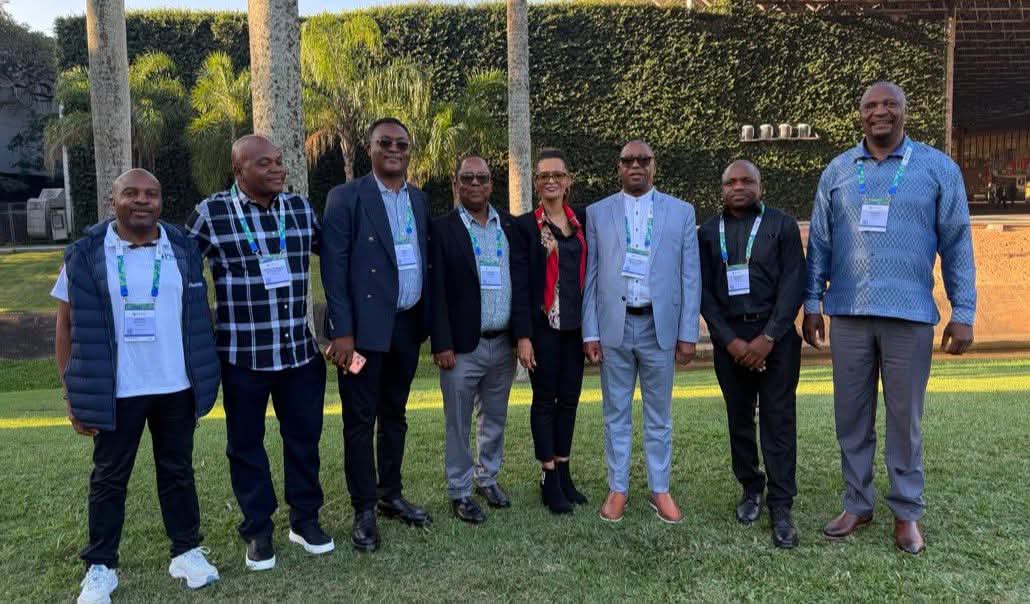
Stakeholders that attended included members of the ZIFA Normalisation Committee, the Premier Soccer League board, PSL clubs representatives and the Footballers Union of Zimbabwe.
FIFA delegates led by head of development programmes Africa Solomon Mudege, David Fani who is the lead, regional office for Southern Africa, Silmara Sousa a development programmes coordinator (Member Association Division Africa) and Sanda Rasoamahenina, the FIFA member association development manager.


 Online Reporter