Patrick Chitumba [email protected]
GOVERNMENT has said the Education 5.0 model must inspire local colleges and other training institutions to become engines of innovation and entrepreneurship as opposed to producing graduates who merely seek employment.
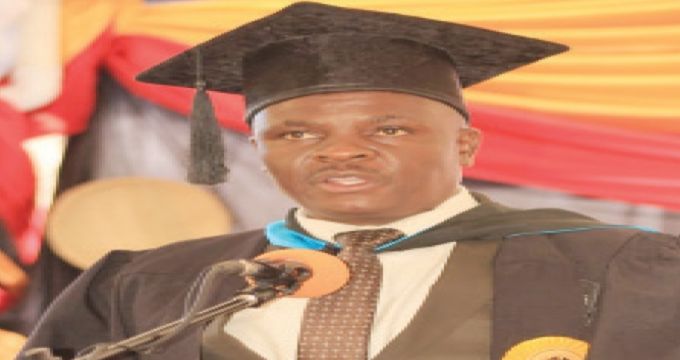
Speaking at the 46th graduation ceremony of Mkoba Teachers’ College in Gweru last week, Deputy Minister of Higher and Tertiary Education, Innovation, Science and Technology Development, Simelisizwe Sibanda, said the Education 5.0 model has fundamentally transformed the role of tertiary institutions, placing them as drivers of innovation, industrialisation and problem-solving.
“Education 5.0 is centred on the shift from producing job seekers to producing job creators. The model gives graduates an opportunity to create employment,” he said.
The graduation ceremony was held under the theme: “Heritage, a Lifetime of Empowerment; Transforming Lives through Education,” and coincided with the college’s 50th anniversary celebrations.
A total of 679 students graduated, including 211 from the Secondary STEM programme introduced in 2018 to address shortages of science teachers in schools.
Deputy Minister Sibanda announced that Mkoba Teachers’ College had been selected among four institutions countrywide to offer dedicated STEM degree-awarding programmes.
The other colleges are Belvedere Technical Teachers’ College, Marymount Teachers’ College and Hillside Teachers’ College.
“These four colleges will anchor Zimbabwe’s ambition to produce highly qualified, degree-holding STEM educators who are equipped to inspire the next generation of scientists, engineers and innovators,” said Deputy Minister Sibanda.
He added that the Government also plans to establish a dedicated STEM Secondary Teachers College in Mashonaland West Province to further strengthen national capacity in science education.
Deputy Minister Sibanda cited graduate-led projects at Mkoba Teachers’ College as evidence of Education 5.0 in action.
Among the projects is the construction of Gangarabwe High School in Chiwundura, located about 53 kilometres from Gweru, which is being spearheaded by a consortium of graduates. The school already has two classroom blocks and an ablution facility completed.
Other projects undertaken by graduates include a water purification plant, a cultural hub and the construction of Early Childhood Development and Grade One classrooms within rural communities.
Deputy Minister Sibanda also commended the college’s partnership with SCOPE under the Schools and Colleges Permaculture Programme, which equips student teachers with skills in sustainable environmental management and food production systems.
He noted that since its establishment, Mkoba Teachers’ College has produced 16 228 primary school teachers and 320 STEM educators, contributing significantly to the country’s human capital development agenda, which aligns with the National Development Strategy 1 and 2.
“To date, the college has produced 16 228 primary school teachers and 320 STEM educators, an achievement that reflects not just numbers, but a profound commitment to human capital development under the National Development Strategies 1 and 2,” said Deputy Minister Sibanda.
He, however, expressed concern over the widening gender imbalance in teacher education, noting that women constituted 87 percent of the graduating class.
“Today, we confer qualifications upon 679 graduands, comprising 590 females and 89 males. While this is a remarkable achievement worthy of celebration, it is important to note the declining number of male students in teacher education,” he said.
Deputy Minister Sibanda urged graduates to view themselves not only as teachers but as innovators, mentors and nation-builders capable of driving socio-economic transformation.
He also called upon colleges to embrace emerging technologies such as artificial intelligence and virtual laboratories to improve learning experiences and prepare students for the modern workplace.
The Deputy Minister further encouraged the expansion of the Work Study Programme, which currently supports 44 students at Mkoba Teachers’ College.
“Empowerment through education is transformational. You have been moulded into resilient, adaptable and critical thinkers, ready to navigate the complexities of the modern world while preserving your Zimbabwean identity,” he said.
Mkoba Teachers’ College principal Dr Rosina Mavunga said the institution remains committed to aligning its programmes with national development priorities and producing graduates capable of teaching, innovating and creating employment opportunities.
Dr Mavunga added that lecturers and students continue to participate in local and international research conferences to share expertise and strengthen collaboration in the education sector.
“Our lecturers and students also continue to actively participate in research conferences, sharing expertise and collaborating with peers nationally and beyond.”