

 admin
admin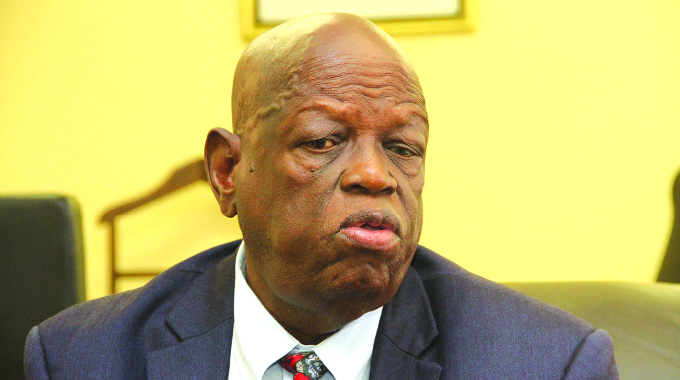
Knowledge Centre
ZANU PF Politburo member and a stalwart of the liberation struggle Colonel (Retired) Tshinga Dube, who died on Thursday, will be remembered as a decorated war veteran and revered figure in the country’s liberation history.
He died at the age of 83 after a long battle with illness.
Born Othiniel Siduduzo Dube on July 3, 1941 at Fort Usher in Matobo District, Matabeleland South, Col Dube became involved in politics at a young age, joining the liberation movement in the 1960s.
His first encounter with colonial injustice was in 1953 when his family was forcibly moved from Matopo to Hwange. He had most of his exposure to nationalism when he was in standard 6 at Solusi Mission and in 1957 he bought his membership card for the Southern Rhodesian African National Congress.
He sold copies of the Bantu Mirror and had the opportunity to hear Benjamin Burombo addressing people in beer halls.
Cde Dube was also exposed to Drum, Parade and Time publications. Africa had also started to taste freedom starting with Ghana.
He took part in his first strike at Solusi.
In 1961 Cde Dube left Solusi destined for Ghana via Zambia. He entered the Democratic Republic of Congo in 1962 and went to Lubumbashi where he aborted his trip after heavy fighting in the city. He returned to Zambia and was employed in a shop in Ndola before he relocated to Luanshya where he sold bicycles.
In 1963 he joined the grass root cells of the Zapu branch in Ndola and served as its secretary while recruiting new members. In July 1964 he was sent by Zapu to the Silver Forest Academy in the then Soviet Union (Russia) for military training.
He joined Cde Phelekezela Mphoko, Cde Ambrose Mutinhiri, Cde Robson Manyika, Cde Dumiso Dabengwa, Cde Goldman Gombakomba, Cde Wilfred Mlala and Cde Ethan Dube who were already undergoing training. Cde Dube underwent guerrilla training in specialties such as tactics, light arms and higher armaments.
After nine months of training he was selected for a communications programme which was thorough on sound electronics. After completing the signals course he remained in Russia as an instructor for future Zapu arrivals until the end of 1965 when he returned to Zambia where he joined the Inkomo Camp.
In 1966 he and 11 others were tasked to cross Zambezi River into Zimbabwe to attack the Rhodesian post in Tsholotsho and managed to do so but were eventually cornered and forced to retreat into Botswana where Cde Dube worked illegally as a teacher.
He was arrested and sentenced to one year in jail after he dropped his pistol while picking up a chalk.
After serving his sentence, he and his fellow comrades, who had also been arrested were repatriated to Zambia and he was commanding the recruiting camp at Luthuli.
In 1968 he was the commander at Kalowa Camp. He then joined the Zipra High Command as Chief of Communications and helped map out routes for joint Zapu-ANC incursions into the country.
On March 11, 1971 Cde Dube and other members of the Zapu High Command were arrested and detained during an attempted coup staged by malcontents that wanted to effect a change in the leadership of the party.
Two weeks later they were rescued and taken to Mboroma 400km northeast of Lusaka where they languished for months surviving on locusts.
He managed to study and sit for his A levels. In June 1971 he was sent to Mbeya, Tanzania, to deal with the diversion of Zapu arms to Zanu.
In September 1973 he returned to Russia on a Zapu assignment arranged by Cde Dabengwa and Cde Jason Ziyapapa Moyo. On arrival in Moscow he was taken to Madi University where he was offered a place to study electro-technic engineering and became the party’s de facto student’s representative.
Cde Dube was a part-time radio announcer on Radio Moscow. In mid-1976 he managed to fly back to Zambia to meet Cde Joshua Nkomo and other Zapu leaders after their release from prison.
He returned to Russia two weeks later and continued to engage Zapu students on developments back home.
Cde Dube graduated with a Master of Science degree (engineering) in electro-technics.
In July 1979 Cde Dube returned to Zambia before the Lancaster House talks and was appointed Chief of Communication in the Zipra Communications Department.
He was also tasked with spreading the word about the end of the war after the conclusion of the Lancaster House conference.
He returned home on December 31, 1979 and landed at the then Salisbury International Airport (now Robert Gabriel Mugabe International Airport) with Dumiso Dabengwa, Lookout Masuku, Tjile Nleya and Phillip Valerio Sibanda and was based in Mt Pleasant.
He joined the Ceasefire Commission whose members visited assembly points across the country and helped with the integration of the Zanla and Zipra forces into the national army. In 1981 he was appointed Commander of the Signals Corps.
In 1982 he travelled to Tanzania with the then Minister of Defence Sydney Sekeramayi on a recruitment drive of operators, technicians and instructors. He also travelled to other countries to source equipment for the ZNA.
In 1982 was assigned together with the late General Vitalis Zvinavashe to deploy two companies of the ZDF at Mafoka in Mozambique during the RENAMO era.
He left the ZDF in 1989 and joined the Ministry of Defence as deputy secretary responsible for research and development in 1990. His role and that of the department was to expedite studies and inquiries into problems that affected the armed struggle.
He left the Ministry of Defence in 1994 to join Zimbabwe Defence Industries as general manager. Cde Dube also spearheaded the introduction of garrison shops within military barracks for the first time in the country’s history.
He mooted the sale of food rations to other African countries by the ZDI. In 1996 he was appointed to serve on the advisory board of the United Nations Disarmament Commission.
Cde Dube facilitated the overthrow of Mobuto Sese Seko after the ZDI was contracted by Rwanda to supply arms to the troops of the late DRC President Laurent Desire Kabila’s troops.
He also facilitated the entry of Zimbabwe in the DRC war. He oversaw the commissioning of the high-explosive filling plant in Domboshava on February 16, 1995 and in 1997, he was appointed to the Organisation of the Prohibition of Chemical Weapons.
He was instrumental in pushing for Zimbabwean businesses to explore the DRC market after the war.
He was instrumental in the capture of Colonel Simon Mann and his group of mercenaries in Harare in 2004.
Cde Dube joined Zanu PF in 1987 after the Unity Accord.
He entered the political fray in 2007 and participated as Zanu PF candidate for Makokoba constituency in the 2008 election but lost to Thokozani Khupe.
He was appointed a member of the Zanu PF Central Committee in December 2009. In 2010, he became a Politburo member.
He was later appointed Marange Resources chairman in March 2012.
In 2013, he lost the election for Makokoba National Assembly seat again to Mr Gorden Moyo of MDC-T in 2013.
He finally won the Makokoba seat during by-elections that were held in June 2015 and was appointed Deputy Minister of Welfare Services for War Veterans, War Collaborators and Former Political Detainees in September of the same year.
He replaced Cde Chris Mutsvangwa as Minister of Welfare Services for War Veterans, War Collaborators and Former Political Detainees in March 2016 and lost the position after a Cabinet reshuffle in October 2017.
Cde Dube took a back seat in active politics after the 2018 harmonised elections.
He sat on the board of the Zimbabwe Mining Development Corporation (ZMDC) for eight years. He was deputy chairman of TelOne for seven years. He was also the Zimbabwe Football Trust chairperson
His awards were: Independence Medal, Liberation Medal, Ten-year Exemplary Service Medal, Mozambique Campaign Medal, SADC-DRC Campaign Medal, Grand Order of Merit and USSR Military Training Medal.
He was a long-time supporter and benefactor of Highlanders Football Club. He was also involved in the development of Makokoba.
Cde Dube was influential in bringing Michael Jackson to Zimbabwe in November 1998.
He brought in Freddy Gwala and Platform One from South Africa to perform for free ahead of the 2013 elections.
Cde Dube also sponsored the Mafela Trust, aimed at collating Zapu liberation war history
He was involved in cattle ranching, was previously involved in horse and dog racing.
“It is true that a lot happened in history but we should not stay there forever. We cannot resurrect those who died, even if they died in a bad way.”-Cde Dube addressing supporters during a campaign rally in Makokoba constituency Bulawayo in 2013.
“I don’t think we have taken our sport seriously. Maybe in future our President will have a Sports Ministry, so that sports can have its own budget.”-Rtd Col Dube speaking during a Zimbabwe Football Trust fundraising campaign launch in 2013.


 Online Reporter