

 admin
admin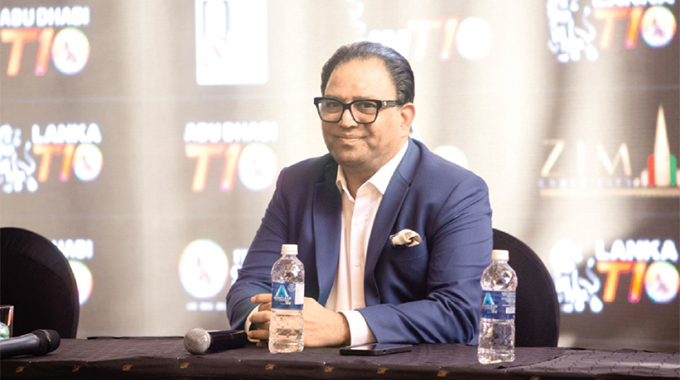
THE recent Zim Afro T10 tournament that was hosted by Zimbabwe Cricket (ZC) and their international partners — T Ten Global Sports — was a testament to the huge potential that lies in local sport as an industry.
Sport is an industry with unparalleled global reach and power if run professionally.
It has the potential to contribute significantly to the growth of the country’s economy.
Hence the reason sport leaders in different associations and capacities should heed the call by President Mnangagwa to invest more in the sector.
The President hammered the message home in his keynote address at the close of the Zim Afro T10 when he stressed the international recognition of Zimbabwe as a destination for business and sport.
There are many opportunities that can be harnessed for the growth of the country through sport tourism. The message was not aimed at ZC alone but across the board.
There is a need for investment into sport and the likes of ZIFA, ZRU, Zimbabwe Netball Association, Tennis Zimbabwe and Triathlon among others can lead the way for other sporting disciplines registered with the SRC because of their wider appeal.
Last month, the country hosted large numbers of international visitors, who came for the Zim Afro T10 tournament that was held at Harare Sports Club.
A growing number of international investors, who are putting their confidence in Zimbabwe and the Zim Afro T10 League, were in attendance.
These investors represent countries such as Australia, Bangladesh, India, the United Arab Emirates, Portugal and the United States, among others.
Over 60 international cricket players from as many as 13 different countries took part in the tournament this year. This demonstrates that Zimbabwe’s doors are truly open for global partnerships and opportunities.
The local cricket fans also turned up in numbers and the global viewership, according to the organisers of the tournament, has grown exponentially, hence putting Zimbabwe on the international map.
This is an event that is proving to be big not only in Zimbabwe but across the globe.
The spin offs were significant as the hospitality industry also benefitted from the demand for hotel accommodation.
The nexus between sport and tourism can result in good business for the nation.
In essence, sports and tourism are somehow inter-related and can complement one another in showcasing the country as well as earning revenue from the spin-offs.
Sports tourism is a fundamental axis, generating around 10 percent of the world’s expenditure on tourism.
It is, according to the UNWTO, one of the fastest-growing sectors in tourism as more tourists are interested in sports activities during their trips whether sports are the main objective of travel or not.
Sports tourism positively impacts regions by attracting tourists, creating job opportunities, and generating revenue.
The world over, the sports industry has repeatedly demonstrated its ability to act as a catalyst for economic and societal development: connecting global communities, attracting inward investment, generating revenue, creating job opportunities, attracting tourists and delivering positive health outcomes.
According to UK Sport, major sport events hosted in the UK in 2023 generated £373 million in direct economic impact, a 6:1 return on investment, with 93 percent of the British population agreeing that major sporting events raise the profile of UK cities internationally.
This is exactly where our sport should be heading.
The most encouraging fact is that the Government of Zimbabwe has been open to hosting international events that bring the spotlight on the country.
This dovetails with government’s efforts towards remodelling the sport and recreation sector into a multi-million-dollar industry, in line with the National Sport and Recreation Policy and the quest to promote sport tourism.
Government has made a deliberate approach under the Second Republic to support the growth of the sport and recreation industry.
The ‘Zimbabwe is open for business’ mantra has fostered strong partnership between Government and the private sector for inclusive and sustainable development.
The President said Government stands ready to continue playing its part towards attracting investors in the sector.
The ball is firmly in the courts of sports administrators and the potential partners in industry and commerce. The impact of sport tourism on a country’s economy can be incredible.
Local communities cab benefit through the investment into sports infrastructure.
For instance, Takashinga Sports Club in Highfield has transformed into an ICC accredited stadium while the construction of the Mosi-oa-tunya International Cricket Stadium in Victoria Falls could be a big game changer.
There is a need for synergies and investment in infrastructure across all sport codes; be it rugby, football, tennis, athletics you name it.
Over the years and worldwide, sport has evolved from being a pastime into a huge industry with the potential of impacting on a country’s Gross Domestic Product, resulting in job creation and poverty alleviation.
As well as directly contributing to the economy, sport also provides indirect social benefits.
It requires proper planning and a total mindset shift.


 Online Reporter