

 admin
admin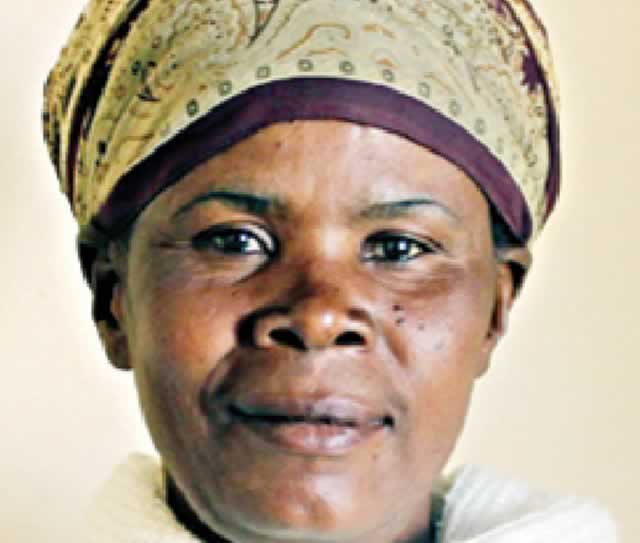

Sukulwenkosi Dube
THE era of the colonial rule was harsh to all. The elderly, adults and children felt the wrath of the Rhodesian government which was adamant to keep the black majority dormant.
At the age of 16, Simiso Dumani left her parents and village in Bambadzi area in Bulilima determined to contribute towards liberating her community that was suffering.
Dumani, who is now 54-years-old, said the years 1976 and 1977 were synonymous with great pain and anguish.
The elderly woman who narrated her experiences of the colonial rule system and the journey to attaining liberation said women equally contributed to the attainment of independence.
Dumani, whose liberation name was Siphile Dlela, said she dropped out of school before completing her Grade 7 as it had become impossible to pursue studies during the build up to independence.
“There was a lot of tension in our village as the Rhodesian government soldiers were continuously invading our area and torturing people. At first we kept attending school but the soldiers would arrive at the school and interrogate teachers and assault them in front of pupils.
“They would demand to know where the liberation fighters were hiding and they would chase us from school. At times, we would go for a week without attending school but we eventually stopped as the tension had worsened,” said Dumani.
She said at the ages of 15 and 16, she watched as her parents were thoroughly beaten up by the soldiers with sjamboks and knobkerries.
She said the soldiers would arrive even during the night while they were asleep and demand to know the whereabouts of the liberation fighters.
Dumani said elders were assaulted with heavy weapons while children were whipped.
“The soldiers used to arrive on horses and accuse villagers of assisting the liberation fighters with food and clothes. They sometimes acted on information that they received from villagers who were sellouts.
“In some cases they interrogated villagers by beating them up severely demanding information on the liberation fighters. It was very painful to watch my parents being battered before me continuously,” said Dumani.
She said under worse circumstances they were forced to flee their homes and spend nights in the bushes to escape the wrath of the soldiers.
She said at times parents fled leaving their children behind.
Dumani said they spent some nights hiding by Maitengwe River in Botswana as they knew that the soldiers could not access them there.
She said they escaped as families and they would prepare their meals in the bush and sleep in the open until the soldiers passed through their village.
Dumani said she developed the urge to join the liberation struggle after enduring two days of extreme torture by the soldiers.
“At one time we spent a week sleeping by Maitengwe River in Botswana after running away from the soldiers. Our village was close to the neighbouring country and at times that served as an advantage when we wanted to flee whenever we heard that they were invading neighbouring villages.
“I got fed up when the soldiers came to our home one day and captured us. They forced us to run while they chased us by car. We were also ordered to sit under the scorching sun and we were whipped severely. This torture lasted for two days,” she said
Dumani said at times they were forced to run ahead while horses pursued them.
She said upon being released she resolved with her elder brother that they had to travel to Zambia and undergo training as ZIPRA forces so they could join the liberation struggle.
Dumani said they travelled on foot to Francistown in Botswana where they arrived at a camp where they converged as aspiring liberation fighters and were later transported to Zambia.
She said she underwent her training at Mkushi training centre at the age of 16 in 1977.
Dumani said she first arrived at VC Camp where a selection was made for potential trainees.
She said upon completing her six month training and excelling, she was appointed as trainer at the camp and was responsible for instructing other recruits.
“Some of my peers were deployed back to the country to fight the enemy and some are still in the army today but I remained at the camp as a platoon commander.
“One night, we were attacked by the Rhodesian forces. They bombed the camp and we lost hundreds of people among them camp commanders. They took over the camp and some comrades fled into the bushes,” she said.
Dumani said she and other survivors sought refuge in a river which was within the camp. She said the soldiers used the same river to dump dead bodies.
She said they spent three days hiding in the river which was swamped with dead bodies without any food.
Dumani said they fled from the camp into the bushes on the fourth day and kept travelling on foot until they were rescued by their fellow comrades who were conducting a search for camp survivors in vehicles.
She said they remained in Zambia and returned in 1980.
“The attack by the soldiers at the camp was painful because we lost many comrades. We weren’t equipped to fight back and as such we were at their mercy. We slept among dead bodies for three days as they kept roaming around the area and we feared for our lives,” said Dumani.
She said the role that was played by the liberation fighters could not be overemphasised as many of them sacrificed their lives.


 Online Reporter
 Bongani Ndlovu