Online Reporter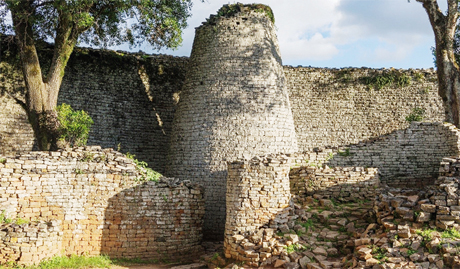
Gibson Mhaka Zimpapers Politics Hub
ZIMBABWE’S assumption of the Chairmanship of the Common Market for Eastern and Southern Africa (COMESA) comes at a time when the regional bloc is attempting to move beyond the language of integration towards a more practical question: how can African countries turn a large regional market into increased production, investment, trade and jobs?
That question gives Zimbabwe’s upcoming Chairmanship significance beyond the hosting of a major regional summit.
Zimbabwe will not simply host the 25th COMESA Summit in Harare. It will assume the Chairmanship at a time when the bloc is advancing the theme, “One Market, One Future: Advancing Inclusive Industrialisation, Investment and Regional Integration in COMESA.”
The real measure of the Chairmanship will therefore be what the regional market means in practical terms for ordinary economic actors.
For Zimbabwe, the question is particularly important.
What does COMESA’s one market mean for the farmer trying to sell agricultural produce beyond the country’s borders?
What does it mean for a manufacturer seeking a bigger market for locally produced goods?
What does it mean for a mining company looking to move from exporting minerals to processing them?
And what does it mean for small businesses and tourism operators seeking customers across the region?
These are the questions that give the COMESA Chairmanship an economic meaning beyond diplomacy.
Zimbabwe enters the Chairmanship with an established policy emphasis on value addition, industrialisation and export growth.
The Second Republic has repeatedly argued that the country must make better use of its natural resources and expand productive capacity rather than rely excessively on the export of raw commodities.
COMESA provides a regional platform through which that proposition can be tested.
A market of more than 600 million people creates opportunities that cannot be fully replicated by individual national markets.
For Zimbabwean producers, the significance lies in whether that market can be converted from a statistical figure into actual customers.
A farmer in Matabeleland South, for example, does not benefit simply because COMESA represents a large population.
The benefit comes when that farmer can produce competitively, meet quality standards, move goods efficiently across borders and receive payment without facing prohibitive costs and delays.
The same applies to a manufacturer in Bulawayo or Harare.
A larger regional market can make investment in production more viable because companies are no longer limited to domestic demand.
This is particularly important for industries that require economies of scale.
A company producing machinery, processed foods, pharmaceuticals, clothing, building materials or other manufactured products needs sufficient demand to justify investment in modern equipment, skills and technology.
Regional integration can provide that demand. But the existence of a regional market does not automatically translate into increased exports.
Zimbabwean companies still have to compete on price, quality, reliability and delivery.
This is where the Chairmanship presents both an opportunity and a responsibility.

Zimbabwe can use its position to place practical barriers to intra-regional trade higher on the COMESA agenda.
Non-tariff barriers, cumbersome border procedures, transport costs, differing standards and delays in payments can make regional trade considerably more difficult than it appears on paper.
For a large corporation, some of these costs may be manageable.
For a small enterprise, they can determine whether an export order is profitable or loss-making.
The interests of small and medium-sized enterprises therefore deserve particular attention during the chairmanship.
SMEs are often described as the backbone of African economies, but many remain largely confined to domestic markets because they lack information, finance, export certification, logistics and knowledge of foreign markets.
A genuinely integrated COMESA market should make it easier for such businesses to identify opportunities and participate in regional value chains.
The same logic applies to agriculture.
Zimbabwe has considerable agricultural potential, but production alone is not enough.
The country needs stronger links between farmers, processors, logistics companies, retailers and regional consumers.
That means looking beyond the export of unprocessed agricultural commodities towards agro-processing and the development of regional value chains.
A farmer producing maize, tobacco, horticultural products, livestock or other commodities can generate greater economic value when those products feed into processing industries that create jobs and additional exports.
This is the broader industrialisation question facing Zimbabwe.
The country’s mineral wealth provides another important example.
Zimbabwe has significant deposits of gold, platinum, lithium and other minerals.
Yet the economic value of a mineral is not confined to the extraction stage.
The greater opportunity lies in building industries around mining, processing, refining, manufacturing components and developing technologies and services linked to the mining sector.
COMESA’s emphasis on regional value chains in critical minerals therefore comes at an important time.
Instead of each country attempting to develop every component of a value chain independently, regional integration can allow countries to specialise and trade with one another.
Zimbabwe could supply minerals or processed materials, while another member state provides manufacturing capacity, technology, logistics or access to another market.
Such arrangements can create a more integrated regional industrial base.
Tourism also has a place in this equation.
Zimbabwe has established attractions, including Victoria Falls, Hwange National Park, Great
Zimbabwe and other cultural and natural heritage sites.
The opportunity presented by regional integration is to make tourism more interconnected.
Visitors coming into the region should be able to move more easily between destinations, spend more time within the region and access tourism products across several countries.
This can increase the economic benefits of tourism while creating opportunities for accommodation providers, transport operators, restaurants, craftspeople and other small businesses.
The COMESA Chairmanship also dovetails with Zimbabwe’s broader engagement and re-engagement drive.
The Government’s foreign policy position of being “a friend to all and an enemy to none” has placed economic diplomacy at the centre of international relations.
Regional integration is an important component of that approach as it provides a platform for countries to pursue economic interests collectively.
For Zimbabwe, the Chairmanship can therefore be used to connect diplomacy with production.
The country has hosted major regional and continental gatherings before, but COMESA presents a different opportunity because of its explicit economic mandate.
The emphasis on “One Market, One Future” places the private sector, producers and consumers at the centre of the integration project.
It also brings the discussion back to the philosophy of “Nyika inovakwa nevene vayo/Ilizwe lakhiwa ngabanikazi balo”.
National ownership does not mean economic isolation.
Rather, it can mean building sufficient domestic productive capacity to participate meaningfully in wider markets.
A Zimbabwean company cannot take advantage of a regional market if it lacks the capacity to produce competitively at home.
This makes domestic industrialisation and regional integration two sides of the same economic equation.
The road ahead will not be without challenges.
Zimbabwean businesses will face competition from producers in other COMESA countries.
Greater market access works both ways; it creates opportunities for Zimbabwean exporters while also opening the domestic market to products from the region.
That reality makes competitiveness essential.
The Chairmanship should therefore be viewed not simply as an opportunity to sell more Zimbabwean products, but as a period in which the country must strengthen the productive foundations required to compete.
Most importantly, the success of Zimbabwe’s COMESA Chairmanship will be seen in the factory that secures a new regional order, the farmer who reaches a new market, the miner who moves further up the value chain, the tourism operator who attracts regional visitors and the small business that makes its first export.
That is where “One Market, One Future” becomes more than a summit theme.
Zimbabwe has an opportunity to use the Chairmanship to push the COMESA conversation towards the practical realities of production, trade and investment.
That is the real test of the one market.