


 peter
peter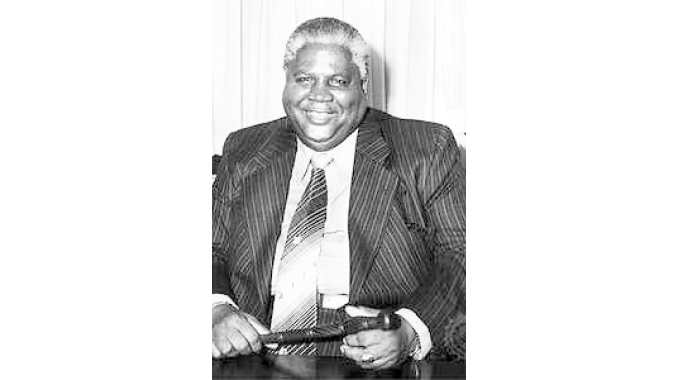
Vincent Gono, News Editor
PERHAPS at one point in the lifecycle of nation, memories have to be evoked and history has to be re-written and corrected where departed and living liberation heroes who deserve recognition should be accorded such without necessarily looking at the different political opinions that exist and in the post-independence era.
That they hold a different political view should not wish away their nationalistic contribution and they should be remembered when they are departed to keep their legacy alive and to ensure the correct version of history is passed on.
Mindful of that and perhaps following the dictum that, “the dead cannot cry out for justice, it is the duty of the living to do so for them,” the Second Republic has set itself to bring justice to the departed sons and daughters of the soil and give the country the correct dose of history and the benefits are not just political but socio-cultural too.
President Mnangagwa has given direction to his Government’s development trajectory through his instructive philosophy of leaving no one and no place behind and what it means is that he desires to see development that transcends tribal and political differences.
African philosophy scholar Mr Jowere Mukusha said in an interview that for that development to flow seamlessly it is supposed to be tied to the idea of knowing how to inherit before becoming good innovators. And inheriting according to him, means connecting history, the past to the present and in Zimbabwe, such can be achieved through recognising the elders and solons of the community and bringing them out to get celebrated for their efforts in nation building.
He said commemorative nationalism should not be seen through the political lenses of electioneering, but as a pure aspect of cultural nationalism meant to bring national unity in the country through a thoughtful recognition of those that history had somehow accidentally or coincidentally omitted.

“The recent recognition of liberation heroes such as Cde Ndabaningi Sithole and Cde James Chikerema by the second Republic for their enthusiastic revolutionary pioneering steps for the Second Chimurenga War was apt. It speaks well of the Second Republic’s desire to correct the history of the country and reconnect the past with the present.
“Most importantly however, it redefines our view of a liberation war hero and unifies the country around how the country came into being. And while there has not been an issue around Cde Joshua Nkomo’s Father Zimbabwe status, the Second Republic has shown some determination in keeping his legacy alive other than letting it be swept away by the deleterious winds that weep tirelessly in the annuls of national history threatening the existence of his legacy,” said Mr Mukusha.
He said the Nkomo Foundation and the Nkomo family have acknowledged the efforts of the Second Republic in keeping alive the history of Father Zimbabwe and the correct documentation of the Zipra forces’ contribution which they felt was being deliberately blurred in the First Republic.
“Many people in Zimbabwe and beyond understand the value of unequivocal and pragmatic nationalism from these commemorations of our fore heroes which will double as a unifying agenda resonating well with President Mnangagwa’s development philosophy of leaving no one and no place behind.
“The people of Zimbabwe are more united by the recognition of such liberation stalwarts thereby bringing peace, unity, harmony, love and public tranquillity.
“These commemorations teach us Zimbabweans about the struggles within a struggle and fundamentally how such struggles should be resolved especially that we are one people with one major objective of achieving the sovereignty of the Republic of Zimbabwe,” he said.
Political commentator who is a Political Communication lecturer at Great Zimbabwe University Dr Last Alfandika said the commemorations were an important part of cultural nationalism which he said was defined by scholars such as John Hutchinson and Ernest Gellner as quoted by Sabelo Ndlovu Gatsheni as a movement of moral regeneration which seeks to re-unite the different aspects of the nation— the traditional and modern, agriculture and industry, science and religion — by returning to the creative life-principle of the nation.
He said cultural nationalists perceive of the nation as a product of history and culture adding that the Second Republic’s initiative to recognise Sithole, Dr Joshua Nkomo and Chikerema and all other efforts of connecting people to their history was a noble one.

He said the objective was, in part, to preserve the memory of the roles that these valiant sons of Zimbabwe played in the past that are significant to the country’s historical development and the independence that we now enjoy.
“Honouring these three who come from three separate provinces, demonstrates how important and powerful these rituals are at disseminating ideals and the historical relevance of the past era that still are part of our existence as a nation today. This is a significant initiative that contributes to Zimbabwe’s national identity.
I believe that the Second Republic’s masterplan for remembering these liberation giants furthers the construction of a very specific Zimbabwe nationalism that asks for the erasing of historical identity cleavages and pushes Zimbabwe in the direction of homogeneity, especially with regard to some history makers like Ndabaningi and Chikerema we knew had been side-lined for the past 43 years,” said Dr Alfandika.
Sabelo Ndlovu Gatsheni puts it succinctly when he posits that to cultural nationalists, ‘nations are then not just political units but organic beings, living personalities, whose individuality must be cherished by their members in all their manifestations.’
In short, cultural nationalists seek to inspire ‘love’ of community, educating members of community on their common national heritage of splendour and suffering, engaging in naming rituals, celebrating cultural uniqueness, and rejecting foreign practices.
Gellner has further argued that cultural nationalists should be understood as ‘moral innovators’ who establish ‘ideological movements at times of social crisis in order to transform the belief-systems of communities, and provide models of socio-political development that guide their modernising strategies.’
Commemorative nationalism is not new to Zimbabwe as galas have been organised for important national events such as Independence and Heroes Holidays.
They have been an essential component and moral reminders of nationalist politics that spoke to the heart, the politics of affect, emotion and drama that unites and connects people with their history and heritage for the maintenance of national sentiment.
Political analyst Mr Methuseli Moyo said it was pleasing that the Second Republic had risen to deal with that past, by being all inclusive in commemorating and recognising all nationalists.
“It is important to correct past mistakes in order to bring everybody together to move forward. Indeed, if that happens, no-one will be left behind. Sithole, Dr Joshua Nkomo and James Chikerema are part of the group of men and women who spearheaded and galvanised the fight against colonialism. There may have been differences, splits and even antagonism amongst nationalists at some point, and that somehow divided the nation, at times on ethnic and regional lines but it is pleasing that the
Second Republic is seized with uniting the people,” he said.
In his 1993 publication – The Nations and its Fragments, Partha Chatterjee emphasised how the cultural nationalism played a part in the fight against colonialism. The theorist said cultural and spiritual sphere was the main domain within which anti-colonial nationalism emerged before it assumed political and militaristic features to fight imperial power.
Commemorative nationalism also seeks to appeal to ethnic cultural symbols such as the leopard skins and fur hats worn by pre-colonial Shona and Ndebele chiefs, which leaders like Joshua Nkomo and Leopold Takawira often wore when addressing the masses.
The use of African cultural artefacts such as a war axe, sword and knobkerrie given to Dr Joshua Nkomo in 1962 by ninety-year-old Mr Nyamasoka Chinamhora exemplified national identity and were a show of solidarity in the fight for liberation across petty ethnic and geographical divisions and the Second Republic has been lauded for doing just that in its pursuit of national unity and development ahead of the Heroes Holidays and the elections in the important month of August.


 derick.khumalo
 Online Reporter