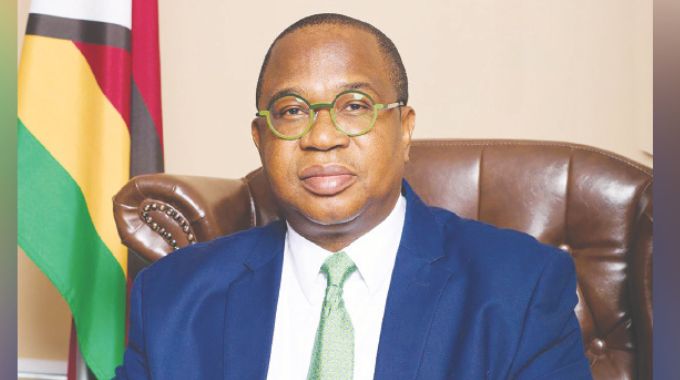
THE address by Finance Minister Professor Mthuli Ncube at the Pre-Budget Seminar in Bulawayo last week was more than a customary fiscal stocktake.
It was a testament to something remarkable: a nation that, after years of heavy lifting, has clawed its way back from economic abyss to become one of Africa’s fastest-growing economies.
The evidence, as Prof Ncube rightly noted, is all around us — in the cranes dotting our cities, the freshly rehabilitated highways and a local currency that has held steady for the longest stretch since the turn of the millennium.
The numbers are striking.
Zimbabwe’s economy grew by 8,3 percent in 2025, second only to Ethiopia on the continent and ahead of giants like South Africa and Nigeria.
Since 2017, cumulative growth has outpaced the Southern African Development Community (SADC) average by 6 percentage points.
Our economy is now more than twice the size it was seven years ago, with nominal gross domestic product (GDP) projected to reach US$66,4 billion this year.
Exports have doubled from US$5,3 billion in 2020 to US$11 billion in 2025, and are projected to hit US$14,9 billion by year-end.
Manufacturing capacity utilisation has climbed from a moribund 45,1 percent in 2017 to over 61 percent today, with giants like Dinson Iron and Steel Company — a US$1,5 billion investment — transforming our industrial landscape.
Perhaps most consequential for ordinary Zimbabweans, annual inflation has plummeted from an off-scale 687 percent in 2024 to just 3,7 percent in September 2026, single digits for the first time in three decades.
These are not abstract statistics.
They are felt in the revived industrial zones of Kwekwe and Gweru, in the record 359 million kilogrammes of tobacco delivered this year, in milk production that has nearly doubled since 2017 and in a tourism sector welcoming over 792 000 visitors in the first half of 2026 alone.
Zimbabwe Gold (ZiG), introduced in 2024, has averaged a stable ZiG26 per US dollar, with the gap between official and parallel rates narrowing below 20 percent — a remarkable achievement given our tortured currency history.
Yet, as we celebrate these milestones, the challenges ahead are sobering.
The spectre of a super El Niño, which threatens to bring drought to the 2026/2027 summer cropping season, looms on the horizon.
Agriculture, which rebounded by 27,9 percent in 2025, is projected to grow by only 5 percent in 2026 before potentially contracting in 2027.
For a country where agriculture sustains rural livelihoods, ensures food security and feeds our industrial value chains, this is no small concern.
The Cabinet-approved Six-Pillar Drought Plan — including AI-powered silos targeting a 600 000-tonne strategic grain reserve, accelerated irrigation development and climate-proofed input programmes — is a commendable anticipatory approach.
But plans must be funded, coordinated and executed with urgency.
This is why the 2027 National Budget, to be announced on November 19, carries exceptional weight.
It must do three things simultaneously: anchor macroeconomic stability and inflation expectations, insulate our critical agriculture sector from climate shocks and sustain the momentum of our reconstruction and reindustrialisation.
This means continued investment in ZiG’s stability through disciplined monetary and fiscal coordination, robust foreign currency reserves — already doubled to US$1,5 billion — and market-based instruments.
It means meaningful resources for irrigation infrastructure, drought-resistant inputs and livestock mitigation.
And it means maintaining the public investment that has delivered 18,3 kilometres of dualised highway, major dams like Gwayi-Shangani and Kunzvi nearing completion and 5 395 boreholes drilled.
The Second Republic has done the heavy lifting. It has stabilised, grown and reindustrialised an economy that many had written off.
But the work is far from done.
Success rests on shared momentum.
Zimbabweans expect a budget that protects the gains, prepares for the storm and keeps the wheels of reconstruction turning.
Since 2017, the Government has jumped through several seemingly insurmountable hoops.
It has confronted Cyclone Idai, which devastated lives and infrastructure in Manicaland in 2019; the Covid-19 pandemic, which paralysed global trade and domestic activity; recurrent droughts and energy shortages; disruptive currency reforms; and external shocks that would have broken weaker administrations.
In particular, Cyclone Idai tested the very limits of the State’s capacity to respond, rebuild and keep hope alive.
That Zimbabwe emerged from all these trials with its economy still standing — and now growing — is evidence of a Government that has learned to absorb shocks, adapt policy and keep moving. That experience gives us confidence that the challenges still ahead on the journey to Vision 2030 are not insurmountable either.