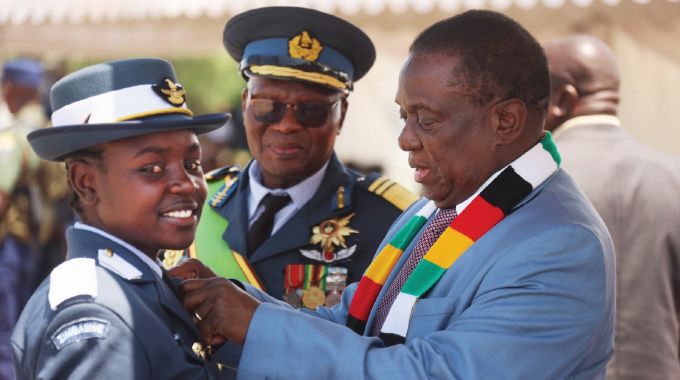
Zimbabwe’s ambitions in aviation, defence, technology and other specialised fields will be stronger when every talented young person can imagine a place in them, regardless of gender, neighbourhood or family circumstances, and pursue that possibility with confidence.
Pilot Kunashe Kavu’s achievement offers an encouraging example of what becomes possible when opportunity meets determination and when professional institutions recognise ability in their search for talent and excellence.
At 25, the young woman from Mufakose is the only female among 10 newly qualified Air Force of Zimbabwe pilots, having completed a demanding five-year training programme alongside nine male colleagues and earning her place through performance.
Her success is notable not simply because she has entered a profession traditionally dominated by men but because she has excelled within it, finishing as the second-best student and earning the prestigious Pink Skies Award for excellence.
The two awards, carrying a combined US$2 000, recognise academic performance and outstanding achievement by a female cadet underlining that inclusion and high professional standards can reinforce rather than compete with one another in national institutions.
Pilot Kavu’s journey began in 2021, after she saw an Air Force recruitment advertisement in the press, applied and secured a place on a course that would test her academically, physically and mentally over five demanding years.
The programme began with 12 officer cadets including 11 men and one woman and despite the discharge of one trainee and the tragic loss of another cadet and an instructor in an air crash, 10 officers graduated successfully.
Completing such training requires more than ambition as military pilots must develop technical knowledge, sound judgement, discipline, resilience and the ability to perform responsibly in demanding circumstances, qualities that Pilot Kavu has worked hard to demonstrate throughout her training.
Her achievement should encourage girls to consider aviation and other specialised careers not as distant possibilities but as fields in which their interests, education and capabilities can find meaningful expression, professional recognition and opportunities for advancement.
Pilot Kavu has offered that encouragement, telling young girls that their backgrounds should not define the height of their aspirations and urging them to work hard, remain focused and keep pursuing their goals with confidence and determination.
Her message deserves to travel beyond the graduation ceremony, reaching classrooms, families and communities where early encouragement can help children discover interests, build confidence and make informed choices about the futures they wish to pursue for themselves.
Schools and families can support this ambition by exposing girls to science, mathematics, technology and aviation, celebrating achievement across disciplines and introducing them to women whose careers demonstrate the breadth of opportunities available in modern Zimbabwe.
Professional institutions also have an important role of ensuring fair recruitment, accessible information, effective mentorship and supportive training environments can help ensure that promising candidates are encouraged to apply and equipped to fulfil their potential at every stage.
The Air Force’s training of Pilot Kavu provides a positive example of what can follow when women are given the opportunity to compete, learn and demonstrate their abilities within demanding professional settings alongside their male colleagues.
Her success also speaks to the value of looking for talent throughout the country, because ability and ambition are found in communities such as Mufakose as surely as they are found anywhere else in Zimbabwe.
Pilot Kavu has acknowledged the encouragement of her family, friends and instructors, a reminder that achievement is often strengthened by people who offer guidance, confidence and practical support throughout a challenging journey towards a worthwhile professional goal.
As Zimbabwe develops its aviation and wider technical capacity, Pilot Kavu’s flying wings can serve as a reminder that national progress is enriched when more young women are encouraged to bring their talents into every field.