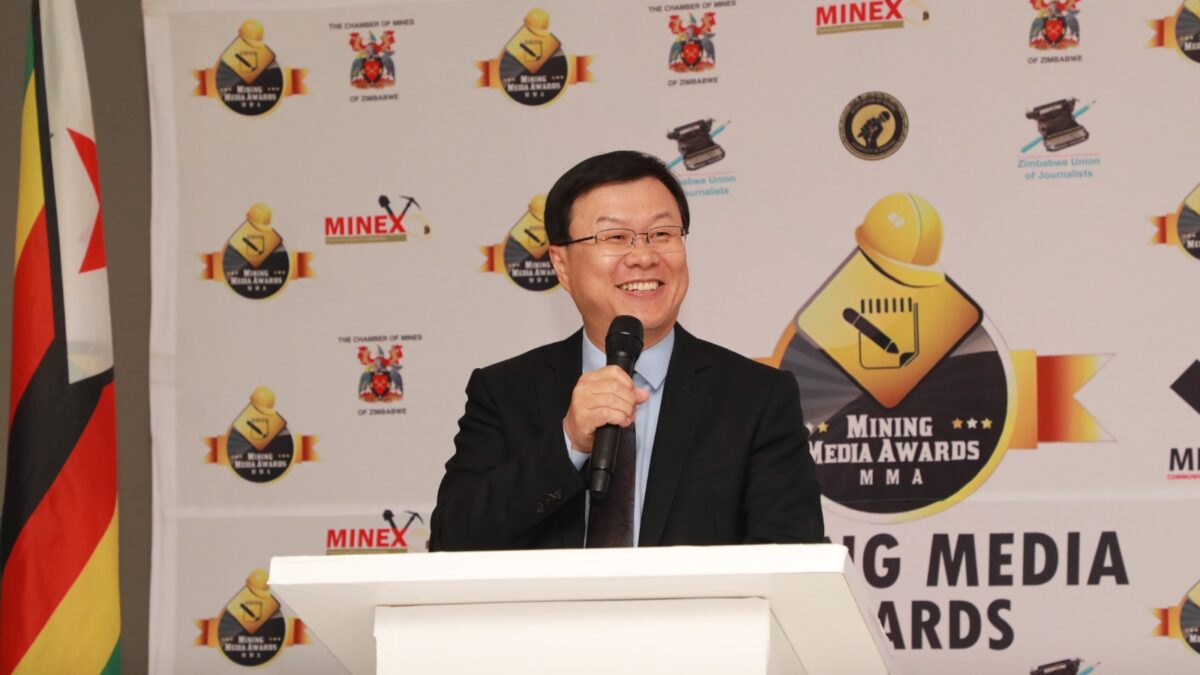
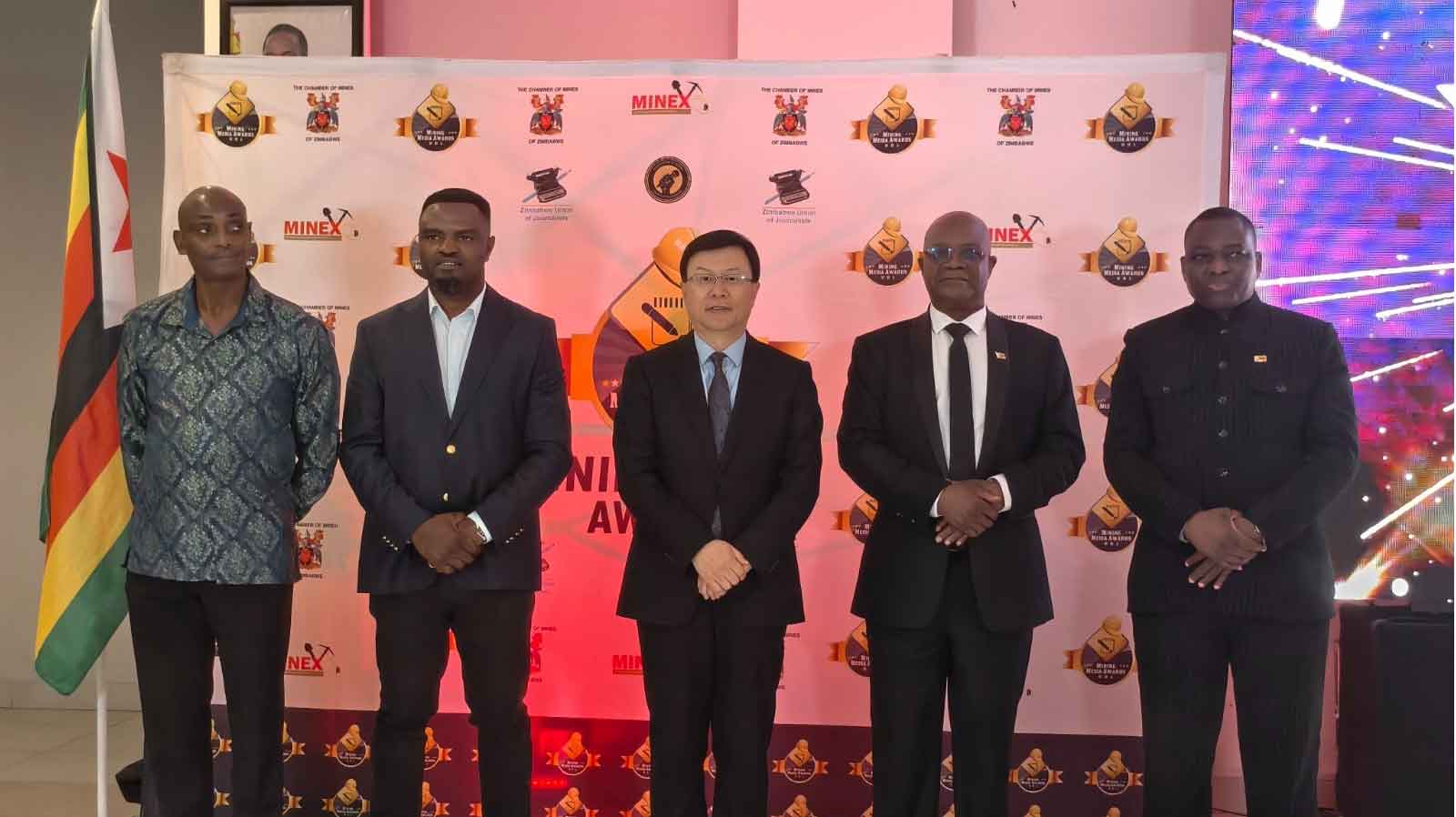
Remarks at the Mining Media Awards by H.E. Chinese Ambassador Zhou Ding
It is my great pleasure and honour to join you once again for the Annual Mining Media Awards Ceremony. I wish to extend my sincere gratitude to our organiser, Minex, for inviting me back to this important event.
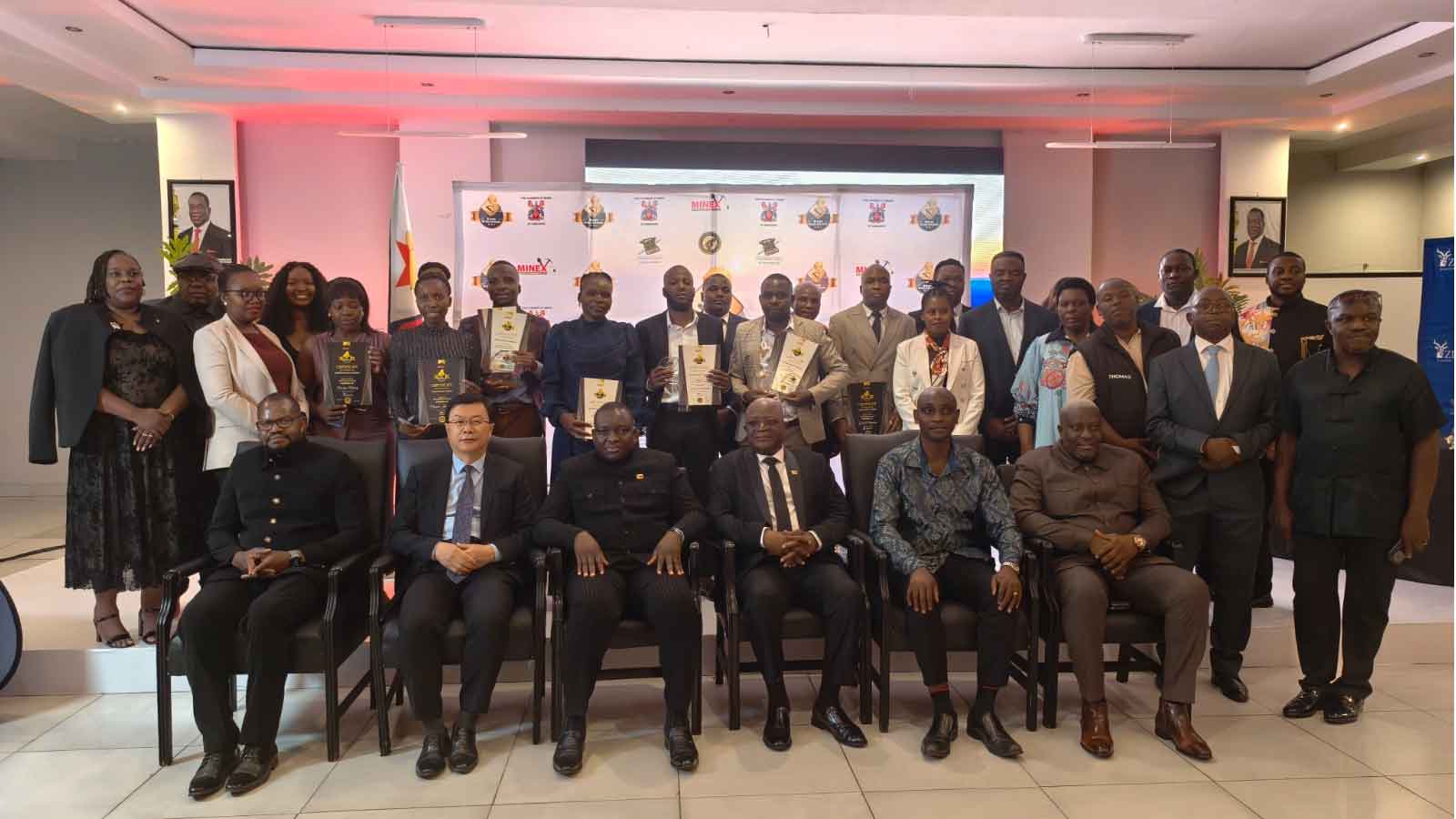
First of all, I would like to extend my warmest congratulations to every journalist and media house being honoured this evening. Your on-the-ground reporting, rigorous fact-checking and comprehensive coverage of Zimbabwe’s mining sector are truly commendable.
This year’s theme, “Build, Protect, Sustain Media Relations In A Digital Age”, is both timely and thought-provoking. In today’s fast-evolving digital landscape, journalism continues to play an invaluable role. It connects policymakers, industry operators and local communities, and fosters discussions on how Zimbabwe can best turn its rich mineral wealth into tangible benefits for the Zimbabwean people.
The mining sector is a solid pillar of Zimbabwe’s economy and a key driver in realising Vision 2030 and the National Development Strategy 2 (NDS2). Mining cooperation also constitutes an important dimension of China-Zimbabwe relations, going far beyond capital investment and mineral trade. It embodies a genuine partnership rooted in shared prosperity, skills transfer and a sincere commitment to local communities. China stands ready to support Zimbabwe in achieving its national development goals through unlocking the immense potential of its mining sector.
On 13 October in Beijing, President Xi Jinping put forward an important four-point proposal on China-Africa mining cooperation during his meeting with President Boko of Botswana. The proposal lays out the guiding principles for China-Africa mining cooperation:
First, African resources belong to Africa.
Second, China-Africa mining cooperation follows the principle of balancing justice and interests for mutual benefit.
Third, China-Africa mining cooperation pursues high-quality development to deliver greater industrial value addition and advance Africa’s modernisation drive.
Fourth, China-Africa mining cooperation must be conducted in a fair and open environment. Africa’s mineral resources must not be used as instruments for geopolitical rivalry. China stands ready to work with African partners to foster more enabling conditions for investment and business operations.
Yesterday, at the 33rd APEC Economic Leaders’ Meeting held in Shenzhen, President Xi Jinping noted that building an Asia-Pacific community calls for solidarity and mutual assistance, openness and integration, enterprise and innovation, as well as inclusive development. These principles are equally applicable to China-Africa mining cooperation.
Guided by these principles, China encourages Chinese enterprises to make tangible investments and deliver concrete benefits to Zimbabwe’s mining sector.
First, China fully supports Zimbabwe’s strategic goal of raising local beneficiation and downstream value addition for mineral resources. Huayou’s Prospect Lithium project has produced Africa’s first batch of lithium sulfate, with an annual capacity of 50,000 tonnes. Sinomine’s Bikita Minerals and Yahua’s Kamativi Mining Company are also constructing lithium sulfate plants, scheduled for commissioning next year.
Second, Chinese companies are scaling up power generation to underpin mining activities and Zimbabwe’s broader national economic growth. Sustainable mining cannot happen without a reliable power supply. China-Zimbabwe energy cooperation projects including Hwange and Kariba South Power Stations continue to deliver stable electricity for industries and households across the country.
Meanwhile, multiple solar projects and new waste-to-energy facilities will soon add over 1,000 megawatts of installed capacity, with total investment exceeding 700 million U.S. dollars. Beyond power generation, these projects will create tens of thousands of direct and indirect jobs and on-the-job training opportunities for Zimbabweans.
Third, Chinese enterprises contribute tax revenue and deliver meaningful corporate social responsibility outcomes to advance sustainable mining. Chinese lithium investors operate within Zimbabwe’s established mining tax regime, which includes a 10 percent export tax, a 3 percent community development levy, a 7 percent mining royalty and the 1 percent marketing fee for the Minerals Marketing Corporation of Zimbabwe (MMCZ). In the first three quarters of 2026 alone, Chinese lithium firms contributed over 400 million U.S. dollars in export-linked tax revenue to national coffers.
Beyond tax contributions, Chinese companies have channelled more than 100 million U.S. dollars into nationwide CSR programmes, supporting schools, clinics, roads, boreholes and community livelihood projects across Zimbabwe. The Chamber of Chinese Enterprises in Zimbabwe (CCEZ) will soon release the Report on Economic Contributions and Corporate Social Responsibility of Chinese Enterprises in Zimbabwe, documenting these community-focused endeavours.

The Chinese Government consistently requires Chinese enterprises and nationals overseas to strictly abide by the laws and regulations of host countries. We are pleased to see the vast majority of Chinese mining companies operating in Zimbabwe respect local rules and honour their social and environmental commitments. Some reports tend to magnify individual, isolated incidents and paint a distorted picture of the overall situation. This is neither fair nor conducive to China-Zimbabwe cooperation, nor to Zimbabwe’s national interests.
Responsible mining partnerships cannot thrive without integrity and compliance.
Last month, the Fifth Plenary Session of the 20th Central Committee of the Communist Party of China concluded successfully in Beijing. The session reaffirmed the CPC’s commitment to full and rigorous self-governance and strengthened the Party’s institutional capacity for sound, clean and effective governance. It also outlined requirements for deeper international anti-corruption cooperation. These priorities are reinforced by the newly enacted Anti-Cross-Border Corruption Law, China’s first dedicated foreign-related anti-corruption legislation. The law demonstrates China’s zero tolerance for corruption involving Chinese citizens and enterprises overseas. It sets binding compliance rules to curb transnational bribery, abuse of power and illicit asset transfers, denies safe haven to transnational corrupt actors, and establishes UNCAC-aligned frameworks for judicial cooperation and asset recovery. Applying primarily to Chinese citizens and enterprises abroad — including those operating in Zimbabwe — the law and its strict compliance standards will make Chinese enterprises more reliable partners for Zimbabwe’s sustainable mining development.
To unlock Zimbabwe’s vast mineral potential, stable, transparent and predictable policy frameworks, together with a level playing field for business, serve Zimbabwe’s national interests. They help attract and retain responsible, high-quality investment, drive deeper local beneficiation, expand skills transfer and bring greater benefits to local communities. China stands ready to cooperate with Zimbabwe to foster a clean and responsible investment environment for business to grow.
Journalists are key stewards of balanced, evidence-based public discourse. Zimbabwe’s media has done invaluable work, documenting industry gains while highlighting challenges in support of the country’s sustainable development goals. Your voices carry immense weight as Zimbabwe seeks to grow its mining sector.
Drawing on tonight’s theme — “Build, Protect, Sustain” — I encourage all journalists and media practitioners in Zimbabwe to continue upholding rigorous professional standards, capturing the complex realities of Zimbabwe’s mining sector, building informed understanding of China, and reporting accurately and fairly on China-Zimbabwe mining cooperation. In doing so, you will help safeguard a sound environment for investment and cooperation and enable international stakeholders to better understand Zimbabwe’s development priorities and investment potential.
Once again, my sincere congratulations to all award winners this evening. May your pens and cameras continue to capture truth, amplify hope and forge ever-stronger bonds of friendship. I look forward to working with Zimbabwe’s mining media community and supporting Zimbabwe in developing its mining sector and realising Vision 2030.