Online Reporter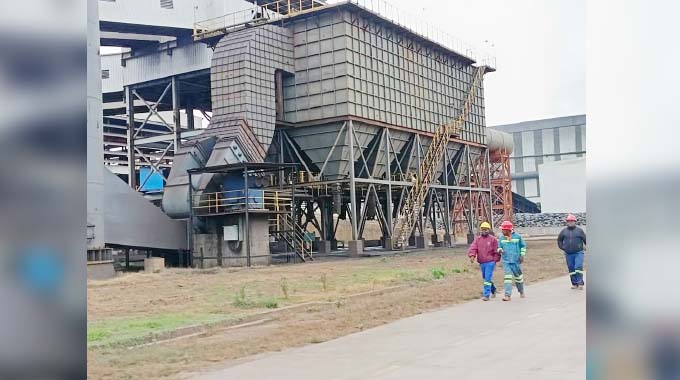
THE construction industry is back in the driver’s seat when it comes to economic growth, with the huge and growing Government investment in infrastructure, the insatiable demand by Zimbabweans for more and better housing and the return of private sector investment in a big way to the property markets.
Added to this is the fact that all raw materials and almost all the main intermediate materials are now Zimbabwean home products, making it easier to add to cement factories, brickfields, timber processing and now the new steelworks at Manhize supply the basic construction bar and the materials needed by others for the downstream fittings.
And, of course, all this allows proper production of building sands and aggregates within a few kilometres of every building site in Zimbabwe, creating new local employment every time there is a major project, with minimal environmental damage now that almost all the larger users have recognised the need for proper regulation and licensing.
Of course more investment is needed, and some of the years of poor investment and running down of capital works need to be reversed, but new investors are lining up, eager to show that with modern plant and equipment it is possible to have the finished price of building materials within ranges that allow the investors to make money, while having quality materials available at acceptable prices within the trade.
Zimbabwe has had construction booms in the past and a lot of the stop-start economic development in the colonial era was built around construction, although its very stop-start progress, usually linked to the waves and retreats of emigration and immigration, did place intolerable strains on the viability of the materials industry.
Post independence, development was more sustained, but still over linked to the supply of foreign currency and import controls, and then the volatility following the hyperinflation did not help.
The Zimbabwean problem of running capital investment into the ground was apparent, and the continual changes in ownership in things like major cement factories did not help to build up the sustained stability that was required.
Most of these problems have been sorted out, or are being sorted out, and it looks as though we will be able to move into a new era where we can have continuous growth in construction and the capital investment continually updated.
It is almost impossible to undervalue the role construction can play in pushing a developing economy forward and creating new jobs and other employment.
If we want to see the effects of serious pressure from this industry in recent times, we just need to look at Europe and Japan after the Second World War, and the gigantic progress made in countries like China later on as they used construction to lead some of the highest growth rates in history.
The Second World War left swathes of Europe and Japan destroyed, just piles of rubble, especially in the defeated nations. And yet a systematic rebuilding programme, that at one stage absorbed almost 20 percent of the workforce, proved to the trigger of rebuilding the economies as well.
Zimbabwe just needs to build its economy, and using construction provides both real value with new building and infrastructure as well as the value that can take the country to new heights.
Sometimes the rebuilding and new building was ugly and sub-standard, but those countries that had decent standards and enforced these usually did a lot better than those who just let the worst of the private sector do what it wanted, or allowed some theoretical developers to build the sort of buildings that no sane person would want to live in and which has seen, for example, many being torn down and replaced with high-density development that still retains a human touch and allow the growth of communities.
We need to learn from mistakes as well as successes.
Some of the industrial potential that must be built up, such as the cement works and the steel works and the brickfields, needs to be done in new locations, preferably right next to the raw materials that are required as these are far bulkier than the final pockets and tankers of cement, lorry loads of bricks and shipments of construction steel.
They also advance rural industrialisation and doing so in ways that allows some of the industries to be more safely isolated without damage to communities and messing up town planning. In any case, complexes like cement factories need to be spread around the country, nearer to markets and keeping the transport charges for high-bulk modest value goods within reason.
Sustainability is now almost assured. The Government was able to move into continuous and far greater construction after it had sorted out the finances required for roads, bridges, dams and irrigation.
But the sort out means that there is now a continual stream of revenue available, so that as one set of work is signed off it is possible to move onto the new project on the list, and since Zimbabwe is developing that list is fairly long.
Efforts had to be made to legalise and then enforce legal standards for housing, and this has largely been done meaning that new housing that will be good from the world go is now being built and which can be legally and properly occupied as soon as it is complete, without anyone having to debate regularisation. Later on.
Public-private partnerships are leading the way here, along with some private sector development that is being done properly.
More importantly there are a large number of people involved, and a large number of property owners and entities like local authorities involved, so no one is reliant on just a small group of favoured investors.