Online Reporter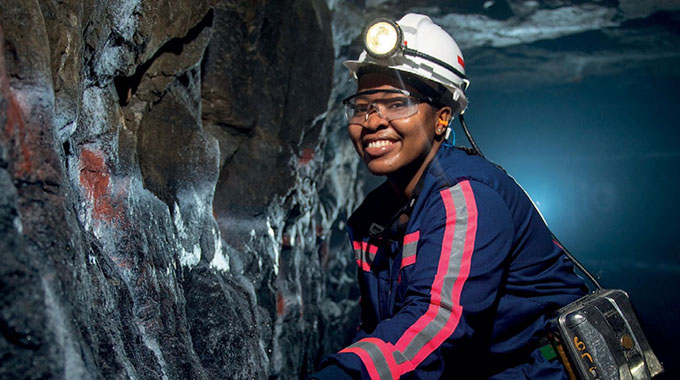
THE steady rise of women in Zimbabwe’s mining sector marks a shift not only for the industry but also for the broader economy. Long regarded as a male-dominated field, mining is increasingly opening up to women, whose participation is bringing new energy, innovation and inclusivity to one of the country’s most critical economic pillars. This progress deserves both recognition and sustained support.
Empowering women in mining is not merely a matter of equity; it is a strategic imperative. When women are given access to mining opportunities, from artisanal operations to executive leadership, the entire value chain benefits. Evidence from across sectors shows that gender diversity improves decision-making, enhances productivity and fosters resilience. In mining, where operational efficiency and adaptability are crucial, these contributions are particularly valuable.
At the grassroots level, women miners are playing a pivotal role in supporting household incomes and improving community livelihoods. Many of these women invest their earnings in education, healthcare and small businesses, creating a ripple effect that strengthens local economies. By formalising and supporting their activities through access to training, financing and technology, the sector can unlock even greater socio-economic gains.
Importantly, the inclusion of women is also helping to reshape the culture of the mining industry. Historically characterised by hazardous working conditions and limited support structures, the sector is gradually embracing safer, more sustainable practices, partly driven by the growing presence of women.
Their participation is encouraging a stronger focus on occupational safety, environmental stewardship and community engagement, all of which are essential for long-term sector viability.
Access to finance remains one of the key enablers of women’s empowerment in mining. Many women lack collateral or face structural barriers in securing funding, limiting their ability to scale operations.
Initiatives that provide targeted financial support, coupled with technical training and mentorship, are therefore critical. By lowering these barriers, policymakers and industry stakeholders can ensure that women are not confined to the margins but are fully integrated into mainstream mining activities.
Furthermore, the rise of women in mining aligns with Zimbabwe’s broader development goals, including Vision 2030, which emphasises inclusive growth and economic transformation. A diversified mining workforce strengthens the sector’s capacity to drive export earnings, create jobs and attract investment.
In this context, empowering women is not only socially desirable but economically prudent.
The growing visibility of women in mining leadership positions is also inspiring a new generation. Young women are beginning to view mining not as an inaccessible field, but as a viable and rewarding career path. This shift in perception is crucial for ensuring a sustainable pipeline of talent and for breaking down entrenched stereotypes that have historically limited women’s participation.
However, much remains to be done. Stakeholders must continue to invest in policies and programmes that promote gender equality, from education and skills development to workplace protections and representation. Collaboration between Government, industry players and civil society will be essential in consolidating the gains made so far.
Ultimately, the empowerment of women in mining is a story of progress, resilience and opportunity. It is a reminder that when barriers are removed and potential is unleashed, the benefits extend far beyond individuals to entire communities and the nation at large. Zimbabwe stands to gain immensely by continuing to champion the role of women in this vital sector — not as participants of necessity, but as leaders of change.


 Bongani Ndlovu