CLIMATE change is seeing more El Nino events and the resulting droughts in Zimbabwe, requiring a wide range of interventions and programmes to ensure we can continue to feed ourselves as a nation and that our farming families remain viable producers on the land with rising incomes.
Part of the strategy is storage during the years when average or good rains fall.
Some of the storage is for water, in the growing range of irrigation dams as well as, where possible in the small farm dams. In a good year we hope to fill most dams, so that in the drought years and below average years there is enough water for the expanding irrigation network.
We are also building up food reserves, grains at the moment although others could follow. Once major lesson of exceptionally severe 2024-2025 drought was that we need decent reserves and stocks.
There was enough in storage that the Government was able to supply its grain rations to rural families whose crops had been devastated, although the commercial shortages had to be met from imports by the private sector.
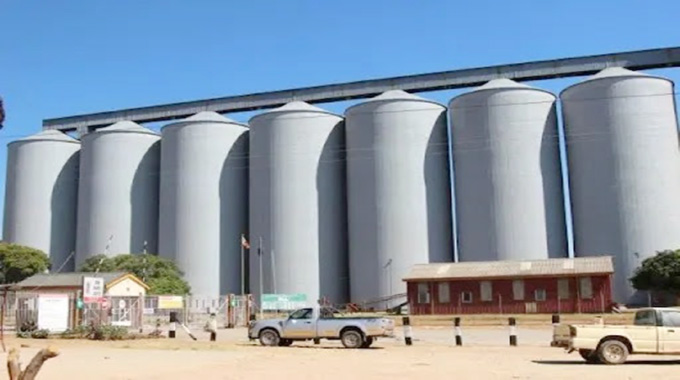
We came through the emergency, and the economy even grew 2 percent despite the severe cut back in agriculture. We learned a lot of lessons. One was the need for better and greater storage of surplus crops in good years, and these has seen the new ultra-modern silo complexes now being erected to ensure grain can be stored for longer periods with minimal damage and waste.
Other interventions were a renewed determination to speed up the process of rolling out irrigation, and making sure this could become normal among small-scale farmers as well as with their larger colleagues. A Presidential credit scheme that allows a small scale farmer to install irrigation for 1ha was a highly practical start, along with the continued development of village business units centred on the national borehole drilling programme to ensure families could grow vegetables in the midst of severe drought.
Continued work is in progress in State and private sectors to breed grain varieties that are more drought tolerant and have shorter growing cycles, along with cultivation techniques that minimise water loss and make the best use of what rain does fall. Crop selection became important, with wishful thinking being eradicated, at least in Government-funded schemes.
Traditional grains assumed a far greater importance since being indigenous to Africa unlike Central American maize, they evolve to cope with local climates. So they are more drought tolerant, and have the interesting feature that when rain is intermittent, they can stop growing in dry spells but resume as rains fall.
We still need a lot more processing and market research to make these grains more desirable on most dinner tables, rather than just seen as famine food. But efforts to recover some of the many older traditional dishes and create new ones in the style will have their effect.
There is no single magic formula, but rather a large collection of strategies that combine into workable solutions.
The longer term reserves of grain will exceed 550 000 tonnes when the full harvests are in and could be close to 1 million tonnes. There is watchfulness at the moment over the next possible El Nino, and it will come and the drought will follow. But when it does come we need to be ready, both to grow the best foods in more arid conditions and to have a healthy buffer of grain in stock.
This simple idea of storing surpluses of good years for eating in bad years is hardly new. It is there in the first book of the Jewish and Christian bibles when Joseph became sort of Food Minister buying in the surpluses of seven good years so there was food, to spare, in the run of seven famine years that followed.
Building reserves needs extra finance, since the farmers need to be paid when they deliver, or very soon afterwards, while the grain may be in storage for over a year and perhaps several years if there is a run of good seasons.
For a number of reasons this requires State intervention. Already the practice of a GMB floor price, that any grain delivered will get at least that price, means that there are no price drops when surpluses appear in good years. At the same time having the stocks on hand means that there be no scarcity prices when these reserve stocks are breached.
This minimises risks for farmers, at least financial risks, which seems fair enough as they have so many other risks to handle from the weather to diseases.
The national benefit as all the measures kick in means we have enough food to eat in bad years, as well as good years.