Online Reporter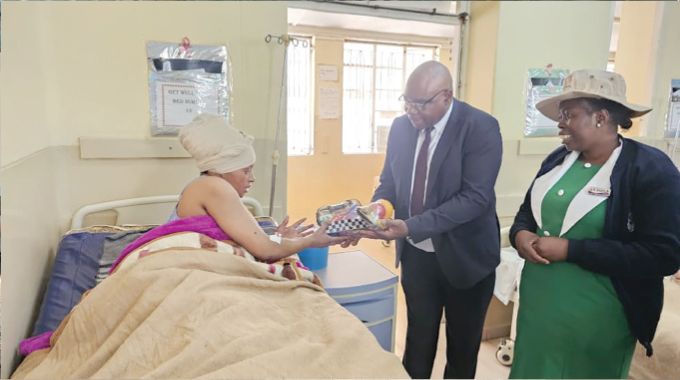
Farai Dauramanzi, [email protected]
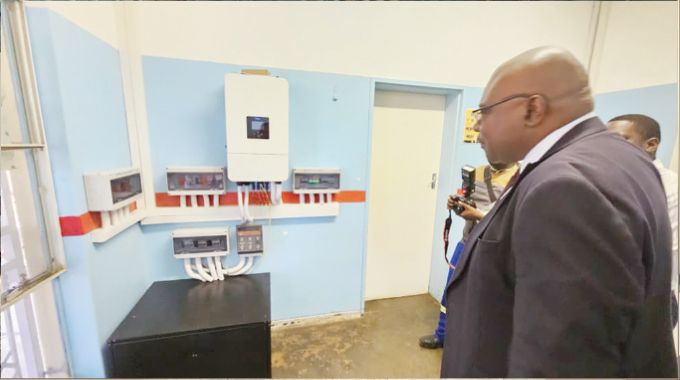
The Postal and Telecommunications Regulatory Authority of Zimbabwe (POTRAZ) has handed over a 12kVA solar system to Gwanda Provincial Hospital to power its Intensive Care Unit (ICU) and end the painful practice of transferring critical patients to Bulawayo.
The intervention, backed by a 20kW PV solar array, was unveiled this week together with an assortment of pharmaceuticals, 50 mattresses, 50 blankets, groceries, 100 patient care packs and fruit packs. It marks a clear example of how collaboration between regulators, Government and communities can step in to close urgent service gaps.
Matabeleland South has seven administrative districts and about 143 health facilities, including rural clinics, health posts and district hospitals. All of them are serviced through a referral network headed by Gwanda Provincial Hospital.
As the province’s main referral centre, the hospital carries the weight of emergencies that cannot be handled at lower levels.
An ICU ideally requires specialised medical equipment, round-the-clock monitoring, and a dedicated team of critical care experts working to support failing organs and treat life-threatening conditions
For years, that capacity at Gwanda was undermined by power cuts and infrastructure constraints
Speaking at the handover ceremony, Potraz Deputy Director-General Mr Alfred Marisa said Gwanda Provincial Hospital was selected as one of this year’s beneficiaries under the authority’s Corporate Social Responsibility programme.
“While we have our mandate of regulating the ICT sector, we also have to come to the communities that we serve and help out,” Mr Marisa said.

“In March this year, we were at Gwanda Provincial Hospital where we assessed the needs.
“The requests from the province were many, but we had to prioritise Gwanda Provincial Hospital after coming on site to assess the needs. We discovered that there was an urgent need for a solar system.”
He continued, “So we came in with a 12kVA solar system which will power the ICU. It is already operational. We are told that before then, ICU patients were being transferred to Bulawayo and some were losing their lives along the way. We hope that this has helped to alleviate that problem.”
He said they had also provided an assortment of medicines and other essentials to the hospital, some of which include 50 mattresses and blankets and grocery items, just to boost operations at the hospital.
“We know it’s a drop in the ocean, but the idea is that perhaps this will encourage other companies and other organisations to also come in and assist,” he emphasised.
Gwanda Provincial Hospital Acting Medical Superintendent Dr Ray Chokera welcomed the intervention and said it will greatly improve patient care.
“The solar system will be of great benefit during power cuts, and we also received some medications,” said Dr Chokera.
“This is the only ICU that we have in our province, and the majority of our patients are going to benefit from the help that we received from Potraz. We are very thankful for this donation, and we hope that it will help in the management of our patients, especially the blankets, because our hospital covers the whole province.
He added that the additional mattresses would help the hospital to accommodate more patients during peak periods.
Dr Chokera said sometimes they receive patient numbers that go beyond the facility’s normal bed capacity, and the new mattresses will help in the management of patients, making sure that everyone has a place to sleep and we do not have to send patients home.
Gwanda Provincial Hospital operates with an approved capacity of about 200 beds, and it functions as the main referral health centre for Matabeleland South, but it is housed in infrastructure originally built for a district hospital. That mismatch has led to severe constraints in space, staffing, and equipment.
Power and support upgrades are now being rolled out to address some of these gaps. Recent installations, including dedicated solar power arrays for critical care and maternity blocks, are incrementally boosting functional reliability. The POTRAZ system is the latest addition to that effort.
The need for a complete upgrade has not been lost on the Government. Early this year, authorities announced plans to expedite construction of a brand-new provincial hospital in Gwanda on a 46-hectare piece of land allocated by Gwanda Municipality. The project is expected to transform the facility into a modern referral centre that matches its provincial status.
Speaking during a visit to the health facility recently, Health and Child Care Minister Dr Douglas Mombeshora said limited working space is a common challenge across health facilities and must be addressed with urgency.
“I have been touring Matabeleland South this week just to find first-hand information on the situation that is prevailing in our institutions,” said Dr Mombeshora.
“I visited Maphisa District Hospital, Kezi Rural Hospital, Plumtree District Hospital and Lady Stanley Rural Hospital in Bulilima, and today I am at Gwanda Provincial Hospital.”
He said what stood out at Gwanda was that the institution was designated to function as a provincial hospital but is not adequately resourced.
“What has come out today is that this isn’t a real provincial hospital. It was designated to work as a provincial hospital, but it’s not adequately staffed. It has three specialists and two theatres, which are serving a multi-purpose function,” he said.
“Even the staff levels for the nurses and midwives are very low. The structures are not in good condition as this is a very old hospital.”
Dr Mombeshora said that, as a starting point, dilapidated structures at the hospital will be rehabilitated, and a new theatre will be constructed. He added that efforts will now be made to ensure construction of a proper provincial hospital starts immediately.
“That 46-hectare piece of land is more than enough to house all the necessary infrastructure for the provincial hospital if we build going up,” he said.
“We have assigned our engineer, together with our Director of Finance, to start working on modalities to have the provincial hospital constructed.”
He said a 200-bed capacity is far below expectations for a provincial hospital and a new structure will help incorporate all essential medical facilities, as well as accommodation for staff.
“I’m pleased that at this institution they have been able to do their work with limited staff, limited workspace. Improving the state of this hospital will also help us to retain our staff, as I understand that some who get deployed here leave shortly after starting because of the working conditions,” said Dr Mombeshora.
Under the Second Republic, the Government has invested in health infrastructure, human resources and medical supplies as a priority, in line with efforts to achieve universal health coverage.
Through the devolution agenda, there has been improvement of rural health facilities, increased availability of medicines and modernisation of equipment to ensure no community is left behind.
Potraz is touring various provinces, donating to clinics, hospitals, old people’s homes and children’s homes as part of its CSR commitment. The Gwanda donation shows how non-health institutions can step in where they are needed most.
For patients in Matabeleland South, the impact is immediate. With the ICU now backed by solar power, the risk of losing lives during transfers to Bulawayo is expected to drop. With mattresses and blankets added, more patients can be accommodated with dignity. With medicines supplied, treatment can begin without delay.
The story of Gwanda Provincial Hospital is therefore not just about a donation. It is about the power of collaboration. It is about a regulator stepping beyond its core mandate, a ministry conducting ground assessments, a municipality providing land, and a community hospital doing its best with limited resources.
As construction plans for the new provincial hospital gather pace, such partnerships will remain critical. They ensure that while long-term infrastructure is being built, patients today do not have to wait.
In Matabeleland South, that collaboration is already lighting up lives, one ICU bed at a time.