Online Reporter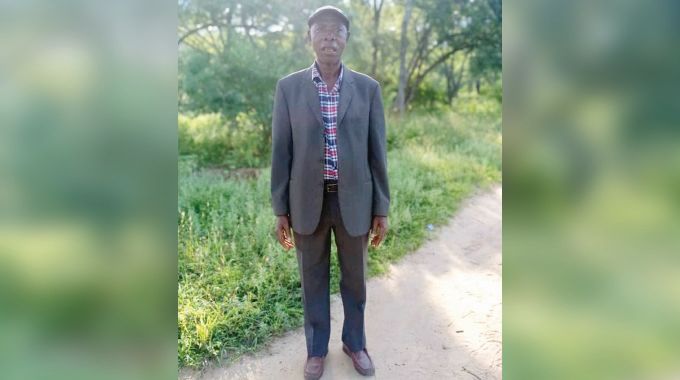
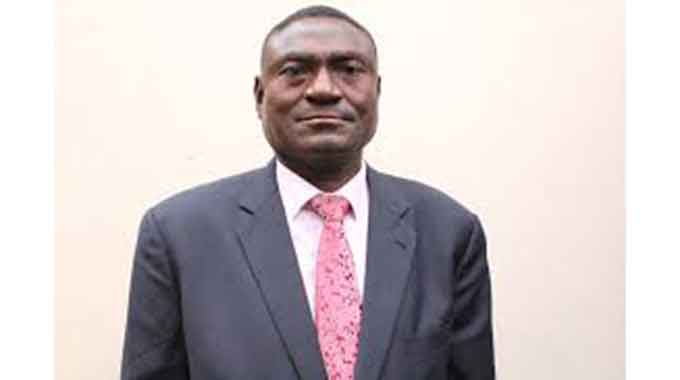
AS Independence Day celebrations draw nearer, with Matobo District’s Maphisa Growth Point set to host the main event, former freedom fighter Major (Retired) Nelson Archbald Nyamuridzo better known by his nom de guerre, Cde Reeves Sigola reflects on the area with deep affection. Maj (Rtd) Nyamuridzo was given the pseudonym Sigola in honour of Chief Sigola of Umzingwane District in Matabeleland South Province.
He recalls that in 1978, as ZANLA forces prepared for a major deployment into the Matobo/Kezi area from their Beitbridge staging ground, he began making incursions into Matobo District and its surrounding areas.
His first entry into Matobo was as the leader of a seven-member ZANLA reconnaissance unit tasked with assessing conditions ahead of the larger deployment. The unit traversed the district before returning to Beitbridge to brief their sector commander. Matobo fell under Sector Four of ZANLA’s operational province, code-named Gaza.
The area was under close surveillance by Rhodesian forces, as it served as a key corridor for those crossing into Botswana to join the armed struggle.
Upon his eventual deployment to reinforce ZANLA units already operating in the region, Maj (Rtd) Nyamuridzo was later on to assume the rank of Sector Four Security Officer based in Kezi.
The Gaza Province was commanded by Cde Rex Tichafa. On Thursday last week, our Assistant Editor Mkhululi Sibanda (MS) had a WhatsApp conversation with Maj (Rtd) Muridzo from his base in Chegutu, Mashonaland West Province where he is into farming. Below are excerpts from the interview with Maj (Rtd) Nyamuridzo:
MS: May we begin by asking you to share your background?
Maj (Rtd) Nyamuridzo: I was born Nelson Archbald Muridzo on 15 February 1947 at Sori Village, Uzumba District, Mashonaland Central Province.
I completed my lower primary education at Chidodo School before proceeding to Manyika School for upper primary.
In those days, some schools only offered classes from Sub-A to Standard Three, meaning pupils had to transfer to complete their primary education at another school.
Afterwards, I attended Nyamuzuwe School in Mutoko, where I completed Forms One and Two and obtained my Junior Certificate.
I developed a keen interest in Building as a subject. However, I did not proceed to Form Three. Instead, I moved to Salisbury now Harare, in search of employment.
I secured a job with a construction company known as Fillcor Sea Blue Pools. That marked the beginning of my career in the construction industry.
The company specialised in building houses and swimming pools. I was later transferred from Harare to Bulawayo.
MS: Tell us about your time in Bulawayo and the areas where you worked as a bricklayer.
Maj (Rtd) Nyamuridzo: I moved to Bulawayo around 1968 and worked on several projects. Initially, I lived at Sidojiwe Flats in the Donnington industrial area.
During my time in the city, I also resided in Luveve and Old Pumula. The company I worked for constructed houses in what are now considered leafy and affluent suburbs, including Kumalo, Matsheumhlope and Riverside, among others.
We also built swimming pools throughout the city. However, another move was soon to follow.
MS: And where was that?
Maj (Rtd) Nyamuridzo: In 1972, I was transferred to Botswana after the company secured contracts there. I was based in Francistown, but our projects took me to Mahalapye, Gaborone, the capital, Lobatse, Serowe and Selibe-Phikwe. While in Botswana, I became increasingly politicised.
As black workers, we were frustrated by the stark salary disparities between ourselves and our white counterparts. It was clear the company was profitable, yet we were paid meagre wages.
During this period, I met representatives of ZPRA and ZANLA in Francistown who encouraged us to join the armed struggle. Representing ZANLA was Cde Joseph Chikara, while Cde Dick represented ZPRA. In 1974, I left my job and committed myself to the liberation struggle.
MS: Since you were already in Botswana, where were you taken?
Maj (Rtd) Nyamuridzo: Cde Chikara took me to Francistown Prison, where I met another recruit. At that stage, there were only two of us.
The Botswana authorities kept us in prison as a protective measure against Rhodesian security agents. We stayed there for some time before being joined by a group of 12 students from Thekwane Mission just near Plumtree Town, among them the current Zanu-PF National Political Commissar, Cde Munyaradzi Machacha.
In March 1975, the Zanu chairman based in Lusaka, Cde Herbert Chitepo was killed by the enemy. His death led to the suspension of recruit movements, prolonging our stay in Botswana.
During that time, Cde Chikara was tracked down and killed by Rhodesian agents. We were then left under the guidance of Cde Dick from ZPRA.
MS: How large did your group become?
Maj (Rtd) Nyamuridzo: Recruits continued to arrive, and by the time we left Botswana our numbers had grown to 200. In April 1975, through Cde Dick’s arrangements, we were transported to Zambia.
At Lusaka International Airport, we were received by Cde Jason Ziyapapa Moyo from Zapu and Cde Noel Mukono of Zanu. From there, we were taken to Nampundwe Farm, which at that time belonged to Zanu.
Zapu later assumed control of the camp after ZANLA/Zanu relocated to Mozambique.
MS: What was the situation like at Nampundwe?
Maj (Rtd) Nyamuridzo: It was during the détente period, when there was a lull in the fighting. The then Organisation of African Unity, now the African Union was working towards uniting the liberation forces, ZANLA and ZPRA, into a single entity known as the Zimbabwe People’s Army (Zipa).
We found the camp under the guard of Zambian soldiers and were assigned various duties, including zekukohwa chibage. It is important to note that the group of 200 included cadres aligned to both ZANLA and ZPRA.
While in Botswana, we had been asked to indicate, which army we wished to join. We stayed at Nampundwe for two months before being transferred to Mbaraga Camp in Tanzania, south of Dar es Salaam. Cdes JZ Moyo and Noel Mukono visited to check on us. Shortly thereafter, two senior guerrillas, Eddie Sigoge and Grey Mapondera, also paid a visit.
To be continued next week, with Major (Rtd) Nyamuridzo reflecting on his training at Morogoro and deployment to Mozambique under Zipa.