Online Reporter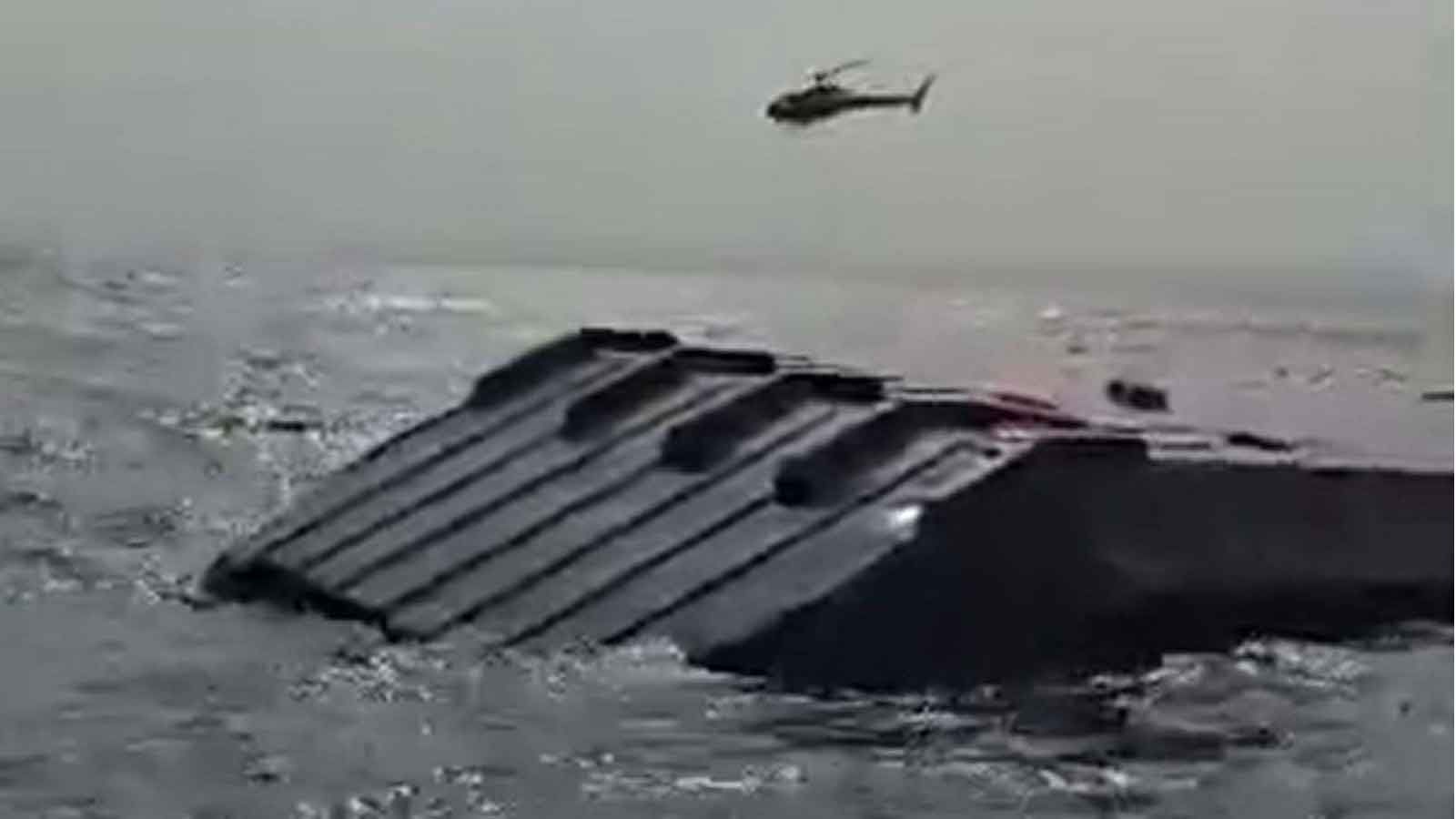
THE Lake Kariba ferry disaster with at least 44 people killed will be investigated and the floating wreckage of the capsized ferry will almost certainly be towed to land so that experts can pinpoint the reasons why it overturned.
These investigations will be vital to improve safety on the very large lake and ensure that existing vessels and new vessels follow stricter safety rules so that we do not ever a repeat of this disaster.
Smaller fishing boats and pleasure boats have been lost on the lake over the years, but generally those aboard have survived because they took basic precautions and knew the dangers fairly precisely.
Ferries of various types, including at one stage a ferry that could even lift cars, have been plying the lake for several decades and were preceded by a large landing craft operated during the liberation war to land raiding parties in four Land Rovers on the Zambian shore.
Tuesday’s capsizing was the first major accident involving these large vessels which normally can just plough through difficult conditions.
We suspect that there might well have been an attitude of complacency and a tendency to see large vessels as invulnerable, at least to the weather although obviously there was risk of collision and other types of accidents.
One major issue will be the need to enforce passenger and load limits and have an accurate count of just how many people are on board.
So far, 77 people have been rescued, all shortly after the capsizing when private and Government boats on the Matusadonha shore set out promptly as soon as they saw the ferry was in serious trouble, backed by the helicopter owned by the Matusadonha Conservation Trust which was able to direct boats to survivors and start the hard task of retrieving bodies.
Quite rightly, this prompt action by Zimbabweans able and willing to help their fellows has been officially acknowledged and praised, and it is obvious that the rescue boats were able to coordinate their actions and work together.
But 44 bodies have been recovered, taking the number aboard the ferry to at least 121 when survivors and known dead are totalled, with a complete count almost impossible to make.
There are known to have been a crew of five, plus 114 ticket carrying passengers, making an official total of 119.
But besides these, there were an unknown number of small children under four-years-old, or who looked as though they were under four, who do not need tickets and were not counted.
So one immediate measure that is needed for all boats is a passenger manifest, simply a list of all names, so if the worst comes to the worst there will be a precise figure of how many were aboard and who they were.
That probably needs to be compulsory for all boats.
Even a little fishing boat can keep a cheap notebook in a plastic bag and those aboard can take a few seconds to write out their names before setting off.
The second issue is the need to avoid overloading.
The ferry was licensed for 90 passengers plus the crew, so even when we just count the passengers sold tickets we still have 24 extra people.
Licensing can perhaps be flexible to count children as halves, but when life jacket numbers are set then we need to take that into account. It is unknown if the ferry had life jackets, but the capsize was so sudden that there would not have been time to don them unless it was made compulsory for all on any boat to wear one.
Experts will need to work out if overloading made capsizing more likely. A lot would depend on the total load of passengers, their luggage and any cargo, and how that affected the centre of gravity of the vessel. The more mass above the centre of gravity the more likely a vessel will flip.
Weather reports for the lake are now routine and accurate, and the forecast conditions were not serious enough to postpone the voyage. But those experienced with Lake Kariba know of freak waves that are more likely in certain conditions and places, such as when the lake suddenly narrows, and it was one of these that caused the ferry to flip.
So another factor in the final accident report will be any recommendations to modify vessel design, and how to monitor for freak conditions, which could just be keeping a better lookout, so the vessel is turned to face into the wave, or at second best away from the wave, but not broadside on. And in the end there is that lesson that complacency can kill. Just because an accident has not happened before does not mean it cannot happen.
While Lake Kariba is a very large lake approaching an inland sea, the larger irrigation dams are now creating a string of moderately large and potentially dangerous lakes, so safety will be of increasing importance. We have rules and crew licensing requirements, which include theory exams and practical tests, but perhaps these need to be updated.