Online Reporter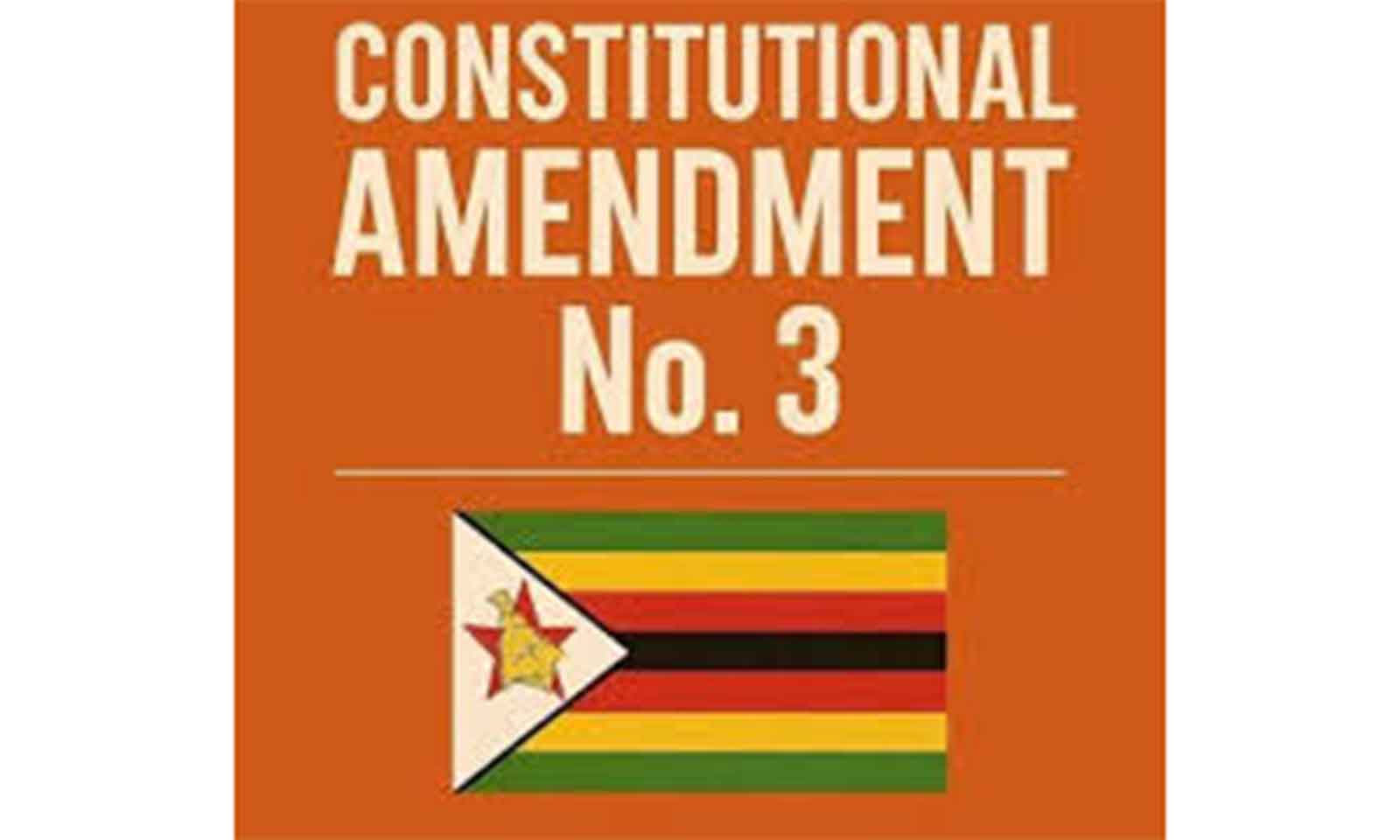
ZIMBABWE stands on the threshold of an important democratic moment as public consultations on the Constitution of Zimbabwe (Amendment No. 3) Bill, 2026 begin tomorrow.
Beyond the immediate legal implications of the proposed changes, this outreach process speaks to a deeper constitutional principle: that governance must be anchored in the will, voice and participation of the people.
The Constitution of Zimbabwe is unequivocal on this matter.
Section 141 obliges Parliament to “facilitate public involvement in its legislative and other processes and in the processes of its committees”, and to “ensure that interested parties are consulted about Bills being considered by Parliament”.
This is not a courtesy; it is a constitutional duty.
Public hearings, therefore, are not procedural formalities, but a fulfilment of the supreme law’s demand that law-making must be participatory.
In this regard, the consultations on the Constitutional Amendment Bill No. 3 are a critical test of Zimbabwe’s commitment to democratic governance.
At their core, such processes deepen democracy by moving it beyond periodic elections to continuous citizen engagement.
They create a platform where ordinary Zimbabweans, often excluded from elite policy spaces, can shape the laws that govern their lives.
In doing so, they reinforce the foundational democratic principle that authority is derived from the people.
At a fundamental level, the public consultations give practical meaning to Section 3(2)(e) of the Constitution, which lists “the principles of good governance”, including transparency, justice, accountability and responsiveness, as founding values of the State.
By opening up the law-making process to scrutiny and input, Parliament is operationalising these national values.
The public engagement becomes one of the key ways through which Parliament measures and aligns itself with that national interest.
The importance of this outreach in governance cannot be overstated. Laws, particularly constitutional amendments, carry far-reaching and long-term consequences.
They define the structure of the State, the distribution of power and the protection of rights.
Without meaningful public input, there is a risk that such laws may lack legitimacy, face resistance or fail to address the lived realities of citizens.
Consultation, therefore, is not just about inclusion; it is about crafting responsive, durable and legitimate governance frameworks.
In the context of Zimbabwe’s governance trajectory, these consultations serve as a conflict-prevention mechanism.
Constitutional amendments can be politically sensitive and, if perceived as exclusionary, may generate public distrust or polarisation.
Inclusive dialogue allows grievances to surface early and be addressed through institutional channels rather than spilling into social or political instability.
But the value of public consultations lies not merely in their occurrence, but in their quality — they must be genuine, not symbolic.
The consultations, as has been shown by the programme drafted by Parliament, should be inclusive, reaching urban and rural communities, women, youths, persons with disabilities and marginalised groups.
Engagement must be conducted in languages people understand, and in formats that encourage open, respectful and informed dialogue.
Equally important is the responsibility that rests on Parliament to take seriously what the people say to preserve the credibility of the whole process.
This responsiveness builds trust in institutions and strengthens the social contract between the State and its people.
The Constitutional Amendment Bill No. 3 itself underscores the gravity of the moment.
Constitutional amendments are not ordinary pieces of legislation; they alter the supreme law of the land. As such, they demand heightened scrutiny, broader consensus and deeper public engagement. The stakes are high, and so must be the level of participation and deliberation.
For this reason, the success of the outreach will also depend heavily on logistics and publicity, with the hearings being adequately resourced, accessible and well-organised.
Venues should be reachable, schedules clearly communicated and outreach efforts robust enough to ensure widespread awareness.
Without effective publicity, many citizens will remain unaware or unable to participate, undermining the very purpose of the exercise. Accessibility, whether through transport considerations, timing, or inclusive facilities, is not a peripheral issue; it is central to democratic participation.
As consultations commence, Parliament has an opportunity to demonstrate that it is not only a law-making body, but also a custodian of the people’s voice.
For citizens, this is a moment to engage, to speak and to shape the trajectory of their country’s governance.
For Zimbabwe, it is a chance to reaffirm that democracy is not merely a system of representation, but a living practice of participation.