Chronicle Editor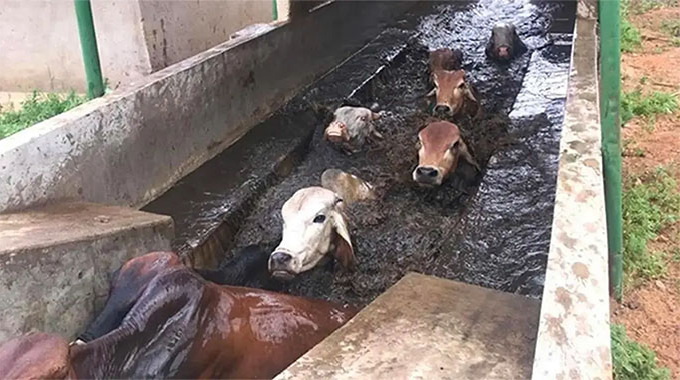
FARMERS are encouraged to complement Government efforts to curb the resurgent theileriosis, a tick-borne disease, also known as January Disease, which claimed a lot of cattle last season, by dipping their livestock in accordance with set requirements.
So far 236 cattle deaths and 618 cases have been recorded countrywide, our sister paper Sunday News reported yesterday, with the dreaded disease expected to reach its peak this month.
According to reports, more than 65 percent of cattle deaths in Zimbabwe are caused by tick-borne diseases, with 500 000 cattle valued at about US$150 million having died of January disease between 2018 and 2022.
The Government has urged farmers to be extra vigilant and regularly inspect their cattle for the presence of ticks while religiously following their dipping calendar.
The Government is working on increasing the production of the BOLVAC Vaccine for the disease to 900 000 doses this year up from 300 000 produced last year.
In an interview with Sunday News, the Department of Veterinary Services acting chief director, Dr Pious Makaya said for the period November 1 to December 31, 2023, Mashonaland West had the highest number of deaths due to theileriosis followed by Matabeleland South and Masvingo.
“Of the 236 January disease deaths, 64 were recorded in Mashonaland West, 62 in Matabeleland South, 42 in Masvingo, 21 in Mashonaland Central, 20 in Mashonaland East, while Manicaland had 14 deaths, 12 in Midlands and one in Matabeleland North,” he said.
“The highest number of cases have been recorded in Mashonaland East with 177, 118 in Mashonaland West, 94 in Masvingo, 91 in Matabeleland South, 49 in Mashonaland Central, 43 in Midlands, 33 in Manicaland and 13 in Matabeleland North bringing the total to 618 cases.”
To avoid a repeat of recent seasons in which close to a million cattle were lost to tick-borne diseases, the Government has introduced a raft of measures that included the adoption of the 5-5-4 dipping rota, the Presidential tick-grease programme and the construction and rehabilitation of dip tanks across the country.
The Ministry of Lands, Agriculture, Fisheries, Water and Rural Development urged farmers to continuously dip their cattle arguing that dipping remains the single most effective control measure against all ticks and tick-bone diseases.
The ministry said dipping of cattle was mandatory by law and cattle should be dipped at least once a week to control ticks and tick-borne diseases during the rainy season.
“The rains are now upon us. Most parts of the country are receiving good rains to support cropping and pastures. The good rains, however, bring with them an increased activity of ticks resulting in tick-borne diseases such as the notorious January Disease affecting cattle if not prevented,” said the ministry.
“Dipping should be repeated when cattle are rained on within 24 hours of dipping. They should also be inspected for ticks two to three days after dipping, especially inside the ears, under the tail, on the udder and the tail brush.”



 Online Reporter