admin
admin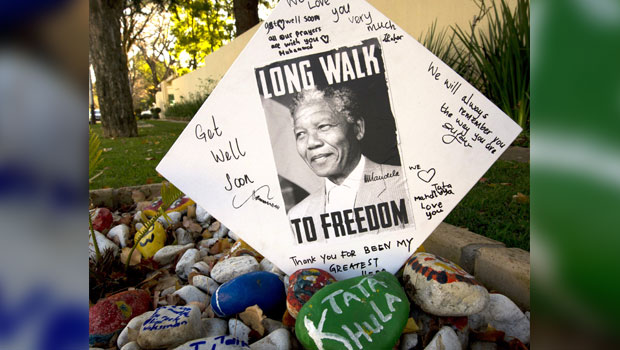

Nelson Mandela, South Africa’s first democratically-elected President had been ill for the past four years or so. He received the best medical attention South Africa could offer. Due to his illness he had retreated from public life, making his last major appearance on 11 July 2010 at the closing ceremony of the Fifa World Cup.
Dressed in black, together with his wife Graca Machel and being driven on a golf cart, he smiled but appeared to put a lot of effort waving at the crowd in Soccer City Stadium. Later, his compatriots largely had contact with him through pictures issued by the South African government.
It was tough to accept that the iconic liberator was getting weaker and, at some point, the time for his departure would come. It came at 8.50pm on Thursday. At his advanced age, 95, and given the ill-health he had suffered in recent years, his death is actually a rest.
Few people make a positive global impact such as Madiba made, first from 1952 when he launched his nationalist career and anti-apartheid struggle, the 27 years he served in jail and in his country’s 19 years of independence.
His biggest achievement was leading his country to independence in 1994 and governing as president for five years. For a country that had been radically divided on the basis of race for 46 years, he also did commendably well to unite the people — the white architects and beneficiaries of apartheid on one hand and the downtrodden blacks in Bantustans and Soweto on the other.
Mandela was a fatherly figure, affable and always smiling. He accommodated former apartheid luminaries and encouraged them to play a positive role in developing South Africa.
Abroad, particularly in the West which saw nothing wrong with apartheid that he considered an assault on his dignity and that of fellow blacks, he is idolised. They regard him so highly that some westerners thought he was president of Africa.
While he was broadly feted abroad, Madiba substantially divided opinion in Africa. He is respected by many, but others accuse him of doing nothing to deliver wholesome independence to his people, acquiescing to foreign capital and apartheid, the essence of what reduced him and his people to a level of sub-humanity.
But we don’t know if a more radical approach early on in South Africa’s post independence period was possible as apartheid still clearly runs the economy, defines social status, and to some extent, the politics. Independence in South Africa did not come through military means as it did in Zimbabwe; it was basically negotiated.
This means that it was possible for the apartheid regime to frustrate progress as long as independence did not guarantee their privileges.
Afrikaners, who founded apartheid (Afrikaans for “the state of being apart”) as an official government policy in 1948, benefited from it and still do, account for 8,9 percent of the nation’s 52 million population.
They remain a potent force in many respects. They are still in the military, intelligence service, the judiciary not to mention the corporate sector which they monopolise.
Would a more militant strategy, and not the conciliatory path Mandela followed, have worked in delivering independence in the circumstances? If the latter was the only practicable one, then Mandela deserves credit.
After independence, however, Pan-Africanists expected a more deliberate movement in the direction of equalising opportunities by lifting blacks from the margins instead of waiting for circumstances to do that for them. They argue that he should have done something to lay the groundwork for meaningful equity.
Not much was done in that respect during his time. In his country, racism continues to permeate society with blacks always at the bottom level, whites consistently at the top.
For the black majority, independence has not yet arrived in the strictest sense of the term. It has not yet arrived in virtually all African countries where economies are still controlled from the West but the situation is worst in South Africa, the most unequal community on the globe.
A World Bank report released in July last year states that South Africa had an entrenched inequality of opportunity that threatened her future.
“Our results show that a (black) South African child not only has to work harder to overcome the disadvantages at birth due to circumstances, but having done so, finds these re-emerge when seeking employment later in life,” said a World Bank study one of the many done on the same subject by many scholars and institutions.
The white child, according to the report will, on average, receive better access to electricity, primary and secondary education and sanitation than the two blacks, posing drastic effects on their long term development and chances of future growth. The black-white inequality extends to the job market, access to credit and other conditions of life.
Furthermore, 70 percent of South Africa’s land is still owned by whites. No one expects South Africa to have dismantled the legacy of apartheid in 19 years but the victims of that system want to be encouraged that something is happening.


 Online Reporter