admin
admin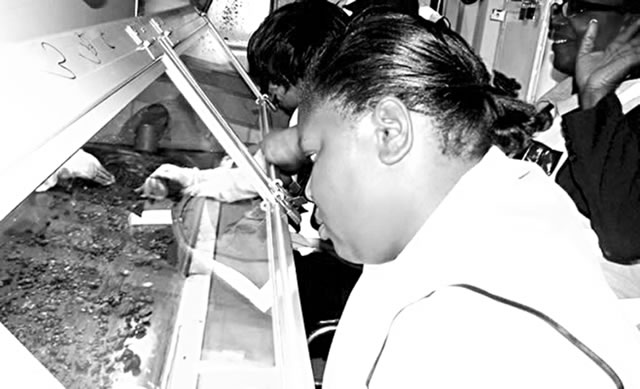

Stephen Mpofu
The impact of foreign aid from the rich North to the poor South can crack smiles on shrunken faces, or it can turn faces into chopped steak. The latter effect arises out of conditionalities on tied aid and which resemble nooses meant to rope in recipient countries as political slaves of donor countries.
Instead of nurturing the economies of recipient countries, donors often demand their pound of flesh, like Shylock, even before the struggling economies sight a sliver of light at the other end of the tunnel, or else there are no further infusions of much-needed capital for full economic revival.
Ask Zimbabwe, no doubt a true case study on the issue in point, and you are wisened up. Then there is visibility aid by means of which Big Brother tries to flaunt its presence in a smaller country with façade assistance which causes not even a ripple of change in the welfare of the targeted people.
The donor may even gloat about helping the poor in the resident country of its diplomatic mission, to try to give an impression of being a Good Samaritan.
A thoroughgoing study of foreign aid will not fail to expose such dubious aid, which has to be quietly ignored with the contempt it deserves.
Of course the unwritten lesson concerning visibility aid is that developing countries should try and derive maximum benefit from their natural resources, be these agriculture, mining, fisheries, timber, to finance their own social and economic development initiative instead of going all out raising the begging bowl to a world that can be obsessively cynical and indifferent to the plights of smaller nations, especially in Africa which colonialists under-developed in the first place by exploiting and carting off the continent’s riches to build palaces overseas.
The meaning of self-initiative, self-actualisation and social and economic upliftment suggests that countries can build a solid foundation of emancipation using whatever resources are at hand before rushing away, in some cases to former colonies and oppressors, for redemption from the crushing poverty, for example.
Technical assistance is often touted as the best form of international aid because it provides a recipient country with personnel whose expertise, if driven by goodwill, will heal economic ills in a recipient country.
Technical assistance may be provided as is or in combination with partnerships so that the experts are backed by a vertical transfer of advanced technology from their native country and through a local partner, be it statal, parastatal or private to benefit locals.
Partnerships with technical assistance strapped on the back of the foreign partner have proved a boon to nascent economies and they are to be recommended for struggling African economies without any reservation.
Contextually, a decision by the Antwerp, Belgian, World Diamond Centre to help Zimbabwe set up a diamond auctioning and, therefore a major trading hub in Zimbabwe is wont to leave the enemies of Zanu-PF and the country licking their wounds while we pull all stops to give the motherland a braver, more vibrant economic future.
A Zimbabwean delegation, just back from the meetings with experts from Antwerp, the world’s leading diamond trading centre, can vouch that the promise for assistance in setting up an Antwerp-wise auctioning base for the country’s much sought-after gems will transform Zimbabwe’s economy in the not-so-distant future unless the world comes to an abrupt end thereby nullifying the plans now underway.
The training that Zimbabweans will undergo in Belgium and at home to equip them with knowledge and skills involved in all the processes of making rough diamonds ready for the market cannot fail, if undertaken diligently, to make this country a diamonds trading centre to which thousands from around the world will troop in search of the unique Zim gems.
This will obviously translate to thousands of jobs for our people who now tramp the streets of world capital centres searching for work or lack of adequate employment at home to cater for their high academic and professional qualifications.
With Antwerp coming to Zimbabwe’s aid for us to derive maximum economic and social benefit from our God-endowed diamonds, Belgium has technically, and effectively, pulled the rug from underneath the feet of Britain and the United States and their cubs in continental Europe all of which should now repent from their pursuit of iniquitous economic sanctions imposed in anger at Zimbabwe’s empowerment of her people through land reform — to try to effect regime change in order to reverse the reform programme, a consequential benefit from the revolution that dislodged a racist, white, colonial regime.
If America, Britain and their allies continue to behave as if the rest of the world comprises robot-like leaders, they might soon discover just how irrelevant they have become in international political dynamics themselves with regards to the Zimbabwean case. One of those countries has recently given off signs of repentance, which is all very well and is to be expected.
However, it should emerge from its trench waving the white flag of surrender, rather than continue to dither, like a girl being propositioned who gives off signs of surrender but remains hesitant in saying: “Yes, I’m now all yours, kiss me.”
Today, after the Antwerp story, Zimbabweans in all walks of life will hug themselves in glee, telling each other, “a friend in need is a friend indeed — witness Belgium”


 Online Reporter