Online Reporter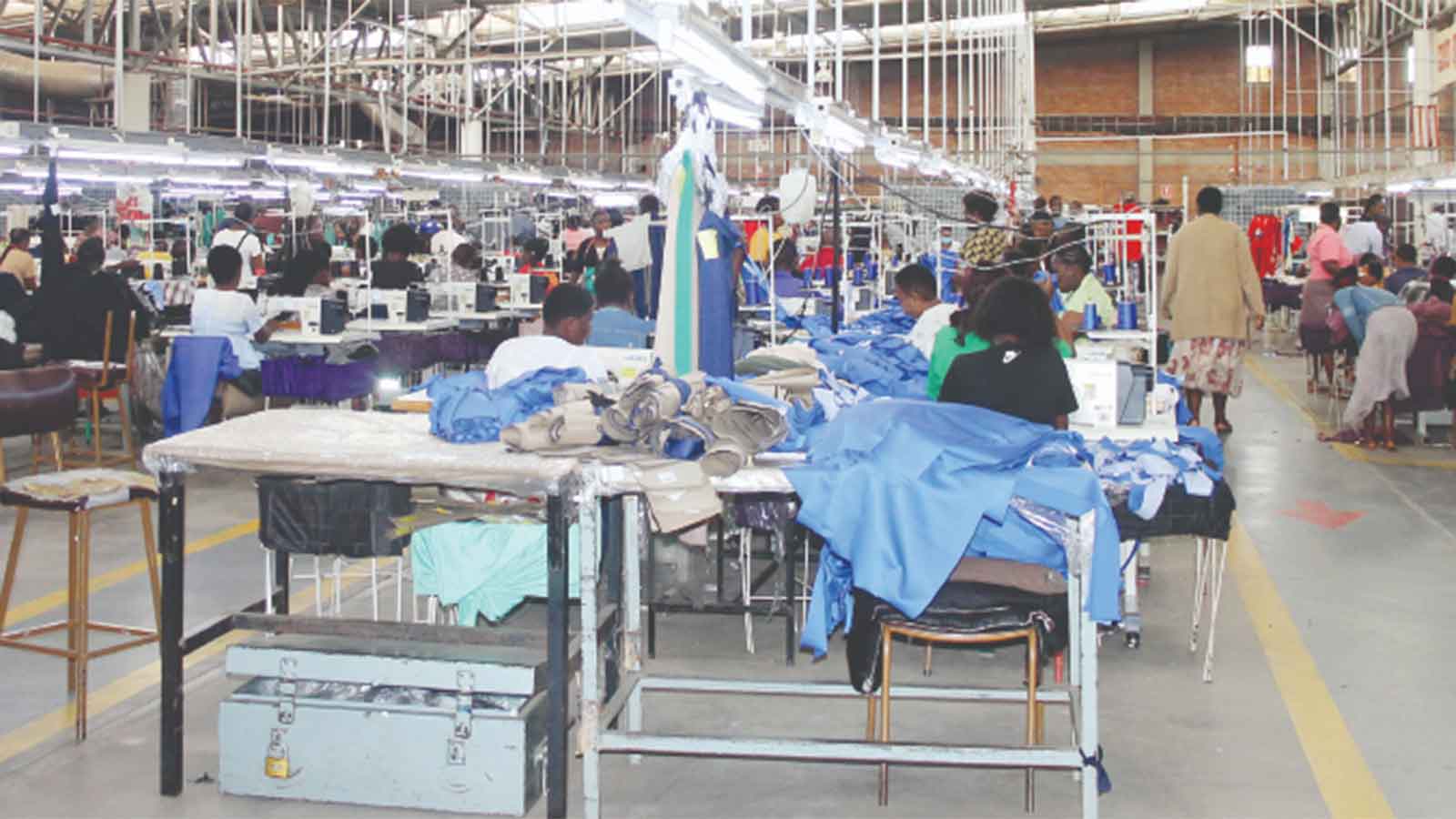
WHILE all sectors of the Zimbabwean economy are growing fast, manufacturing is growing even faster than any other segment and has now moved into the leading slot when it comes to contributions to gross domestic product.
Even by 2024, it was contributing almost 16 percent of all the value created in the country.
It has to be stressed that this is due to exceptional growth in manufacturing, with our industrial sector growing faster than second-placed mining, third-placed wholesale and retail, fourth-placed financial services and fifth-placed agriculture.
The other four sectors have also seen spectacular growth under the Second Republic, but manufacturing growth has been extra spectacular, thus accounting for its greater share of the economy.
This is despite the restructuring of farming that has improved output significantly to the level where it exceeds what we grew before land reform, and the even more dramatic expansion of mining. Manufacturing has built on that growth of the other two high production sectors and posted even higher growth rates.
In 2010, admittedly after some deindustrialisation as result of the opening of the economy, manufacturing was third placed and just a shade over 9 percent of the total GDP. The huge change from being very much an also-ran to becoming the leading driver of economic growth is a direct result of the major changes introduced by the Second Republic.
Much of the serious manufacturing growth comes from the dual stress of recent years on manufacturing products using Zimbabwean raw materials, what our farmers grow and what our miners dig up, along with a far more export-orientated sector, although manufactured exports are still fairly low.
This followed the near failure of the previous industrial policy, introduced around 1965 and 1966 after UDI, of concentrating on doing everything possible to save foreign currency by doing a lot more assembly from imported components and a lot more packaging of goods imported in bulk.
The new policy moves from prioritising saving foreign currency and instead concentrates on making money by adding value to what we grow and mine and by ensuring that the quality and price are sufficiently attractive to make inroads into exports. The switch from a largely negative push for industrial expansion to a far more positive and sustainable-pull policy.
This has also seen a significant rise in the average quality of Zimbabwean products and far more competitive pricing. For more than a third of a century Zimbabwean consumers were forced, through the policy of total import control, to accept whatever was offered by local industrialists at whatever price they could get away with. Some were good and fair; some were not.
That sort of approved monopoly or near monopoly allowed goods to be made that were non-competitive, and as the economy started opening so imports that could compete on quality and price started flooding in, despite what were still very tight supplies of foreign currency. That flood reached a peak during dollarisation, and helped make dollarisation unviable, but the industries washed away were those that could not reform and ride the new waves.
The switch was also crucial for the future, since filling local markets had limits, especially with the near eclipse of much heavy industry. The only way to grow faster than the population is to have the right products at the right price that can compete in regional, continental and global markets. So we are back to stressing making money, rather than managing imports.
There are some excellent local manufacturers, some dating back to the early days of Zimbabwean industry, and these not only survived, but are now thriving and helping to drive growth. They have been joined by many new investors and new factories operating from the same mould. That is why manufacturing is growing so fast and can continue to grow, being based on sound economics, rather than bureaucratic licensing and allocations.
There were some unfortunate casualties, mainly in the textile sub-sectors, where complications following the privatisation of cotton buying, financing, ginning and initial processing dried up supplies of the critical raw material.
Those are now being sorted out, with the textile sector becoming far more involved with the farmers growing what they want.
That build-up of direct contact between manufacturers and farmers, with a more restricted role for middlemen, is also accelerating growth in the agro-industrial sub-sector. The Government is not just pushing this new linkage, but even making it clear that it wants to see a lot more of this sort of activity. It makes sense for both farmers and industrialists if the farmers grow what the industrialists want to buy.
We are now starting to see some of the same links between mining and manufacturing, with the Government stepping in to demand miners at least are selling the refined output from their mines instead of just ores or concentrates.
In the end, Zimbabwe’s industrial base has to be anchored on the full range of industry, from processing raw materials to the final light-industrial conversion of those processed products to goods that people buy in shops. But we are now on the right track and industry will more and more be the leading light of our economy, and the ever greater creator of new jobs and new businesses.