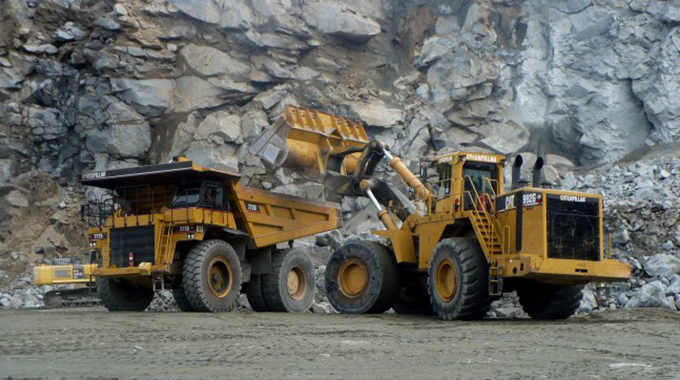
THE growing tensions between livestock farmers and mining operators in Umzingwane highlight a challenge that Zimbabwe can no longer afford to ignore: how to balance economic growth with environmental protection and agricultural sustainability.
Mining remains one of Zimbabwe’s key economic pillars, providing employment, foreign currency earnings and opportunities for rural communities. Equally important, however, is agriculture, particularly livestock production, which serves as the backbone of many households in Matabeleland. When one sector thrives at the expense of the other, the entire community loses.
The concerns raised by farmers are neither new nor insignificant. Abandoned mine pits, recurring veld fires and alleged water pollution have become recurring features in many mining districts. Open pits pose a direct threat to livestock, while destroyed grazing lands reduce the capacity of farmers to sustain their herds. If water sources are indeed being contaminated, the implications extend beyond agriculture to public health and environmental conservation.
What makes the Umzingwane situation particularly worrying is that it comes at a time when farmers are already facing climate-related challenges. With uncertainty over rainfall patterns and increasing pressure on grazing land, rural communities can ill afford additional human-induced environmental damage.
Importantly, farmers are not demanding an end to mining activities. Their position is both practical and reasonable. They recognise the contribution of mining to the local and national economy. What they seek is responsible mining that respects environmental standards and safeguards the livelihoods of neighbouring communities.
The call by Umzingwane legislator Brigadier-General (Retired) Levi Mayihlome for dialogue among farmers, miners, government departments and law-enforcement agencies is therefore a welcome intervention. Sustainable solutions can only emerge when all stakeholders engage openly and honestly. Confrontation will solve little, but constructive engagement can produce workable measures such as compulsory pit rehabilitation, stronger monitoring of mining operations and improved management of veld fires.
More importantly, authorities must ensure that existing environmental regulations are not merely written on paper but are rigorously enforced. Operators who fail to rehabilitate mining sites or who pollute water sources should face meaningful penalties. Responsible miners should not be disadvantaged by those who disregard the law.
The suggestion that miners contribute towards rehabilitation funds deserves serious consideration. Natural resources belong to the nation, and those who profit from their extraction should bear responsibility for repairing environmental damage. This principle is widely accepted across the world and should apply equally in Zimbabwe.
The issue also exposes the need for greater coordination among the ministries responsible for mining, agriculture and environmental management. Too often, these sectors operate in silos despite sharing common land and water resources. A more integrated approach would help prevent conflicts before they escalate.
Ultimately, Zimbabwe’s development depends on the success of both mining and agriculture. Neither sector should be allowed to undermine the other. The challenge for policymakers is not to choose between gold and cattle, but to create conditions where both can flourish.
Umzingwane’s farmers have sounded an important warning. Their concerns deserve urgent attention, not only for the sake of their livestock and livelihoods, but for the broader goal of sustainable rural development. If proper safeguards are put in place today, mining and agriculture can coexist productively. If ignored, the conflict over land, water and environmental degradation will only deepen, leaving communities poorer and more vulnerable in the years ahead.