Online Reporter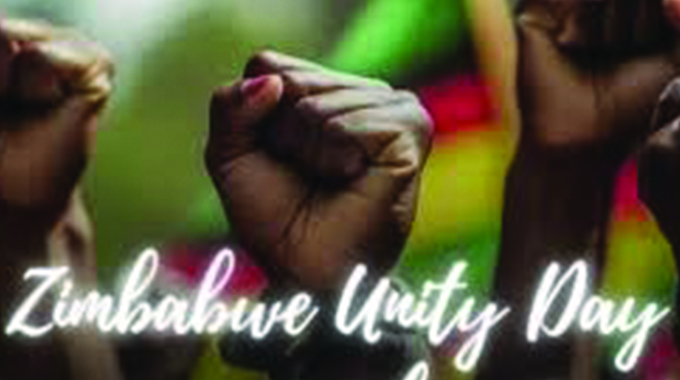
TODAY we celebrate National Unity Day and while the date and original proclamation marked a vital building block, it has grown to become a special day set aside to continue building that unity across all Zimbabweans
The origins were important. On December 22, 1987, the two wings of the historic nationalist movement, which had split in August 1963, joined together as a single political party, which at that time controlled almost all seats in Parliament.
The original split despite the subsequent journey of the two parties, sometimes apart, but generally together, was welcomed by the settler colonial authorities and their allies, but was deeply regretted by everyone else who wished the people of Zimbabwe well.
The actual split was not driven by ideology, more of differences in stress over how liberation should be brought about and the waters muddied by those who wished the nationalist cause ill.
After independence, won by the two parties working together in the liberation war, there were again those who felt that Zimbabwe could be weaker if the differences between the two parties could be exaggerated and if differences in their geographical areas of strength, largely a result of where they operated in the liberation war, could be built up.
The dying power of the apartheid regime in South Africa felt that destabilising Zimbabwe and presenting a total collapse riven by disunity, would help it stay in power, as well as provide an example that fulfilled the myths of settler rule. And for all sorts of reasons this interference took hold.
A lot of things happened that should never have happened, but the final result of that whole Gukurahundi disaster was to see the two party leaders, Robert Mugabe and Joshua Nkomo, step back from the cliff edge and reunite the nationalist movement.
That unification was far more than some vague coming together; it involved a new structure and making sure that the two parties were solidly meshed together into a single new structure with no victors and no vanquished.
With the advent of the Second Republic, President Mnangagwa went further, and right now we are in the midst of the programme of gathering thousands of depositions and all the evidence so that as far as possible the wounds can be healed.
But after that reunification of the nationalist movement, which allowed it to effectively campaign and win subsequent elections right up to the present day against an assortment of new political parties with different ideologies, the concept of unity grew and became more important, although less linked to the largest political party.
Zimbabweans generally recognise that the important tie we have is our joint citizenship. We can disagree, we can argue, we can form political parties, we can create all sorts of surface differences.
But we still recognise that deep down we are one people regardless of where we live, how we earn a living, our cultural or tribal connections, our political preferences, the language we speak at home, and all the other things that add richness to the Zimbabwean people.
That self-confidence in being a successful united nation, or at least united in the really important points of recognising that everyone who follows our flag, who carries our citizenship, and who recognises every other citizen is one of us.
The surface bits do not matter that much. All families have their days when they disagree, when they argue, but they remain a family.
National unity is lot like that. We live and work together and try and get along, but when we disagree, and that obviously happens, we do not open the gun cupboard or take orders from foreign powers trying to weaken our country and its people, but instead try and work out functioning arrangements so we can keep going, while we see if we cannot persuade the others, peacefully.
Even when we come to the nitty gritty, like national budgets and the make up of the Government and the rules that must regulate our private sector, the surprising thing many of us notice is that most people want similar goals, a better country with a growing economy.
We argue about details, and Parliamentary committees and seminars are among the ways we see if we cannot change a few minds, but we also need to note that most disputes are in the details, like how many nurses should the Government hire, rather than in some sort of revolutionary change of privatising the whole health sector.
That original National Unity Accord set the tone, that real unity means we treat each other decently, that we listen to each other, that we go to extreme lengths to work together and that we always remember the cost of failure to do so, and the rewards that come when we are united, at least in the important things.
That Unity Accord was also the start of the healing process that we all recognised we had to undertake if we were to not just create a decent country but make sure we could ourselves on track.
The success, because it was to be built on a genuine national unity, has been remarkable with all Zimbabweans now together when we come to the main issues and ideas.
National unity is so important that we need to not just keep the public holiday, but use it to make sure we remember the good that comes from unity, the evil that severe disunity entails, and that we do need to maintain our Zimbabweaness as a united people.