Vusumuzi Dube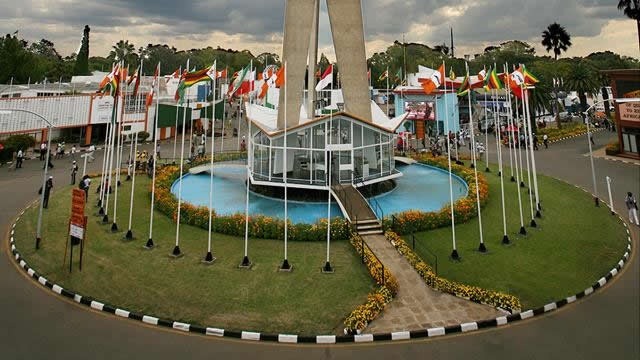
THE recent revelation that Bulawayo City Council has attracted a staggering 369 investment proposals worth an estimated US$90 million is not just a statistic; it is a declaration. After decades of dormancy, the city’s economic engine is finally turning over.
The numbers are undeniably impressive. In just a few weeks following a call for Expressions of Interest, the council received a deluge of bids spanning medical facilities, office parks, hotels, fuel stations, and townhouses. This is not speculative land banking; this is genuine, diverse private sector appetite.
For a city that has struggled to shed its post-industrial gloom, this surge represents one of the strongest endorsements of Bulawayo’s economic potential in a generation.
Yet, let us be clear: investment proposals are not investments. They are promises on paper. The real test – the one Bulawayo has historically failed – lies in execution. The good news is that the council appears to have learned from past mistakes. The establishment of a special express committee to fast-track approvals and the reduction of the offer acceptance period from one month to a single week are not mere administrative tweaks. They are existential necessities.
Bureaucratic lethargy has long been the silent killer of urban development. Too many viable projects have withered while awaiting plan approvals, zoning variances, or simply a signature on a desk. By slashing red tape, Bulawayo is signalling something radical: that it is open for business, and that it understands the velocity of capital. Investors do not wait. They move elsewhere.
Economist Alice Chikonzi rightly noted that this express committee could be a “game-changer.” But a committee is only as good as its mandate. It must be empowered to override antiquated bylaws where necessary, and it must be insulated from the rent-seeking that has plagued our local governance. Speed without transparency is merely a shortcut to corruption.
The sectoral breakdown of proposals is also instructive. The dominance of business and commercial developments (105) and townhouses (92) suggests that Bulawayo is betting on a mixed-use, suburban future. This aligns perfectly with Local Development Plan Number 19, which opened up traditionally low-density suburbs like Kumalo and Parklands for commercial transformation. We are already seeing NGOs, car dealerships, and even the Infrastructure Development Bank of Zimbabwe relocating from the decaying CBD to these new nodes.
However, the city must guard against creating a two-tier economy. While suburban office parks and five-star hotels are welcome, the 36 proposals for fuel stations and 23 for hospitals speak to more immediate, grassroots needs. The challenge will be ensuring that this US$90 million wave does not merely service the affluent but also plugs critical infrastructure gaps. Bulawayo’s chronic shortage of high-end accommodation, for instance, has long embarrassed us during the Zimbabwe International Trade Fair. A new hotel corridor along George Avenue could finally solve that.
But what of the inner-city residential stock? What of water and sewer reticulation that underpins all development?
The 369 proposals are a mandate for change. They represent private capital’s willingness to bet on Bulawayo, but only if the city delivers a predictable, fast, and fair regulatory environment. The express committee is a start. The real work will be in the relentless follow-through: approving plans in days, not months; issuing permits without backhanders; and ensuring that the land bank is unlocked for those who will build, not speculate.
The proposals are a gift. Now comes the hard part: turning paper into pavement, steel, and jobs.



 Online Reporter