Online Reporter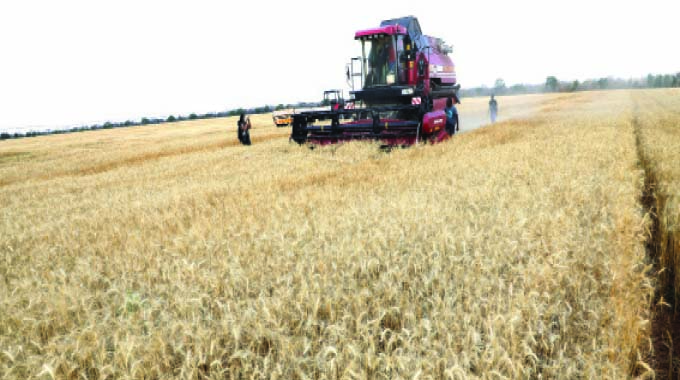
FOR the fourth successive year, the country has broken its wheat output record.
Deficits had become normal. A country with the highest number of dams in southern Africa had resigned itself to producing less than 360 000 tonnes of the cereal that it needs for national consumption yearly.
It was known every year that the Treasury had to set aside millions in foreign currency to finance wheat imports from Russia, Canada, Australia, and Poland, among other countries.
It didn’t look too good, but we had normalised the production gap, and what the huge cost of closing that deficit meant to the economy.
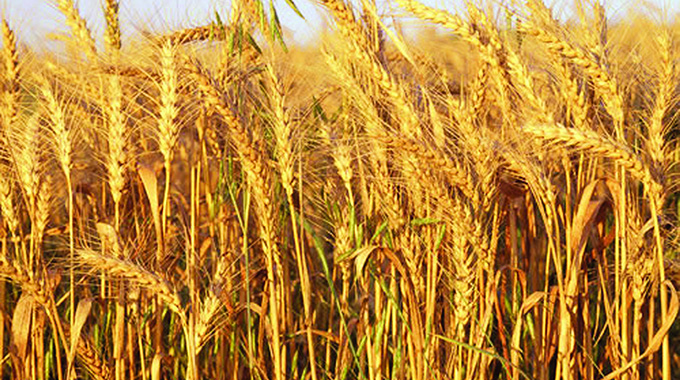
However, the turning point came in the 2022 season when farmers harvested 375 000 tonnes, ensuring wheat self-sufficiency for the first time in 56 years. The following season, the country harvested a record 467 000 tonnes, followed by 562 000 tonnes last year in 2024 and 622 141 this year.
Our sister paper, The Sunday Mail, reported in its latest issue that about 96 percent of the land under wheat this season had been covered, with about 4 480 hectares outstanding. If the remainder performs to the average yield of 5,2 tonnes per hectare, farmers will pick about 23 290 tonnes more, which would lift the total annual harvest to 645 437 tonnes.
After consuming 360 000 tonnes as we do yearly, we will have a surplus of 285 437 tonnes, almost enough to feed the people for another season.
Permanent Secretary in the Ministry of Lands, Agriculture, Fisheries, Water and Rural Development Professor Obert Jiri put the impressive harvest down to timely release of inputs, technical guidance, subsidised support, decentralised mechanisation, improved land preparation and harvesting techniques, introduction of more drought-tolerant varieties, and private sector support.

“This performance reflects both the resilience of our farmers and the strategic interventions coordinated at policy level to achieve wheat self-sufficiency and strengthen national food security,” he said.
We celebrate yet another wheat production record, praying that all the factors that led to it will be maintained and entrenched for us to set yet another production record next year.
We want the winning approach in terms of wheat and horticulture to be expanded to maize, anchored on irrigation. A total of 16 362 farmers had 121 449 ha under wheat this year against a target of 120 000 ha. The irrigated land in the country rose from 151 000 ha in 2019 to 221 000 ha this year.
The growth is commendable but still a far cry from the potential we have — a massive 2,2 million ha from the more than 10 600 dams and water bodies, according to the Zimbabwe Irrigation Investment Prospectus released last year.
“Agriculture production that is anchored on irrigation is both reliable and highly productive,” the document says.
“It offers a real opportunity for all-year-round production on the land, thereby optimising on the utilisation of the land itself, labour and machinery, resulting in improved farmer cashflows and income.”
The prospectus charts the direction our agriculture must take beyond the good wheat and blueberry stories.
We have a long way to go, but the progress of the past eight years across the agriculture industry gives us confidence that more land will be under irrigation, so the country climate-proofs its agriculture and pursues a more export-oriented growth trajectory beyond national food security.