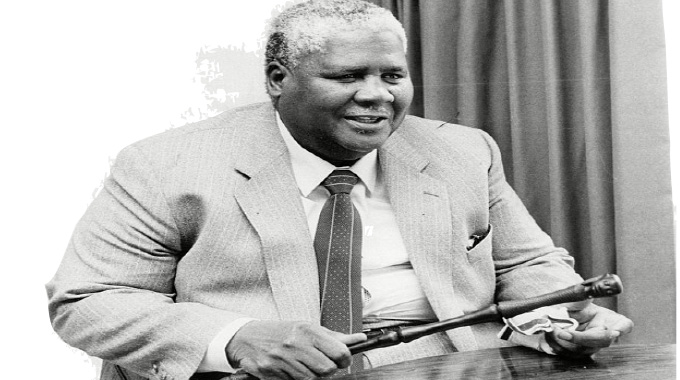
This week marks a solemn moment in our national calendar: we remember the late Vice President Dr Joshua Nkomo, who passed away on July 1, 27 years ago.
That date is more than a historical footnote. It is a reminder — of the cost of politics waged with courage, of the patience required for national reconciliation, and of the enduring power of leadership that speaks to the deepest hopes of ordinary people.
When people say “Dr Joshua Nkomo,” they often speak with a particular kind of warmth. It is not just respect for a public figure. It is recognition of a man who carried the weight of history without losing his humanity.
His life embodied conviction, sacrifice, and a refusal to treat the future as someone else’s problem. In remembering him, we are not merely performing an act of commemoration; we are renewing a moral contract with ourselves: to build a nation worthy of the principles he stood for.
Memorial days can sometimes become routine. We speak the right names, we quote the right lines, and we move on. But true remembrance demands more than ceremony. It calls for reflection: What did Dr Nkomo represent? What did he teach us about the kind of leadership required to survive challenges?
Dr Nkomo’s political journey was not smooth. It was shaped by struggle — some of it visible, some of it hidden behind negotiations, and repression Yet his leadership consistently returned to a central theme: the dignity of the people.
That is why our remembrance must remain alive to the realities of the present. We honour Dr Nkomo not by keeping his image intact in speeches, but by letting his values confront our contemporary problems. The nation he imagined is not automatically inherited; it is earned through conduct, policy, and civic responsibility.
Twenty-seven years can be a long time — enough for generations to turn over, enough for new languages of politics to emerge, enough for new faces to take up old responsibilities.
In such a situation, Dr Nkomo’s legacy becomes a compass. It points to dialogue rather than escalation, to persuasion rather than provocation, and to the belief that national unity is not a slogan but a practical discipline.
One of the most striking lessons from Dr Nkomo’s life is that leadership is not the same as authority. Authority can be demanded through position. Leadership is demonstrated through service — through the ability to stand with people when it would be easier to stand above them.
In our modern political culture, we sometimes confuse visibility with impact. We celebrate the volume of statements and the speed of reactions, but we neglect the slower work of institution-building and strengthening laws. Dr Nkomo’s example reminds us that leadership is measured by outcomes.
That is why we must ask ourselves what we have done with the lessons of the liberation era.? Have we made peace more than a declaration — have we made it a daily practice?
Dr Nkomo’s story also speaks to the complicated nature of reconciliation. Reconciliation does not re-quire us to deny past suffering or to pretend that wrongs were never done. Instead, reconciliation re-quires truth-telling, fairness, and a willingness to confront root causes, as is happening now in the Second Republic.
As we remember Dr Joshua Nkomo, we are invited to treat peace as a permanent project, not a temporary celebration. The question is not whether the nation can hold together for a day. The question is whether we can hold together through difficult conversations, through political differences, and through economic pressures.
Dr Nkomo’s legacy was not a private inheritance. It was earned in public struggle. Therefore, its protection cannot be left to private inheritance.
On this anniversary, we should ask: Are we using our voice to improve public life, or are we using it only for complaint? Are we cultivating unity, or are we feeding division because it is emotionally convenient?
Twenty-seven years after Dr Nkomo’s death on July 1, we must renew purpose.
As we remember the late Vice President Dr Joshua Nkomo, we should do more than mourn a passing. We should give thanks for a life that challenged the nation to become better than its circumstances. His death on July 1, 27 years ago, marked the end of one chapter in our history, but it did not close the story of his influence.
Influence is felt when principles outlive people. Influence is sustained when citizens turn ideals into demands. Influence is proven when leadership becomes service and when reconciliation becomes practice.
Dr Joshua Nkomo is gone, but his example remains a call to responsibility. On this anniversary, we honour him by recommitting ourselves — leaders and citizens alike — to a Zimbabwe (and a nation) that is more just, more united, and more faithful to the promises that sacrifice helped secure.
May we remember him not only today, but in the choices we make tomorrow.