Chronicle Editor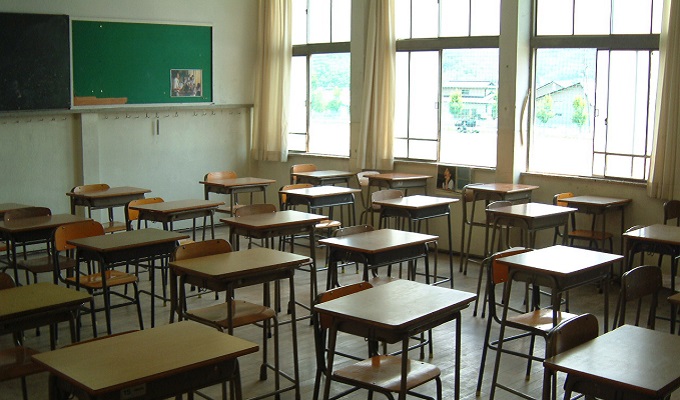
A recent Government report, produced with UN support, reveals worrying gaps hindering the delivery of more inclusive and effective education in the country.
The first worrying point, according to the Zimbabwe Education Analysis 2016-2020 report, is that as many as 20 percent of the school age population of three to 18 years, or 1 090 626 kids, is out of school.
The second worry, we reported yesterday, is that there aren’t enough schools in the country to match the pupil population, so there is need for the building of 4 500 new ones. Even at existing schools, classes are too big so about 40 000 more classrooms are needed. The third area of concern is that there is a national deficit of 55 000 teachers’ houses, especially at rural schools.
“Based on a 2019 report the projected number of the school age populations stood at 5 657 412 while the number enrolled in school (ECD to upper secondary) was 4 566 786,” the document says.
“The difference between the school age population and those enrolled in school leads to the proxy indicator for out of school children to be 1 090 626, representing 19,28 percent of the school age population. There is a need for almost 40 000 classrooms to be constructed in existing schools and a need for over 55 000 teachers’ houses. Over 1 500 new primary schools and over 3 000 new secondary schools will be needed, to accommodate projected increases in numbers of learners.”
Because classes tend to be too big and that the teachers in service are few, the pupil-teacher ratio is higher than the standard, the report says.
On a positive note, the Basic Education Assistance Module (Beam) has improved access to education, boosting enrolments and completion rates.
The report shows that the country is facing big challenges in ensuring that all the children out of school are brought in, building adequate physical infrastructure to accommodate them and their teachers as well as in recruiting more educators to reduce the pupil-teacher ratio.
The financial implications of addressing these gaps are enormous. Yes, the Government is already building schools, as the report acknowledges, and is recruiting more teachers but resources are not enough to meet demand. The Government has to intensify its school construction agenda, made more urgent by the need for greater social distancing at learning institutions amid the Covid-19 pandemic.
Standard operating procedures being enforced by the Government say every class must have not more than 35 children. This means that the classroom deficit, already big before the pandemic, has widened, which demands more resources to plug it.
As indicated earlier, the Government is doing a lot building new schools and school infrastructure but does not have enough resources to meet the ever-rising demand. The total bill must be in the billions of US$.
We therefore ask other stakeholders – the private sector, development partners and individuals – to chip in in a big way to build some of the 4 500 new schools, 40 000 classrooms and 55 000 teachers’ houses that are needed for better quality education.
We are concerned that as many as 1 090 626 children who must be in school but, because of various factors, they aren’t. This is a big number of kids who, if no corrective action is taken now, would grow up illiterate or semi-literate.
The reasons why so many aren’t in school are many. They can include lack of schools, failure by parents and guardians to pay fees due to poverty or religious and cultural factors. Whatever the reasons, every one of us must work hard to get this 20 percent out-of-school population in class.
Beam was introduced to pay fees for children whose parents cannot afford to do so.
The fund has served us very well since it was put in place. The Government report under discussion indicates as much. Indeed, the Ministry of Public Service, Labour and Social Welfare announced a few weeks ago that Beam covered tuition, examination fees and levies for 991 000 orphaned and vulnerable children last year. For this year, the ministry plans to cover 1, 5 million beneficiaries under the facility. That has to be applauded.
However, there must be no time to rest. More schools and teachers’ houses must be built. Beam’s coverage is growing, which is good, but it must be assessed more regularly and be expanded in tune with the need for it.


 Online Reporter