peter
peter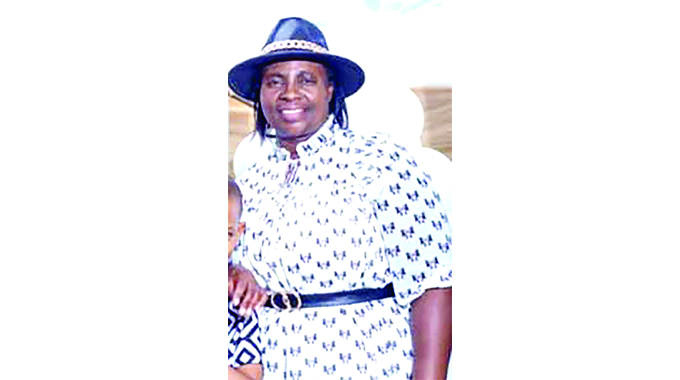
CDE Queen Maligwa (nee Dube) was so determined to undergo military training during the armed struggle in Zambia that even Zapu President and ZPRA Commander-In-Chief, Dr Joshua Mqabuko Nkomo could not stand in her way.
During his address to female ZPRA recruits at the Victory Camp (VC) in August 1977, Cde Maligwa says, Dr Nkomo had made it clear that only “girls” aged 16 and above would be allowed to go for military training and on realising that she would miss out, the determined Cde Maligwa, whose pseudo name was Cde Simangaliso Mpofu, jumped and joined those whose ages were in the correct bracket.
However, when Dr Nkomo moved closer to the group, he could not be fooled and picked out Cde Maligwa as being too young to go for training. In response, Cde Maligwa stood her ground.
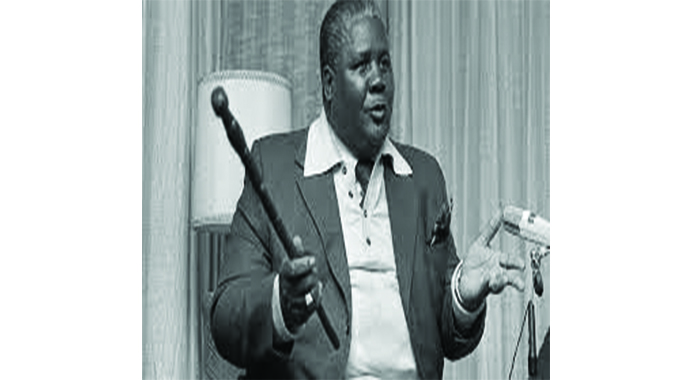
On Friday last week she told our Assistant Editor Mkhululi Sibanda (MS) that during a brief exchange of words with her hero (Dr Nkomo) she maintained that she was 16. Impressed by her determination Father Zimbabwe as Dr Nkomo was affectionately known, putting his hand on her head turned to the commanders and said: “Limekeleni umntwana ufuna ukuhamba.” That is how she was allowed to go for the rigorous guerilla training at such a tender age. After completing her training at Mkushi, Cde Maligwa was seconded to the intelligence unit, the National Security and Order (NSO) after which she was sent for further training in intelligence in Yugoslavia. Below are excerpts from the interview. Read on…..
MS: Cde Maligwa may we please begin the interview by you giving us a brief background of yourself.
Cde Maligwa: I was born Queen Dube on 2 November 1963 at Manama in Gwanda District, Matabeleland South Province. My family was made up of four boys and six girls. My mother was Emily Moyo and my father Ben Dube. However, I was brought up by my aunt, umama omdala, uTsepo Moyo and her husband, Simon Ramonoana. I moved in with them while I was very young and it was at Mangweni Line in Gungwe. We later moved to live at Matulungundu Village. As for my education, I did Grade One to Four at Gungwe Primary School. For my Grade Five and Six I was at Mapati Primary School. I was supposed to do Grade 7 in 1977, but I could not do that as it was the year that I left the country to join the armed struggle. I crossed into Botswana with three other girls in January 1977.
MS: What drove you to join the war at such a tender age?
Cde Maligwa: I was supposed to start Grade 7 in January 1977 but we could not do that as parents were discouraging their children from going back to school for the first term. That was because during the holidays of 1976, a number of children had been taken by the guerillas. So parents felt that the guerillas could raid schools and get away with the children. However, what drove me to join the armed struggle was that while herding cattle and goats I heard some who were older than me talking about freeing the country from colonial rule.
I was herding livestock with some who were much older than me and I would hear them saying: masimana bajiya batho baya ntwa holwela boipuso. That is in Sotho which means people are leaving to go and fight for freedom. They were talking about impi kazibuse. I was even eavesdropping when those I herded livestock with were planning to leave the country and join the war. Those were older girls; Selitha Mhlanga, Mchina Valela and Jane Ncube.
When they realised that I was listening to their plans, they decided to take me along in fear that I will tell our parents about what they were intending to do. I was always dressed in rags and walking barefoot. So those three told me to go and steal my Christmas dress so that I could look presentable when we were going to join the war. During those days we only used to get new clothes during the festive season.
MS: Then the day for you to leave came and how did you execute your plan?
Cde Maligwa: We had agreed that they would come and collect me in the middle of the night. They were to make a shhhhh sound as a signal that they had come. In the run-up to the day for us to leave our homes I had tried by all means to steal the nice dress and shoes but to no avail. It seems umama omdala had the feeling that I was up to something, so she was closely monitoring my movements. When the other three came for me I left in my usual rags and without shoes.
I only started wearing something close to a shoe when I was at the Victory Camp (VC) in Zambia. We walked the whole night and reached Shashe River the following morning. We crossed the flooded river at about 7am. When I look back I think we were crazy, water for the other three was above their chests, while for me it was only my head that was above it. We could have easily drowned on that day.
The three older girls kept on telling me to drag my feet, not lift them as we moved across. We were also afraid that we might be attacked by crocodiles and even hit by logs that were being swept by the raging river. After we had crossed to the Botswana side we broke into song as indeed there was a cause to celebrate that achievement.
MS: What was the next move after you had crossed?
Cde Maligwa: We walked to Mtabeng Village where the elders there took us to the local chief. The chief suggested that we go to Bobonong and we duly obliged. That is where we found others who had also come to join the war. From Bobonong we were driven to Selibe-Phikwe where we were kept at the local prison. We ate a lot of umngqutshu (samp) there. We did not stay long as we were taken to Francistown. I think we stayed in Botswana for about two weeks before being flown to Zambia.
We arrived at Lusaka International Airport in the evening. Arriving at Lusaka Airport with those lights on was quite an experience for me. In fact, it was the first time that I was in a city. I had not left my rural home for a city since I had been born.
From the airport, we were driven in military vehicles and taken to the Victory Camp and we were the first group of recruits to get there. Others came from Nampundwe Transit Camp. Getting to VC was an eye-opener as the situation changed dramatically, the environment had also changed as we were now in a military set up. I was still wearing amabhenka ami (my rags) with no shoes.
Then the time came when we were given military camouflage and shoes. However, as fate would have it I failed to get the right shoe size. When given clothes the authorities did not sit down and say so and so wears this size. It was not like that. We were just given and wena uzibonele phambili. As for the shoe I was given size four instead of six.
I had to wear it still but without fitting my whole feet in them. It meant that part of my feet such as heels were left outside. There was no way, I had to make do with what was available. As recruits you had to find someone to exchange items with if they did not fit but then I was still a bit naïve and timid.
MS: When you got to VC what was the command structure like?
Cde Maligwa: The camp commander was Cde Cecil and among the instructors, there were comrades like Makanyanga, Sylvester, Ntatshana and Public. These are the people who introduced us to military drills such as the bayonet charge, marching and toyi-toyi. The male instructors mentioned above were then joined by their female counterparts that is Cdes Doreen Sigoge, Ingrid, Sithandekile and Belinda who were all coming from doing their training at Mwembeshi. They had trained with the men. Other female instructors that is those who had trained at Morogoro also came to VC and they included Grace Noko, another Belinda, Audrey, and others. Then came the time for us to go for proper military training at Mkushi.
MS: Take us through that period.
Cde Maligwa: It was around August and the ZPRA Commander-in-Chief Dr Joshua Mqabuko Nkomo came to address us at VC. He told us that it was time for us to go for training but said only those aged 16 and above would go.
When we were being grouped according to age I went to join those who were eligible according to age. Dr Nkomo noticed that I was very young. He came to where I was and asked me how old I was. I said I was 16. He placed his hand on my head and seeing my determination said to the commanders: “Limekeleni umntwana ufuna ukuhamba.” That is how I proceeded for training at Mkushi.


 Online Reporter