Chronicle Editor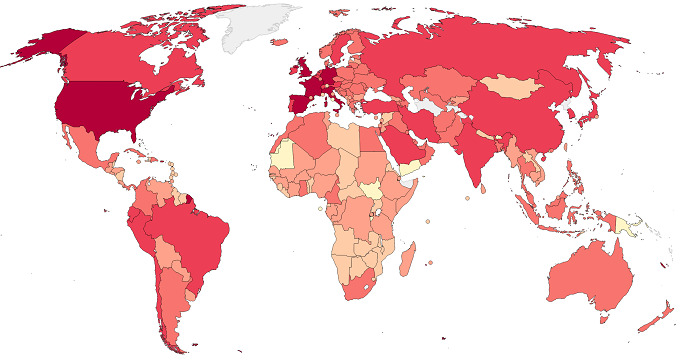
Covid-19 (Coronavirus disease discovered in 2019) has completely changed the way people relate the world over. It has, within the short period since its discovery last December, destroyed communities’ social fabric. The Covid-19 pandemic has not only confounded ordinary citizens but also doctors, scientists and even religious leaders who normally have ready explanations to such phenomena shrouded in myths and mysteries.
Consultants have come up with wild and frightening scenarios of the effects of this devastating pandemic in the next eight months. There are fears the pandemic could kill millions of people if allowed to continue spreading at the present rate.
In Zimbabwe the consultants project that in the worst scenario, more than 14 million people will be infected by the virus in the next 520 days, which means the entire population will be infected and the few survivors will be those who will recover from the disease.
The Covid-19 pandemic has claimed more than 200 000 lives worldwide and infected more than 2,8 million people and most of these are in Europe and the US while Africa accounts for the least number of deaths and confirmed cases.
There have, however, been repeated warnings of the danger of Africa basking in the comfort of the low figures recorded so far as the worst is yet to come. Most African countries, like the rest of the world, have on the advice of the World Health Organisation (WHO) and other health experts, effected lockdowns as part of broad measures to contain the spread of Covid-19. This pandemic is a complete stranger whose characteristics and behaviour are little known given that the disease is just about five months old.
What is therefore not in dispute is that there is a need to intensify research to unmask this stranger if the world is to contain it. It is only logical to start from what the world already knows about this disease. It is a fact that the pandemic has so far been very devastating in Europe and US but moderate in Africa.
Coming home to Zimbabwe, the disease has claimed four lives since the first confirmed Covid-19 case on March 20 and by last Monday 32 cases had been confirmed countrywide. We totally agree with university of Zimbabwe academics Professor Marvellous Mhloyi and Dr Stanzia Moyo that when making projections aimed at guiding a nation for effective planning, such projections must be based on assumptions and data from the respective countries. Covid-19 projections for Zimbabwe and any other country must therefore be country specific so that the results from such projects are more accurate and useful to the nation.
The biggest challenge for Zimbabwean researchers therefore is to come up with projections based on Zimbabwean data to assist the country in planning as opposed to relying on global patterns of progression of Covid-19. We are not saying we should not prepare for the worst scenario but wild figures based on global patterns might create hopelessness in our communities thereby impacting negatively on measures being taken to fight Covid-19.
When a nation is given the impression that it is doomed, the fighting spirit is killed and everything is surrendered to fate. Our academia should therefore rise to the challenge and give us projections based on our experience of Covid-19 in Zimbabwe.
The nation needs accurate information to make informed decisions and strategically allocate resources to combat the spread of Covid-19.



 Online Reporter