Online Reporter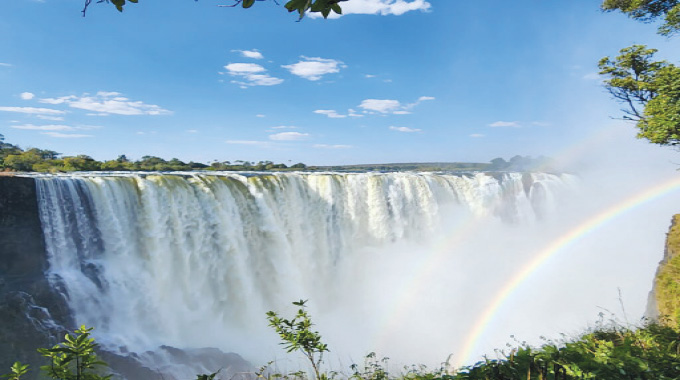
FOR too long, the narrative of progress in Africa has been narrowly defined: concrete, steel, and expansion at any cost. We have seen the results — cities choked by sprawl, severed from their natural environments, and burdened by inefficient, centralised systems.
A quiet revolution, however, is unfolding in Zimbabwe, offering a powerful and replicable counter-narrative. From the tourism epicentre of Victoria Falls to the coal-roots community of Hwange, a new model of pragmatic, environmentally integrated development is taking root, proving that sustainability and growth are not opposing forces, but essential partners.
Victoria Falls is no longer just a natural wonder; it is becoming a wonder of modern urban planning. Faced with the immutable constraints of a Unesco-protected landscape and a booming population, the city made a deliberate choice. Instead of fighting its environment, it learned to build with it.
The policy is elegantly simple yet revolutionary in its enforcement: save every tree you can, and if one must be cut, plant three. Build upwards, not outwards. Power progress with the sun. The result is a thriving urban centre where state-of-the-art lodges and cluster houses exist in harmony with the ecosystem, not in spite of it.
This is not mere landscaping; it is a fundamental reimagining of infrastructure. As Bulawayo’s delegation observed with palpable excitement, this approach solves multiple problems at once. Densification preserves precious land. Renewable energy ensures resilience and reduces strain on the national grid.
The strict conservation ethos maintains the very natural beauty that fuels the local economy. It is a lesson in foresight, showing that the most advanced city is not the one with the tallest towers, but the one that best secures its future by honouring its foundation.
Parallel to this urban evolution, a complementary revolution is brewing in Hwange, driven by the innovative partnership between the local board and FBC Building Society. Their project to build the town’s first major biodigester is a masterclass in decentralised, circular thinking.
This system doesn’t just manage waste; it eliminates the concept of “waste” altogether. Organic refuse becomes cooking gas, electricity, and rich fertiliser. It reduces emissions, slashes management costs, and provides clean energy to hundreds of households.
This is where the true power of Zimbabwe’s emerging model becomes clear. The Victoria Falls example shows how to build new infrastructure sustainably. The Hwange initiative shows how to retrofit essential infrastructure—waste and energy systems—for sustainability. Together, they form a holistic blueprint.
One addresses the form and function of the city; the other addresses its metabolism.
For a nation where a large number of households lack reliable grid electricity, the implications are profound. Biodigester technology, as noted, offers a scalable, affordable energy solution, particularly for peri-urban and rural communities. It turns a perennial problem — waste and energy poverty — into a tangible asset.
The journey of Bulawayo’s leaders to Victoria Falls is symbolic. It represents a crucial shift from theoretical policy to practical, peer-to-peer learning.
The challenge now is to systematise this thinking. Zimbabwe’s National Energy Policy must aggressively champion these decentralised renewable solutions. Town planning statutes nationwide should enshrine the “Victoria Falls doctrine” of mandatory green integration and strategic densification.
The vision emanating from these two stories is of a Zimbabwe that leverages its intellectual and natural capital to build smarter. It is a vision where development is measured not only in square metres built but in trees preserved, in kilowatts generated from waste, and in communities designed for long-term harmony with their environment.
Victoria Falls and Hwange are demonstrating that the sustainable city of the future is not a fantasy imported from the Global North. It is being built here, today, with African ingenuity and a profound understanding that our greatest resource is the land we inhabit. It is a blueprint worth following.