Online Reporter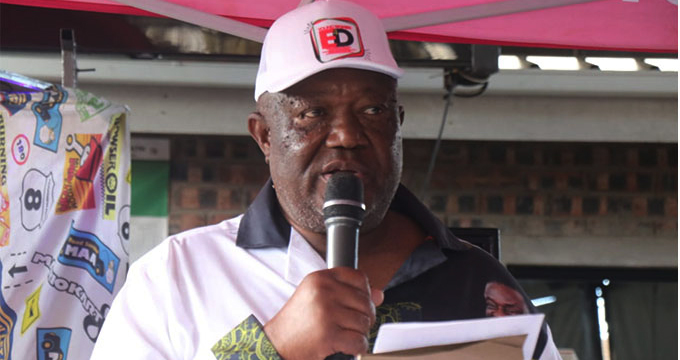
Herald Reporter
ZANU PF National Political Commissar Cde Munyaradzi Machacha yesterday dismissed concerns raised by retired Air Marshal Henry Muchena and other former senior military officers over the Constitutional Amendment (No. 3) Bill, describing their position as inconsistent with global constitutional practice.
In a detailed response issued in Harare last night, Cde Machacha said the suggestion that democracy exists only where citizens directly elect a Head of State is not supported by comparative constitutional evidence.
“Democracy is not measured solely by the method used to select a leader,” Cde Machacha said.
“It is measured by whether political authority originates from the people and whether that authority is exercised through legitimate constitutional institutions.”
The ZANU PF Commissar noted that, out of 56 Commonwealth countries, 34 elect their Presidents or Prime Ministers indirectly through parliamentary systems, including South Africa, Botswana, Angola and Mauritius.
He further reminded the retired officers that Zimbabwe itself had operated under an indirect electoral system during the 1980 independence election, conducted under the theme “Gore reMasimba eVanhu”, where citizens voted for political parties through a parliamentary system, with elected Members of Parliament subsequently selecting the Prime Minister and Ceremonial President.
“No one argues that the 1980 election was not an expression of the people’s will,” Cde Machacha said.
He confirmed that President Mnangagwa had already met Air Marshal (Rtd) Muchena and eight other retired officers, accompanied by the Minister of Justice, Legal and Parliamentary Affairs Ziyambi Ziyambi, the Attorney-General Virginia Mabiza, and the Chief Secretary to the President and Cabinet, Dr Martin Rushwaya.
On public participation, Cde Machacha said Parliament received more than 300 000 written submissions on the Bill, including a submission coordinated by Bishop Nehemiah Mutendi representing approximately 8.7 million congregants.
He further rejected claims that the Bill represented a personal pursuit by the President.
“The claim that this process represents a personal pursuit by His Excellency is not supported by the facts,” Cde Machacha said.
He reiterated that the Bill proposes an extension of the electoral cycle by two years and does not seek to confer an additional term on the President, noting that Section 91 of the Constitution defines a presidential term as a period of three years or more.