

 Online Reporter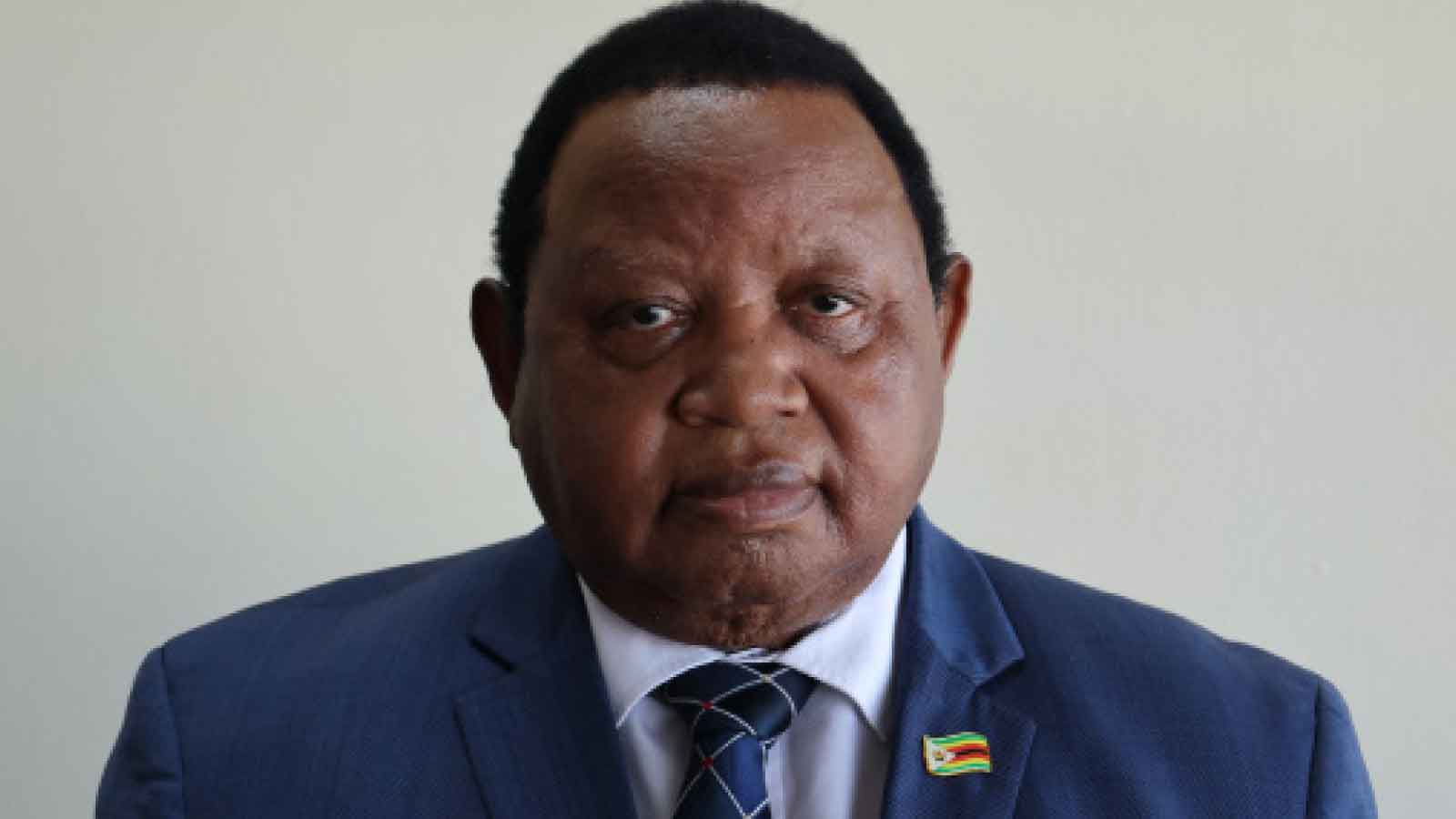
Ivan Zhakata-Herald Correspondent
ZIMBABWE has showcased its growing digital education infrastructure and advances in artificial intelligence-driven learning at the ongoing eLearning Africa Ministerial Round Table in Ghana.
Higher and Tertiary Education, Innovation, Science and Technology Development Minister Frederick Shava highlighted the country’s efforts to secure educational sovereignty and expand access to technology.
The summit, which started yesterday and ends tomorrow, is running under the theme: “Championing Sovereign, Innovative and United Learning Systems: Empowering Africa on its Own Terms.”
Addressing delegates during a session on Continental Solidarity and Cross-Border Collaboration for Resilient Learning Systems, Minister Shava said Africa’s digital future depended on strong regional co-operation and collective resilience.
“No country is an island, nor can we live in isolation. Our digital future depends on continental co-operation, shared vision and collective resilience,” he said. “The next phase of Africa’s digital learning and transformation requires strong regional frameworks.”
Minister Shava said Zimbabwe has built a robust and integrated ICT ecosystem anchored on sovereign national infrastructure to support education, research and innovation.
“Securing sovereignty over our education systems and data is an important conversation point, and Zimbabwe has built a robust, integrated ICT ecosystem anchored on sovereign national infrastructure,” he said.
The Minister said the country now boasts a world-class high-performance computing facility, a national data centre and an expanding cyber infrastructure network connecting educational institutions.
Minister Shava said the infrastructure enables students and researchers to securely access digital learning platforms locally and internationally, while supporting the country’s heritage-based Education 5.0 philosophy.
“Our advanced supercomputing infrastructure secures hosting of large language models locally on graphics processing unit clusters, enabling artificial intelligence tools in indigenous languages,” he said.
Minister Shava said the Zimbabwe National Geospatial and Space Agency was providing satellite and drone-generated data to support multidisciplinary research and classroom learning across the country.
He said Zimbabwe was also developing artificial intelligence-powered e-learning platforms and content on locally controlled cloud infrastructure.
“This is digital industrialisation in action, guaranteeing that the intellectual products of our entire educational system are protected as sovereign national assets,” Minister Shava said.
He said virtual science laboratories were helping bridge equipment shortages in schools, while low-orbit satellite internet programmes were improving connectivity in rural communities.
Minister Shava told delegates that Zimbabwe had made significant progress in digitising education management systems.
He said the Ministry of Primary and Secondary Education was operating an electronic platform known as eMAP to manage school enrolments, while examination bodies had modernised their operations through secure digital platforms.
“The Zimbabwe School Examinations Council and the Higher Education Examinations Council have modernised their operations, utilising secure digital platforms for examinations,” he said. “This includes the digitalisation of results and the current implementation of candidate registration and publication of results.”
At tertiary level, Minister Shava said institutions were increasingly adopting artificial intelligence-driven systems for data management and decision-making.
On financing digital transformation, he said Zimbabwe was leveraging Government funding, development partner support and public-private partnerships to expand digital learning infrastructure.
Among key achievements, Minister Shava cited the establishment of the National Information Access Centre at the Zimbabwe Open University.
“The National Information Access Centre is equipped with graphics processing unit-powered artificial intelligence servers, a digital library, a video conferencing suite and a content creation studio,” he said.
“NIAC is therefore a national asset that strengthens training in data analytics, artificial intelligence and digital content production.”
Minister Shava also highlighted local technology manufacturing initiatives, saying institutions such as the Harare Institute of Technology and Bindura University of Science Education were supporting the production and assembly of laptops and mobile devices in Zimbabwe.
The ministerial round table has brought together education ministers, policymakers, development partners and technology experts from across Africa to explore strategies for strengthening digital learning systems, promoting innovation and enhancing cross-border co-operation in education.



Where are our data centres and how are they being used/maintained? And what type of super computers are being used and where are they situated?